Philadelphia Fed manufacturing index crashes from 26.7 to -0.4 in May
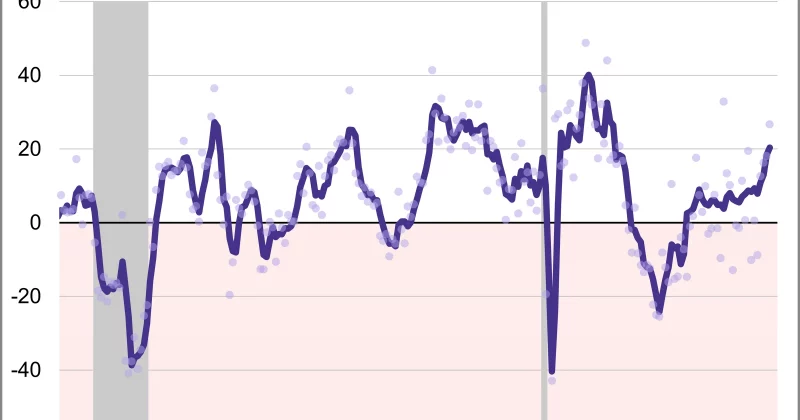
The Philadelphia Federal Reserve’s manufacturing index plunged from 26.7 in April to -0.4 in May, marking the sharpest monthly decline and signaling a shift from expansion to contraction in the Third Federal Reserve District. Economists and crypto traders are closely watching the data as it may influence Federal Reserve policy expectations and market sentiment toward riskier assets like Bitcoin.
The Philadelphia Fed’s manufacturing index collapsed to -0.4 in May, down from 26.7 in April, marking the steepest monthly drop and reversing a trend of expansion in the Third Federal Reserve District, which includes eastern Pennsylvania, southern New Jersey, and Delaware. April’s reading had been the highest since January 2025, driven by strong growth in general activity, new orders, and shipments, despite a negative employment sub-index. The index’s shift from expansion to near-contraction in one month suggests that temporary factors—such as front-loaded orders or post-tariff inventory adjustments—failed to sustain momentum. While a reading of -0.4 is not catastrophic, the abrupt decline raises concerns about broader economic momentum, particularly as regional Fed surveys often serve as early indicators for national trends. Economists note that such volatility in manufacturing reflects ongoing challenges, including post-pandemic demand fluctuations and supply chain disruptions. The Federal Reserve monitors these surveys closely, as persistent weakness could signal the need for policy adjustments, such as interest rate cuts. So far, the Philly Fed’s data aligns with broader cooling in economic activity, though a single reading is not definitive. For crypto markets, the data carries indirect implications. Weaker economic signals may increase expectations of Federal Reserve easing, historically benefiting riskier assets like Bitcoin. While a single regional index won’t drive major price movements, it contributes to a cumulative narrative that could influence market positioning over time. Institutional adoption and macro sensitivity have heightened crypto’s correlation with broader financial conditions compared to earlier cycles.
This content was automatically generated and/or translated by AI. It may contain inaccuracies. Please refer to the original sources for verification.