Philippines plays increasingly central role in U.S. Pacific policy
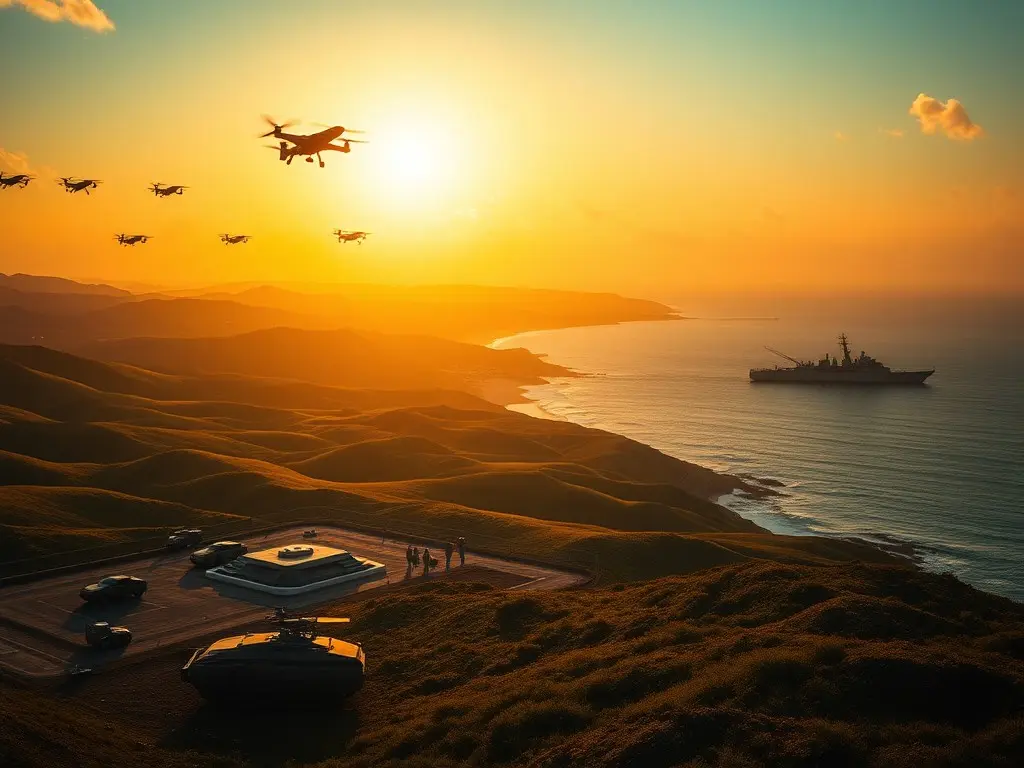
The Philippines has become a key hub in U.S. Pacific strategy as Hawaii-based troops conduct live-fire drills and multinational exercises like Balikatan 2026, now involving 17,000 soldiers from 22 nations. The expanded military cooperation, including training with drones, AI, and missiles, reflects rising tensions with China and a shift toward treating the Philippines as a central node for regional security efforts.
Hawaii-based U.S. military units have been training in the Philippines since April as part of an evolving Pacific defense strategy, with exercises now expanding beyond bilateral U.S.-Philippine drills. During Exercise Balikatan 2026, over 17,000 troops from the U.S., Philippines, Japan, Australia, Canada, France, and New Zealand participated in live-fire drills, including a 'counter landing' exercise in western Luzon. The commander of the 25th Infantry Division, Maj. Gen. James Bartholomees, emphasized the division’s historical ties to island warfare, stating the exercises prepare forces to 'fight on islands' and 'lead from islands.' Adm. Samuel Paparo, commander of U.S. Pacific forces, called Balikatan 2026 a 'strategic evolution' into a multinational mission focused on defending the Philippines, reflecting growing regional security threats. He highlighted the need for faster decision-making and adaptability in modern warfare, noting that the exercises improved U.S. and allied capabilities. Following Balikatan, U.S. troops continued training under Exercise Salaknib and Kamandag, integrating advanced technologies like drones, missiles, and AI with Philippine forces. The Philippines has re-emerged as a central player in U.S. Pacific policy, replacing its peripheral role in regional security. Analyst Brad Glosserman of the Pacific Forum described the U.S.-Philippines alliance as a 'pivot' for engagement with Japan, Australia, and South Korea, driven by shared concerns over China’s regional ambitions. Last year, former U.S. President Donald Trump and Philippine President Ferdinand Marcos Jr. announced plans to develop Subic Bay as a new arms manufacturing hub, further solidifying military cooperation. While U.S. troops left permanent bases in the Philippines in the 1990s due to nationalist protests, recent years have seen increased training rotations and port calls by U.S. warships. The expanded exercises, now involving more allies, underscore the Philippines’ strategic importance in countering regional threats and modernizing joint military capabilities.
This content was automatically generated and/or translated by AI. It may contain inaccuracies. Please refer to the original sources for verification.