Plot twists, panic, and public outrage: Why CBSE's OSM crisis feels like peak OTT drama
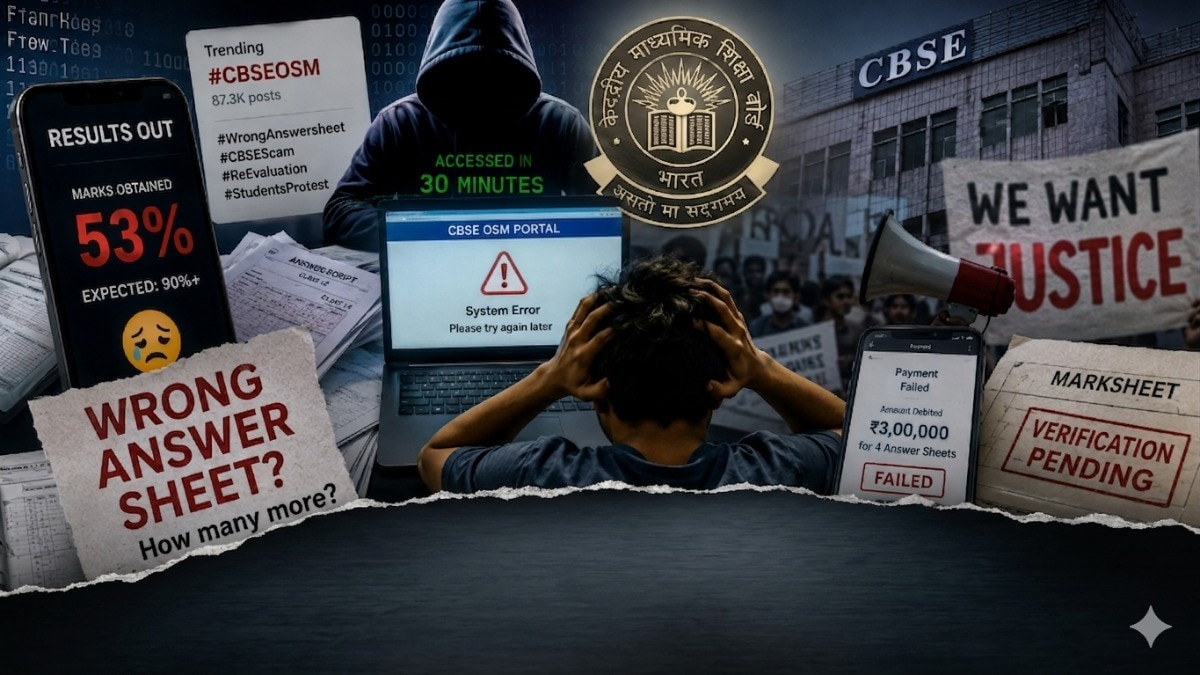
India’s Central Board of Secondary Education (CBSE) faced nationwide backlash over its On-Screen Marking (OSM) system after results revealed a sharp drop in pass percentages and students reported discrepancies in marks. Claims of system failures, cybersecurity vulnerabilities, and incomplete evaluations escalated into a crisis of trust, prompting Union Education Minister Dharmendra Pradhan to intervene and assure corrective action.
The Central Board of Secondary Education (CBSE) introduced its On-Screen Marking (OSM) system for Class 12 examinations this year, aiming to streamline evaluation with digital technology. Nearly 98.66 lakh answer sheets were scanned and assessed online by 70,000 examiners nationwide, promising efficiency and reduced errors. However, the system faced immediate controversy after results were declared on May 13, showing a pass percentage drop from 88.39% in 2025 to 85.2% in 2026. Students reported unexpectedly low marks in core subjects like Physics, Chemistry, Biology, and Mathematics, with some claiming losses of 20-40 marks. Parents compared scores to pre-board results and coaching tests, raising concerns about strict evaluation and potential errors. The backlash intensified as students alleged incomplete checking, unfair marking, and blurred scanned answer sheets, shifting the debate from grading to trust in the digital system. To address concerns, CBSE introduced a mechanism for students to access scanned copies of their evaluated answer sheets before requesting verification. However, this transparency measure overwhelmed the system, with nearly every fourth student seeking access. Reports emerged of portals crashing repeatedly, verification deadlines shifting without clarity, and claims of cybersecurity vulnerabilities, including a 19-year-old’s alleged access to parts of the system within 30 minutes. Union Education Minister Dharmendra Pradhan took responsibility for the crisis, assuring corrective action and defending the OSM initiative as a necessary digital reform. The controversy disrupted nearly 17 lakh students’ futures, turning a technical issue into a broader question of confidence in technology and academic evaluation processes. The OSM system’s failure to function smoothly exposed flaws in its implementation, raising questions about scalability and cybersecurity. While CBSE aims to restore trust, the incident has sparked debates on the reliability of digital evaluation methods in high-stakes examinations. For students and parents, the crisis underscores the high emotional and academic stakes of India’s board exam season.
This content was automatically generated and/or translated by AI. It may contain inaccuracies. Please refer to the original sources for verification.