Portuguese government could suspend EES amid 6-hour queues
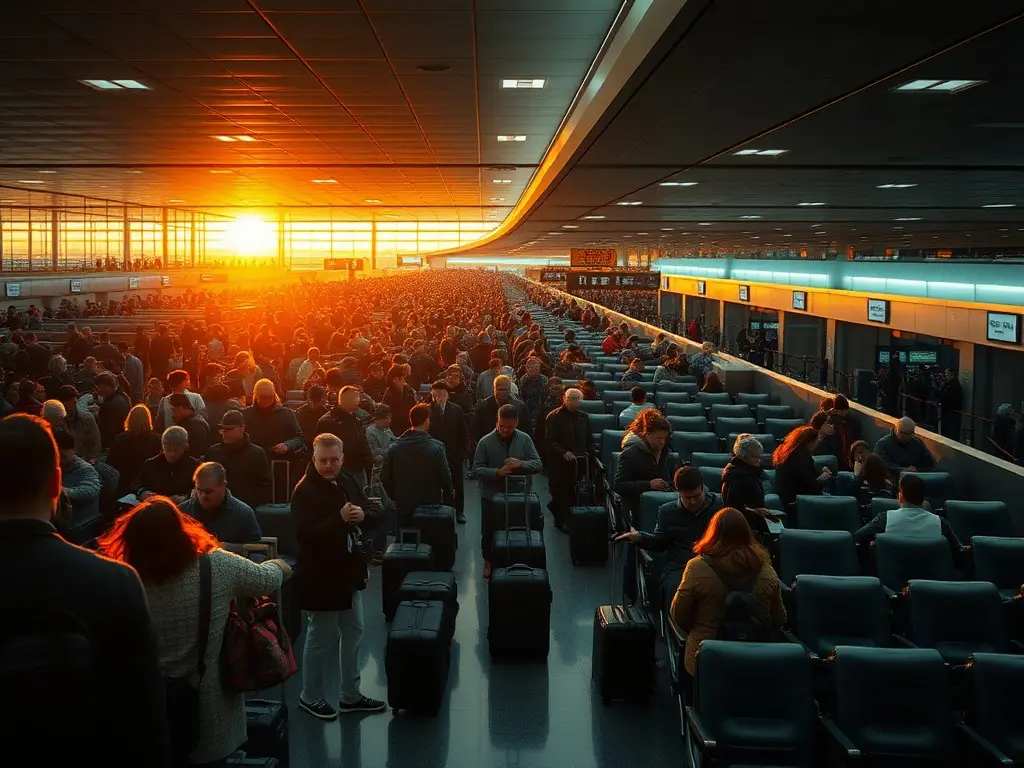
The EU’s new Entry/Exit System (EES) is causing six-hour queues at Portuguese airports, particularly in Lisbon and Faro, prompting calls for suspension and threats from airlines like Ryanair. Portuguese Prime Minister Luís Montenegro has expressed dissatisfaction with the system and hinted at possible suspension if delays persist, while the European Commission denies the EES is the primary cause of delays.
The EU’s Entry/Exit System (EES) has triggered severe travel disruptions in Portugal, with reports of six-hour queues at Lisbon and Faro airports. Travellers, including a family advised by travel expert @travel_luckk, described waiting 6 hours and 40 minutes, missing connections and facing exhaustion. Faro Airport, designed for 4 million passengers, now handles over 9 million annually, worsening bottlenecks. Lisbon’s Monday mornings (6 AM–11 AM) are particularly chaotic, while Porto’s smaller terminal processes EES checks 40% faster. Major airlines, including Jet2 and Ryanair, have demanded the EES be paused until September to avoid summer travel chaos. Ryanair’s Malta subsidiary threatened to cancel flights to Malta due to delays, and CEO David O’Brien urged European authorities to intervene. Ryanair’s COO, Neal McMahon, called for a suspension, citing economic and operational risks. Portuguese Prime Minister Luís Montenegro acknowledged the issue, stating the government was ‘unhappy’ with border control inefficiencies, especially in Lisbon. He warned of ‘stronger measures’ if delays continued, balancing security concerns with economic impact. Montenegro emphasized Portugal’s compliance with EU obligations but rejected penalties for existing challenges. The European Commission dismissed claims the EES alone caused delays, insisting the system averages ‘just over one minute’ per passenger. However, travel advisors recommend families with children under 12 use assisted lanes to reduce wait times to around 30 minutes. Additional disruptions from rolling luggage strikes have compounded the crisis, leaving travellers frustrated as peak season approaches. Airport capacity strains and staff shortages remain unaddressed, with Faro’s overload and Lisbon’s peak-hour congestion exacerbating the problem. Porto is currently the preferred alternative for smoother entry into northern and central Portugal. The situation has sparked broader debates on EU border management efficiency during high-travel periods.
This content was automatically generated and/or translated by AI. It may contain inaccuracies. Please refer to the original sources for verification.