Putin’s Victory Day Parade Relies On A U.S.-Brokered Ukraine Truce
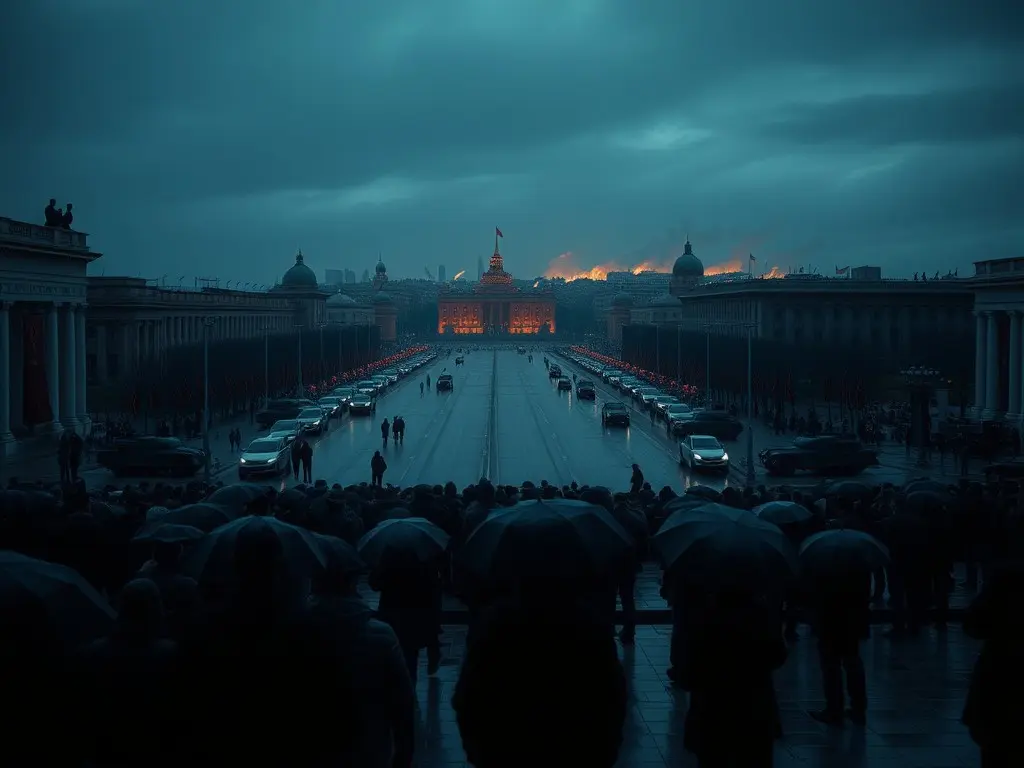
Russia’s 2024 Victory Day parade will exclude military hardware for the first time in nearly two decades, with tanks deployed to Ukraine, while Moscow warns of retaliation against Ukraine and imposes security restrictions. Ukrainian strikes inside Russia, including in Chelyabinsk and Yekaterinburg, have forced Russia to divert defenses, straining its ability to protect key regions like Moscow and Leningrad.
Russia’s annual Victory Day parade on May 9 will mark a significant departure from tradition, omitting military equipment from Red Square for the first time since 2005. Russian MP Yevgeny Popov stated tanks and other hardware are instead engaged in fighting in Ukraine, where Moscow has intensified its offensive. The Kremlin has heightened security measures, including restricting mobile internet and SMS services in Moscow and revoking accreditation for foreign media outlets like Germany’s *Der Spiegel*. Russian occupation authorities in Crimea canceled Victory Day celebrations entirely due to safety concerns amid escalating Ukrainian drone strikes, with at least 15 Russian regions following suit. Security precautions extend beyond the parade, as Russia’s Foreign Ministry warned of potential retaliation against Ukraine if its attacks disrupt celebrations. Diplomatic missions in Kyiv have been advised to prepare for possible evacuations in case of a major Russian strike. The shift reflects Moscow’s vulnerability to long-range Ukrainian strikes, which have targeted regions as far as Chelyabinsk (1,800 km away) and Yekaterinburg (nearly 2,000 km away), according to Ukrainian President Volodymyr Zelensky. These strikes have forced Russia to disperse air defenses and electronic warfare assets across a broader area, straining its ability to protect economically vital regions like Moscow and Leningrad. The guest list for the parade has also been scaled back, with fewer foreign dignitaries attending compared to past years. Belarusian leader Alexander Lukashenko is expected, alongside leaders from smaller or disputed entities, in contrast to last year’s attendance by Chinese President Xi Jinping. The Institute for the Study of War noted that Ukraine’s ability to strike deep inside Russia highlights Moscow’s ongoing challenges in defending critical infrastructure. Ukrainian President Zelensky emphasized recent successes in targeting regions vital to Russia’s war efforts, including Chelyabinsk and Yekaterinburg, further pressuring Russian defenses. The changes to the Victory Day parade underscore the evolving dynamics of the war, with Ukraine’s long-range capabilities forcing Russia to adapt its military and political messaging. Security restrictions and canceled events reflect Moscow’s heightened concerns over potential disruptions, while the absence of military hardware signals a shift in priorities from spectacle to battlefield engagement. The reduced international attendance also suggests a broader isolation of Russia amid the conflict.
This content was automatically generated and/or translated by AI. It may contain inaccuracies. Please refer to the original sources for verification.