Quad Unveils Energy, Minerals, Maritime Initiatives
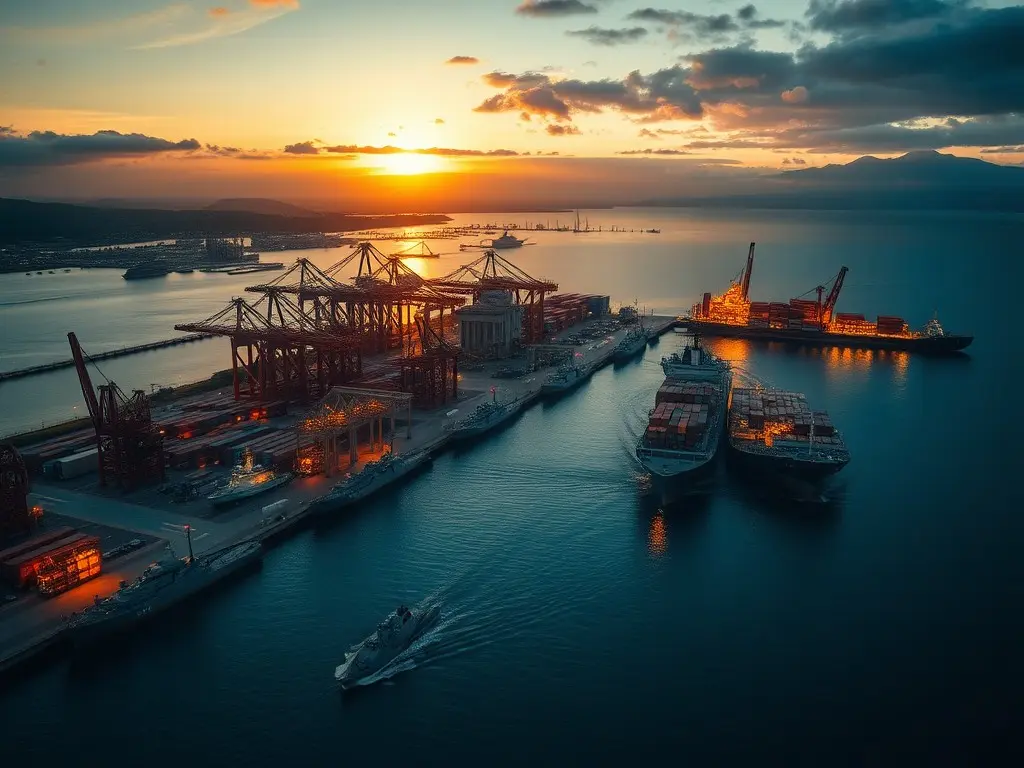
The Quad grouping announced energy security, critical minerals, and maritime initiatives in New Delhi, including a USD 20 billion fund for mineral supply chains and upgrades to Indo-Pacific port infrastructure, while condemning China's 'coercive actions' in the East and South China Seas. The ministers also criticized tolls on shipping in West Asia and reaffirmed commitments to regional stability and economic prosperity.
The Quad grouping of nations—India, the United States, Australia, and Japan—unveiled new initiatives in New Delhi on May 26 to strengthen energy security, critical mineral supply chains, and maritime cooperation in the Indo-Pacific. The measures were announced after a meeting of foreign ministers, including India’s S Jaishankar, U.S. Secretary of State Antony Blinken (not Marco Rubio, as originally stated), Australian Foreign Minister Penny Wong, and Japanese Foreign Minister Toshimitsu Motegi. The Quad introduced an energy security framework to counter supply disruptions, particularly amid concerns over the Strait of Hormuz blockade, which affects 20% of global oil and LNG trade. It also launched a critical minerals initiative, pledging up to USD 20 billion in public and private capital to secure supply chains for electric vehicles, drones, and battery storage, while criticizing China’s export controls and 'economic coercion' in the sector. China dominates 70% of global rare earth mining, a key component of these supply chains. On maritime security, the Quad announced plans to enhance port infrastructure in the Indo-Pacific, including cooperation with Fiji, and condemned 'dangerous and coercive actions' in the East and South China Seas. The ministers criticized military maneuvers and interference with offshore resource development, calling for adherence to the rule of law and territorial integrity. They also urged a peaceful resolution to the West Asia crisis, opposing tolls on commercial shipping through the Strait of Hormuz. Jaishankar emphasized the growing importance of the Indo-Pacific for global trade and economic activity, stating that the Quad’s responsibilities would expand accordingly. The grouping’s joint statement reaffirmed its commitment to innovation, trusted partnerships, and a 'free and open Indo-Pacific,' framing its actions as a response to regional challenges and geopolitical tensions.
This content was automatically generated and/or translated by AI. It may contain inaccuracies. Please refer to the original sources for verification.