Record Seaweed Levels Are Hitting Caribbean Beaches — Hotels Are Cutting Prices
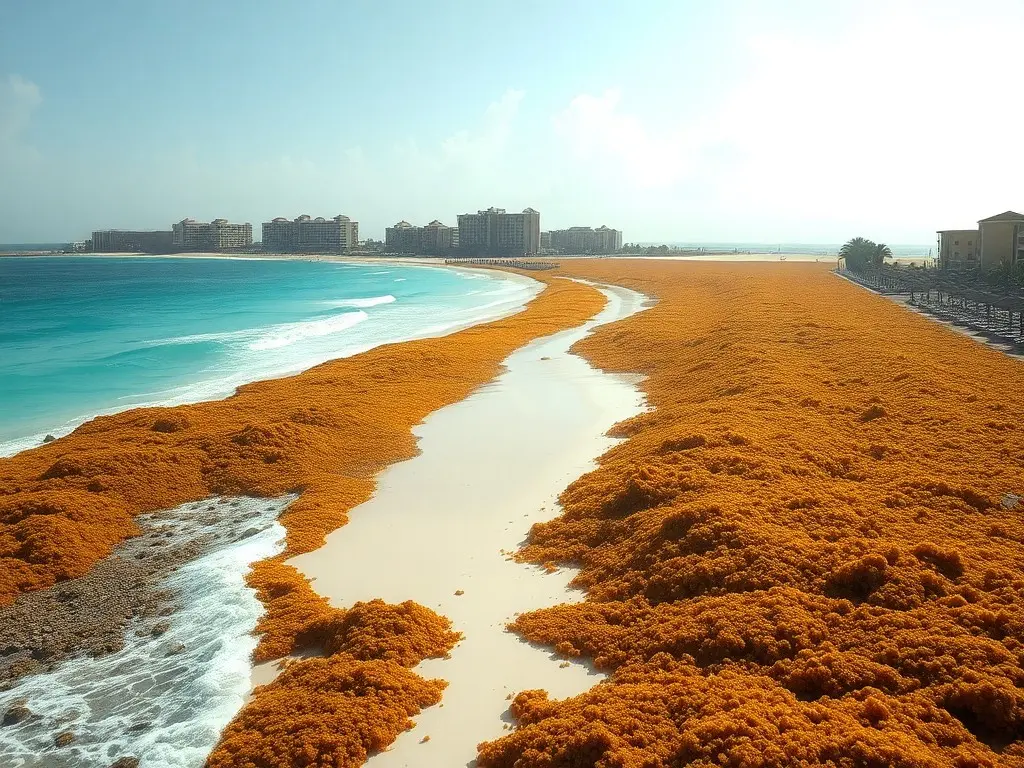
Record levels of Sargassum seaweed are washing ashore across the Caribbean in 2026, with May data from the University of South Florida showing near-universal record highs, forcing hotels to cut prices. The decomposing seaweed releases hydrogen sulfide, creating a foul odor and posing ecological and economic threats to tourism-dependent islands.
The Caribbean is facing its worst sargassum seaweed crisis on record in 2026, with data from the University of South Florida confirming near-universal record-high levels across the region in May. The brown macroalgae, which naturally thrives in open ocean ecosystems, has surged to excessive volumes, washing ashore and decomposing rapidly. This process releases hydrogen sulfide, creating a strong odor that deters tourists and damages local economies. The problem has escalated since initial reports in 2011, with volumes now so severe that hotels are cutting prices to offset lost bookings. May’s data suggests further increases in June, potentially making 2026 the worst year since monitoring began. The seaweed’s impact extends beyond tourism, disrupting marine life and coastal ecosystems. Caribbean destinations heavily reliant on tourism are particularly vulnerable, as the seaweed’s presence forces cancellations and drives away visitors. Environmental experts warn that without intervention, the crisis could worsen, threatening both the region’s natural habitats and its economic stability. The University of South Florida’s findings highlight a growing environmental challenge, with scientists attributing the surge to a combination of ocean currents, nutrient runoff, and climate change. The situation underscores the need for coordinated efforts to mitigate the seaweed’s impact before the peak tourist season.
This content was automatically generated and/or translated by AI. It may contain inaccuracies. Please refer to the original sources for verification.