Ripple (XRP) News: Why Korea Is Trading XRP More Than Bitcoin Right Now
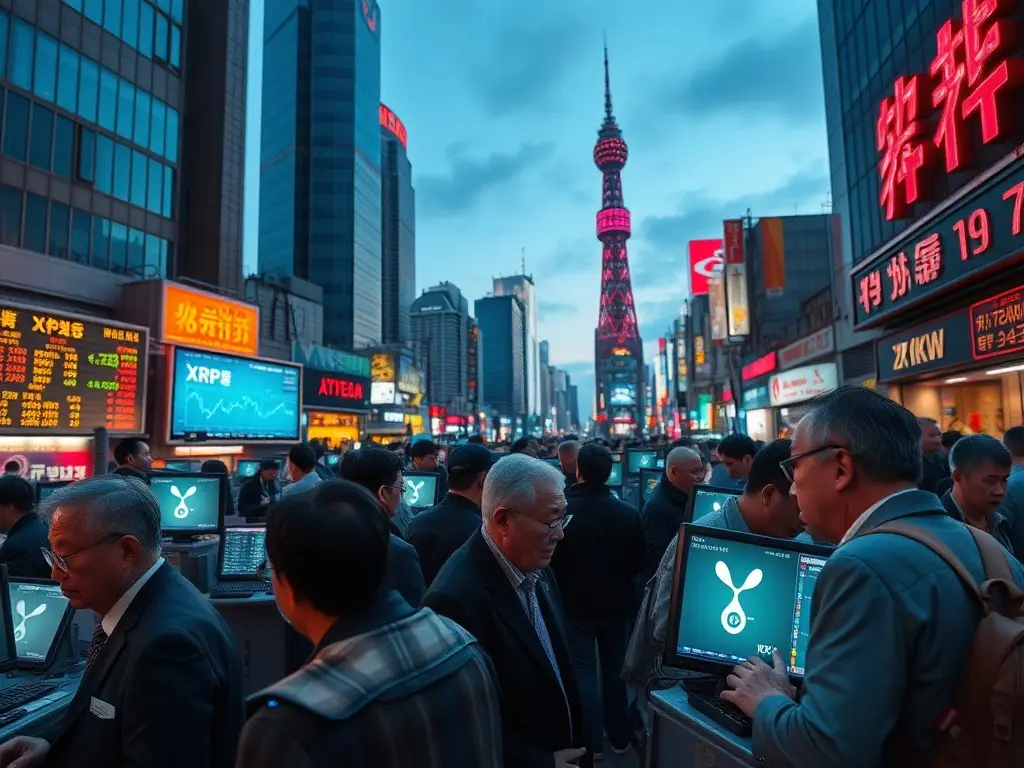
XRP overtook Bitcoin in 24-hour trading volume on South Korea’s Upbit and Bithumb exchanges, with $110.9 million and $41 million in volume respectively, despite its price remaining stagnant near $1.45. Older Korean retail investors, shifting funds from the slumping local stock market, are driving the surge in XRP trading activity, which has yet to break the $1.50 resistance level." "article": "South Korea’s largest crypto exchange, Upbit, recorded $110.9 million in 24-hour trading volume for XRP/KRW, surpassing Bitcoin’s $88.6 million and Ether’s $67 million. The trend repeated on Bithumb, where XRP/KRW volume hit $41 million, outpacing Bitcoin and Ethereum. Despite this surge, XRP’s price remains flat at around $1.45, failing to break the $1.49–$1.50 resistance level for the fourth time this year. The volume spike is led by South Korean retail investors aged 40–50, who are rotating out of weak local stocks and back into XRP, a familiar asset from earlier crypto booms. Korea’s Financial Services Commission restricts crypto trading to spot markets, limiting access to futures or leverage, making XRP an attractive option due to its volatility and liquidity. Upbit listed XRP as its most-traded asset in 2025, with over $1 trillion in cumulative volume and 13.26 million users. The current rally follows a broader trend of Korean traders seeking assets with inherent volatility to simulate leveraged exposure. Analyst Ryan Yoon of Tiger Research noted that older investors, familiar with XRP from 2017 and 2018, are driving the shift. With South Korea hosting roughly 15.5 million crypto users—about 30% of the adult population—capital rotation quickly impacts trading volumes. XRP’s failure to break $1.50 persists despite repeated attempts, including a brief spike to $1.60 in March after the SEC and CFTC classified it as a digital commodity. The rally reversed following the Federal Reserve’s rate decision, which raised 2026 inflation forecasts and signaled only one rate cut for the year. The disconnect between high trading volume and stagnant price raises questions about whether the current surge will finally push XRP past resistance or fizzle out like previous attempts.
South Korea’s largest crypto exchange, Upbit, recorded $110.9 million in 24-hour trading volume for XRP/KRW, surpassing Bitcoin’s $88.6 million and Ether’s $67 million. The trend repeated on Bithumb, where XRP/KRW volume hit $41 million, outpacing Bitcoin and Ethereum. Despite this surge, XRP’s price remains flat at around $1.45, failing to break the $1.49–$1.50 resistance level for the fourth time this year. The volume spike is led by South Korean retail investors aged 40–50, who are rotating out of weak local stocks and back into XRP, a familiar asset from earlier crypto booms. Korea’s Financial Services Commission restricts crypto trading to spot markets, limiting access to futures or leverage, making XRP an attractive option due to its volatility and liquidity. Upbit listed XRP as its most-traded asset in 2025, with over $1 trillion in cumulative volume and 13.26 million users. The current rally follows a broader trend of Korean traders seeking assets with inherent volatility to simulate leveraged exposure. Analyst Ryan Yoon of Tiger Research noted that older investors, familiar with XRP from 2017 and 2018, are driving the shift. With South Korea hosting roughly 15.5 million crypto users—about 30% of the adult population—capital rotation quickly impacts trading volumes. XRP’s failure to break $1.50 persists despite repeated attempts, including a brief spike to $1.60 in March after the SEC and CFTC classified it as a digital commodity. The rally reversed following the Federal Reserve’s rate decision, which raised 2026 inflation forecasts and signaled only one rate cut for the year. The disconnect between high trading volume and stagnant price raises questions about whether the current surge will finally push XRP past resistance or fizzle out like previous attempts.
This content was automatically generated and/or translated by AI. It may contain inaccuracies. Please refer to the original sources for verification.