Rivian starts deliveries of its all-important R2 SUV
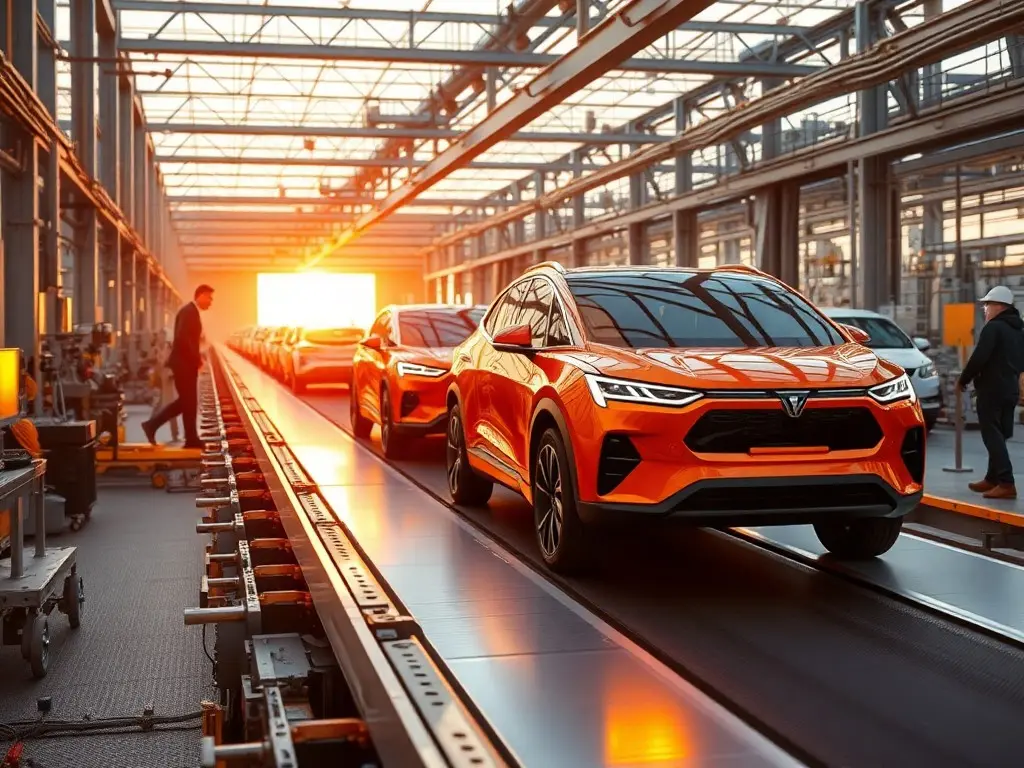
Rivian officially began delivering its R2 SUV to customers on Tuesday, positioning it as a critical model for scaling production and advancing autonomous vehicle ambitions. The company aims to deliver 20,000 to 25,000 units by year-end, with plans to expand production at factories in Illinois and Georgia while targeting price points as low as $45,000 by 2027.
Rivian started delivering its R2 SUV to customers on Tuesday, marking a pivotal moment for the electric automaker as it pushes toward mass-market adoption. CEO RJ Scaringe has called the R2 the company’s most important launch to date, emphasizing its role in autonomous vehicle development. Priced starting at around $58,000, the R2 is a scaled-down version of Rivian’s R1 SUV, with plans to introduce a $50,000 model in 2027 and an even cheaper $45,000 variant later that year. The company expects to deliver between 20,000 and 25,000 R2 SUVs by the end of 2026, a target that would make it one of the fastest-scaling EV launches in U.S. history. Rivian is ramping up production at its Illinois factory and preparing to open a new Georgia plant in late 2028. The R2’s launch coincides with a shifting EV market in the U.S., where weakened regulations and the end of a $7,500 federal tax credit have slowed adoption among legacy automakers. Despite challenges, Rivian sees opportunity in the reduced competition, positioning the R2 as a standout option. The company has also tied the R2 to its autonomy goals, revealing plans in December to enhance self-driving capabilities over time. In March, Rivian struck a $1.25 billion deal with Uber to supply up to 40,000 R2 models for use as robotaxis on the ride-hailing platform. Globally, EV sales are rising, particularly in China, where affordable models are driving demand. Canada recently cut import taxes on Chinese EVs to combat high car prices, raising concerns about future competition. Rivian’s strategy combines affordability, autonomy, and strategic partnerships to navigate a changing automotive landscape.
This content was automatically generated and/or translated by AI. It may contain inaccuracies. Please refer to the original sources for verification.