Robotics Industry at Inflection Point in 2026 as AI and Labor Costs Converge
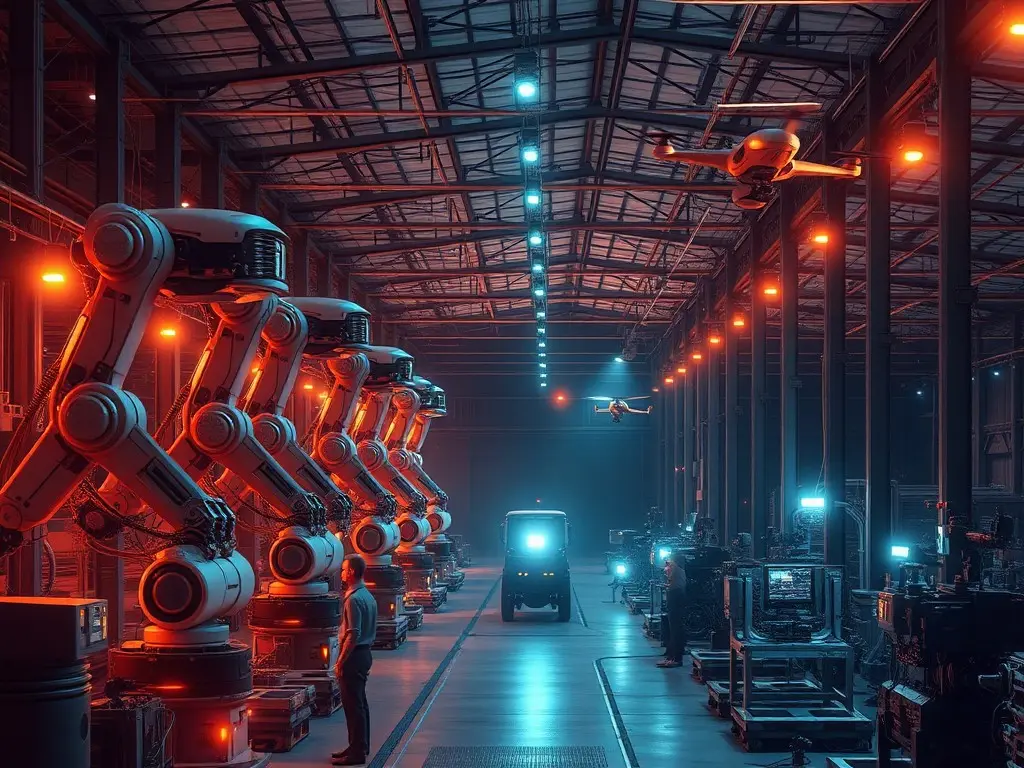
The robotics industry in 2026 is experiencing rapid growth driven by AI integration, labor shortages, and falling hardware costs, with global revenues projected to hit $85 billion. China leads industrial robot installations, while logistics and humanoid robotics segments see explosive adoption, though challenges like cybersecurity and regulatory uncertainty persist.
The robotics industry is undergoing its fastest adoption cycle in history, fueled by AI advancements, labor shortages, and declining hardware costs. Global revenues are expected to reach $85 billion in 2026, up from $62 billion in 2024, according to industry reports. AI integration has transformed the sector, enabling robots to process natural language commands, adapt to unstructured environments, and learn tasks without reprogramming, expanding automation possibilities. Industrial robotics remains the largest segment, accounting for 55% of total revenue, with China installing 350,000 units in 2025—55% of global installations. The U.S. saw a 15% year-over-year increase in installations, driven by the CHIPS Act and manufacturing reshoring efforts. Logistics robotics is the fastest-growing area, with Amazon, Walmart, and Alibaba deploying over 750,000 autonomous mobile robots in fulfillment centers. The payback period for these robots has dropped from three years to just 18 months. Humanoid robotics has shifted from research labs to commercial testing, with Tesla’s Optimus, Figure’s 01, and Agility Robotics’ Digit now being piloted in warehouses and factories. Unit sales of humanoid robots are projected to hit 25,000 in 2026, a sevenfold increase from 2024. Collaborative robots, designed to work alongside humans without safety barriers, now make up 15% of industrial robot sales, with entry-level models priced below $15,000. Despite rapid growth, the industry faces challenges, including a shortage of integration engineers, cybersecurity risks in connected systems, and regulatory uncertainty around AI-driven decision-making. Standardization remains lacking, as major vendors rely on proprietary software and interfaces. The convergence of AI-driven smarts, labor scarcity, and affordable Chinese manufacturing is accelerating adoption, but companies that delay implementation risk falling behind competitors.
This content was automatically generated and/or translated by AI. It may contain inaccuracies. Please refer to the original sources for verification.