Rocket goes boom; so do moon plans
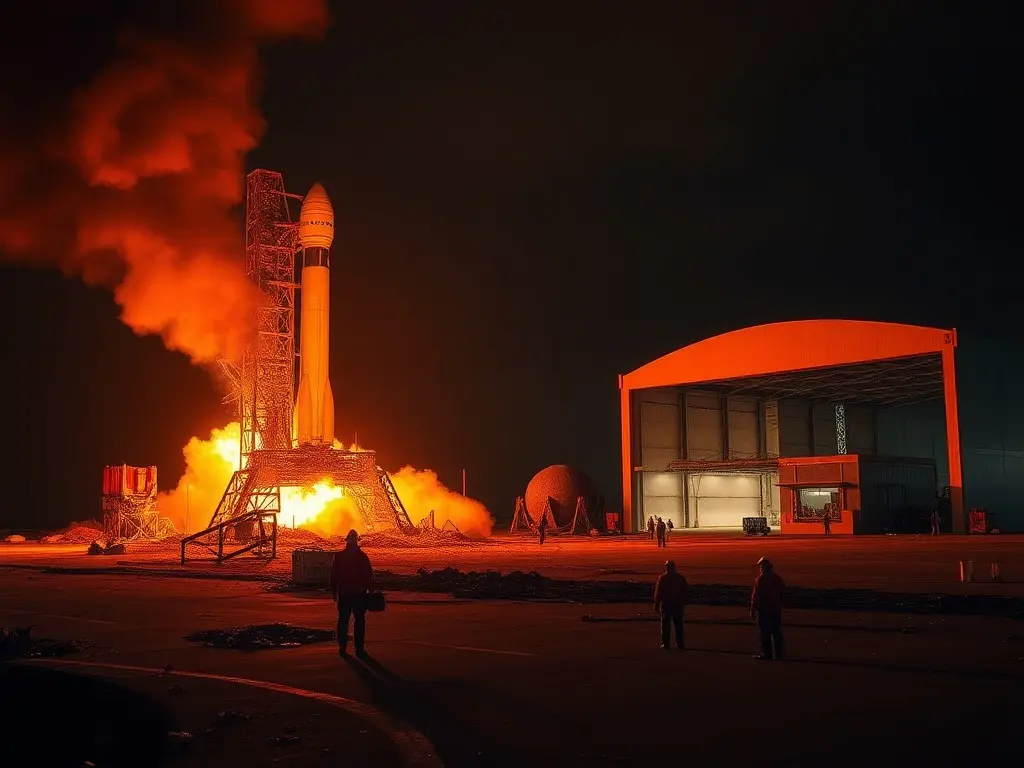
Blue Origin’s New Glenn rocket exploded during testing at Cape Canaveral on May 28, destroying its only launchpad and delaying plans for Amazon’s Project Kuiper satellite network and NASA’s lunar lander program. The incident raises concerns about potential ripple effects on United Launch Alliance’s Vulcan Centaur rocket, which also uses Blue Origin’s BE-4 engines, and pushes back Amazon’s deadline to deploy half its satellite constellation by July." "article": "Blue Origin’s New Glenn rocket suffered a catastrophic explosion during a test at Cape Canaveral, Florida, on May 28. The incident, described as an ‘anomaly’ by the company, destroyed the launchpad and surrounding infrastructure, including a transporter-erector vehicle and a lightning-rod tower. No injuries were reported, but the blast marked one of the largest setbacks in spaceflight since a Soviet N1 rocket exploded in 1969. The explosion threatens Amazon’s Project Kuiper, a satellite-internet venture competing with SpaceX’s Starlink. Amazon had secured up to 83 launches for Kuiper, including 12 with Blue Origin, but the incident risks delays beyond the July deadline to deploy half the constellation. The company is already seeking an extension after acquiring Globalstar for $11.6 billion to secure spectrum rights. NASA’s lunar ambitions are also at risk, as Blue Origin was developing a lunar lander under a 2023 contract to back up SpaceX’s delayed program. The explosion could ground United Launch Alliance’s Vulcan Centaur rocket if the cause is linked to Blue Origin’s BE-4 engines, which both rockets use. Repairs at Blue Origin’s single launchpad may take months, further complicating timelines. Blue Origin aims to resume flights by year-end, but the damage to ground infrastructure complicates recovery efforts. The blast highlights the fragility of space launch operations, where setbacks can cascade across multiple programs. For Amazon and NASA, the incident underscores the high stakes of relying on emerging rocket technology for critical missions.
Blue Origin’s New Glenn rocket suffered a catastrophic explosion during a test at Cape Canaveral, Florida, on May 28. The incident, described as an ‘anomaly’ by the company, destroyed the launchpad and surrounding infrastructure, including a transporter-erector vehicle and a lightning-rod tower. No injuries were reported, but the blast marked one of the largest setbacks in spaceflight since a Soviet N1 rocket exploded in 1969. The explosion threatens Amazon’s Project Kuiper, a satellite-internet venture competing with SpaceX’s Starlink. Amazon had secured up to 83 launches for Kuiper, including 12 with Blue Origin, but the incident risks delays beyond the July deadline to deploy half the constellation. The company is already seeking an extension after acquiring Globalstar for $11.6 billion to secure spectrum rights. NASA’s lunar ambitions are also at risk, as Blue Origin was developing a lunar lander under a 2023 contract to back up SpaceX’s delayed program. The explosion could ground United Launch Alliance’s Vulcan Centaur rocket if the cause is linked to Blue Origin’s BE-4 engines, which both rockets use. Repairs at Blue Origin’s single launchpad may take months, further complicating timelines. Blue Origin aims to resume flights by year-end, but the damage to ground infrastructure complicates recovery efforts. The blast highlights the fragility of space launch operations, where setbacks can cascade across multiple programs. For Amazon and NASA, the incident underscores the high stakes of relying on emerging rocket technology for critical missions.
This content was automatically generated and/or translated by AI. It may contain inaccuracies. Please refer to the original sources for verification.