Russia’s Famed Victory Day Falls Short of Triumph
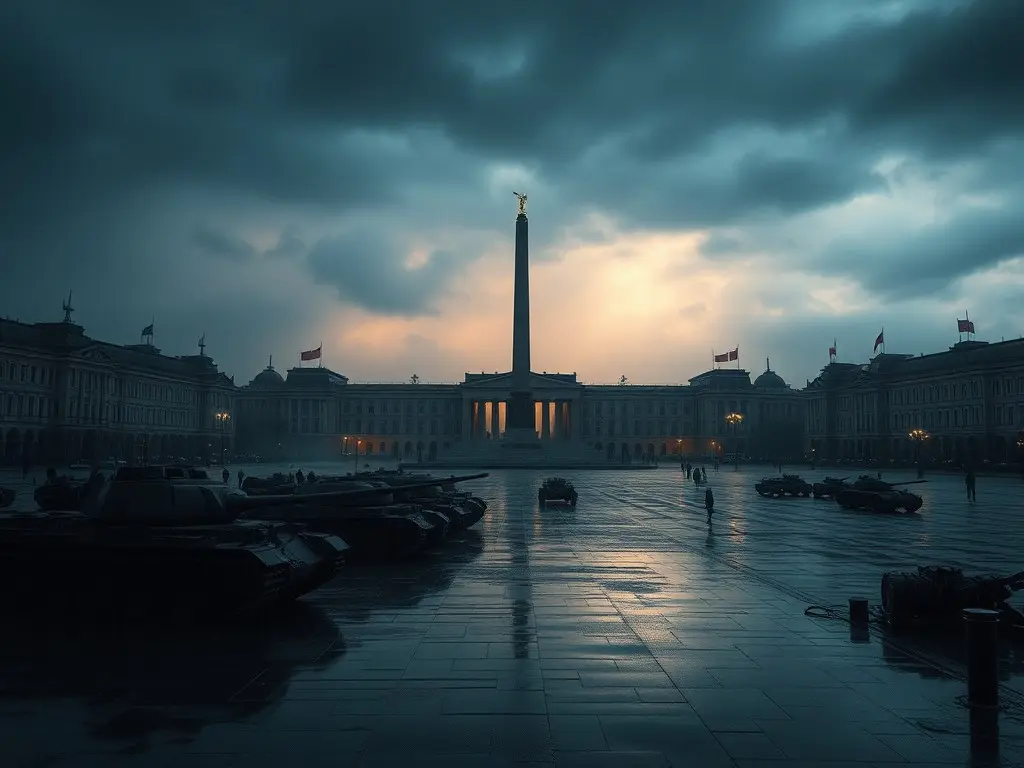
Russia scaled back its 2024 Victory Day parade in Moscow, citing drone attack fears from Ukraine, while experts suggest depleted military resources from the ongoing war may also play a role. The conflict has reportedly caused over 1.3 million Russian casualties, with losses of nearly 12,000 tanks, 24,000 armored vehicles, and over 40,000 artillery systems, according to disputed Ukrainian figures widely cited by Western officials.
Russia canceled its usual large-scale military display during this year’s Victory Day parade on May 9, marking the Soviet Union’s 1945 victory over Nazi Germany. The Kremlin cited concerns about potential Ukrainian drone strikes targeting Moscow, though analysts suggest the decision also reflects Russia’s strained military resources amid its invasion of Ukraine. The war has reportedly caused over 1.3 million Russian casualties, including killed and wounded soldiers, according to disputed Ukrainian figures widely cited by Western officials. Ukraine’s military has maintained a steady offensive in eastern Ukraine, forcing Russia to divert equipment and personnel from symbolic displays. The conflict has devastated Russia’s ground forces, with nearly 12,000 tanks, over 24,000 armored vehicles, and more than 40,000 artillery systems lost, per Ukrainian estimates. The U.K. Ministry of Defense confirms Russia has lost at least 4,394 main battle tanks, over 10,000 armored vehicles, and nearly 2,200 artillery pieces. Russia has ramped up military production to replace lost equipment, with Rostec, the state-owned defense conglomerate, claiming a tenfold increase in output since 2022. Sergey Chemezov, Rostec’s head, stated in June 2025 that the company now produces 80% of Russia’s military hardware used in Ukraine, supported by a workforce expanded by 200,000 employees since the war began. However, the strain on resources remains evident, with reports of conscripts, prisoners, and poorly trained volunteers being deployed in a tactic critics call a ‘meat grinder.’ Analysts note that Russia’s decision to downsize the parade signals a shift toward long-term war planning rather than public posturing. Natia Seskuria, an associate fellow at the Royal United Services Institute, suggests both drone threats and resource depletion contribute to the scaled-back event. With peace talks stalled, Russia appears focused on sustaining its military efforts rather than staging high-profile displays.
This content was automatically generated and/or translated by AI. It may contain inaccuracies. Please refer to the original sources for verification.