Sam Altman said AI will be sold like electricity and water. Tech companies are spending hundreds of billions building the infrastructure to support it
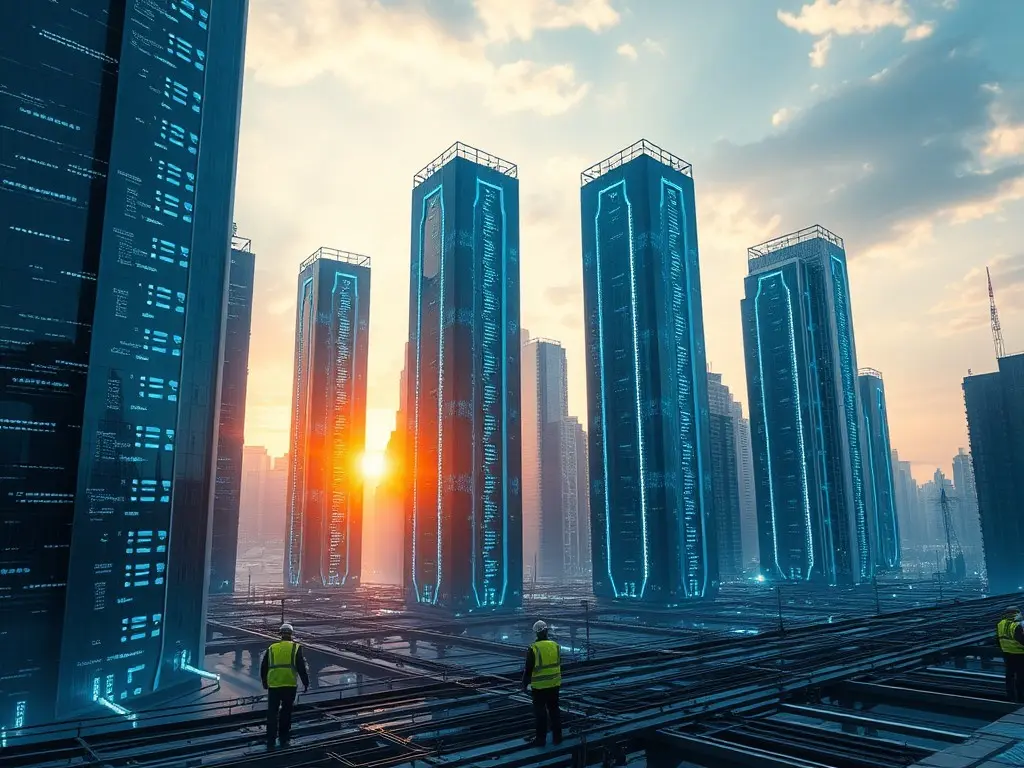
OpenAI CEO Sam Altman predicted AI will become a utility like electricity or water, with users paying for access on demand, while tech companies invest hundreds of billions in infrastructure. However, delays in electrical components and data center construction are slowing the build-out of AI’s foundational systems, despite massive funding commitments from firms like Alphabet and Amazon.
OpenAI CEO Sam Altman envisioned AI as a utility akin to electricity or water during the BlackRock U.S. Infrastructure Summit in Washington, D.C., on March 11. He stated that AI providers will eventually sell intelligence as a metered service, allowing users to pay for access as needed. This vision aligns with tech giants pouring hundreds of billions into AI infrastructure, including data centers, cooling systems, and computing power. Alphabet, Google’s parent company, raised $84.75 billion in equity this week—exceeding its initial $80 billion target—with $10 billion from Berkshire Hathaway. The funds will support AI infrastructure and global compute, with 2026 capital spending projected at $180–$190 billion. Amazon alone plans to invest $200 billion, contributing to a combined tech industry spending surge to over $700 billion this year, up from earlier estimates of $600 billion. Industry leaders warn that demand may outpace supply. At CES in January, AMD CEO Lisa Su projected a need for over 10 yottaflops of compute capacity in the next five years—a scale 10,000 times larger than 2022’s global AI capacity. Yet, progress is lagging: only about one-third of the 12 gigawatts of U.S. data center capacity planned for 2026 is currently under construction, with the rest delayed due to supply chain bottlenecks. The primary bottleneck is electrical infrastructure, particularly high-voltage transformers and grid-tie batteries. Lead times for critical components have ballooned from 7–14 months pre-2020 to up to four years for high-capacity units, according to industry trackers. The *Wall Street Journal* reported that America’s data center expansion is falling behind schedule, risking delays in scaling AI’s underlying systems. Despite the challenges, tech firms remain committed to expanding AI’s infrastructure. Alphabet’s latest funding and Amazon’s $200 billion pledge underscore the industry’s determination to meet growing demand. However, the pace of construction and component availability will determine whether AI can evolve into the utility Altman envisions.
This content was automatically generated and/or translated by AI. It may contain inaccuracies. Please refer to the original sources for verification.