Samsung Electronics union to proceed with strike despite management's dialogue offer
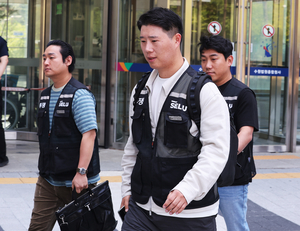
Samsung Electronics' largest labor union announced it will proceed with an 18-day strike starting next Thursday despite management's offer to resume talks without preconditions. The union demands fixed performance bonuses of 15 percent of the semiconductor division's operating profit, while the company proposed maintaining the current incentive system with adjustments to the bonus calculation method.
Samsung Electronics Co.'s largest labor union confirmed on Friday it will move forward with a planned 18-day strike beginning next Thursday, despite the company's proposal to restart negotiations without preconditions. The union, representing around 41,000 workers, insisted its key demand—fixed performance-based bonuses equivalent to 15 percent of the semiconductor division’s operating profit—must be addressed before further talks. Management countered with a proposal to maintain the current excess profit incentive system, allowing the bonus pool to be calculated based on either 10 percent of operating profit or economic value added (EVA), while introducing a special compensation system for flexibility. Government-led mediation talks ended Wednesday without resolution, leaving labor and management divided over bonuses tied to earnings from AI-related semiconductor business. Samsung’s union head, Choi Seung-ho, stated the union would only engage in discussions post-strike, citing constitutional rights. He warned participation could exceed 50,000 workers if the strike proceeds. The strike poses significant economic risks for South Korea, with potential losses reaching up to 100 trillion won ($66.7 billion), according to observers. Samsung reported a record 57 trillion won in first-quarter operating profit, with projections for the full year nearing 300 trillion won. South Korea’s exports hit $219.9 billion in Q1 2026, driven by AI data center demand, with semiconductor exports surging 139 percent year-over-year to $78.5 billion. The government has urged avoiding the strike, citing threats to economic growth. Samsung’s proposal included adjustments to the bonus structure but did not meet the union’s demand for removing payout caps. The dispute centers on aligning incentives with the company’s AI-driven semiconductor growth amid an ongoing memory chip supercycle.
This content was automatically generated and/or translated by AI. It may contain inaccuracies. Please refer to the original sources for verification.