Sanford Underground Facility advances neutrino research
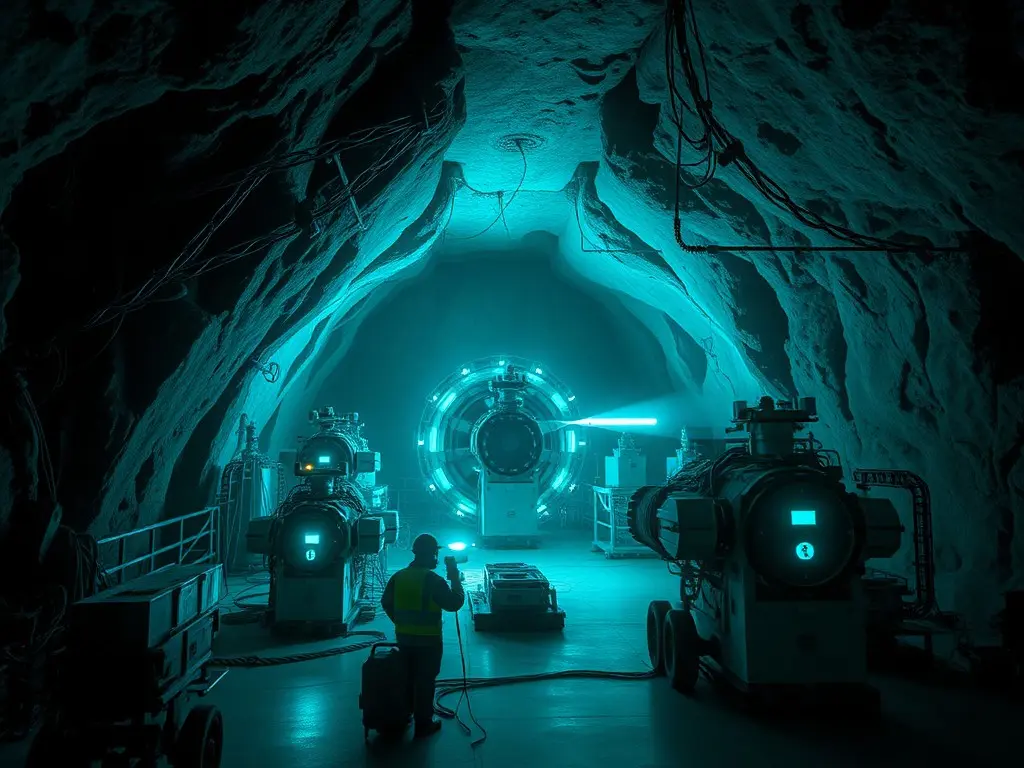
The Sanford Underground Research Facility in Lead, South Dakota, is advancing the Deep Underground Neutrino Experiment (DUNE) with international collaboration, including CERN, to study neutrinos traveling 800 miles from South Dakota to Illinois. The project aims to investigate why matter dominates antimatter in the universe, with construction set to begin in earnest for science operations in the early 2030s.
The Sanford Underground Research Facility in Lead, South Dakota, is progressing toward the installation of the Deep Underground Neutrino Experiment (DUNE). After excavating 800,000 tons of rock and completing infrastructure over two years, the facility is now transitioning to the DUNE setup, with science operations expected in the early 2030s. DUNE will track neutrinos traveling 800 miles underground from Lead to Illinois. Researchers aim to study how neutrinos change during transit, potentially explaining why the universe contains more matter than antimatter. This could address a fundamental question about existence. The project involves over 200 institutions and 1,500 scientists worldwide, including a historic collaboration with CERN, which has invested in a U.S.-based science initiative for the first time. The neutrino beam generated for DUNE will be unique, built on decades of smaller experiments and prototyping. To mark the milestone, scientists and local residents signed the first neutrino beam set to go underground. The facility’s Executive Director, Mike Headley, emphasized the global scale of the collaboration, while LBNF DUNE Project Director Jim Kerby highlighted the experiment’s significance in neutrino research.
This content was automatically generated and/or translated by AI. It may contain inaccuracies. Please refer to the original sources for verification.