School in hot world: what research is saying about children’s health, learning
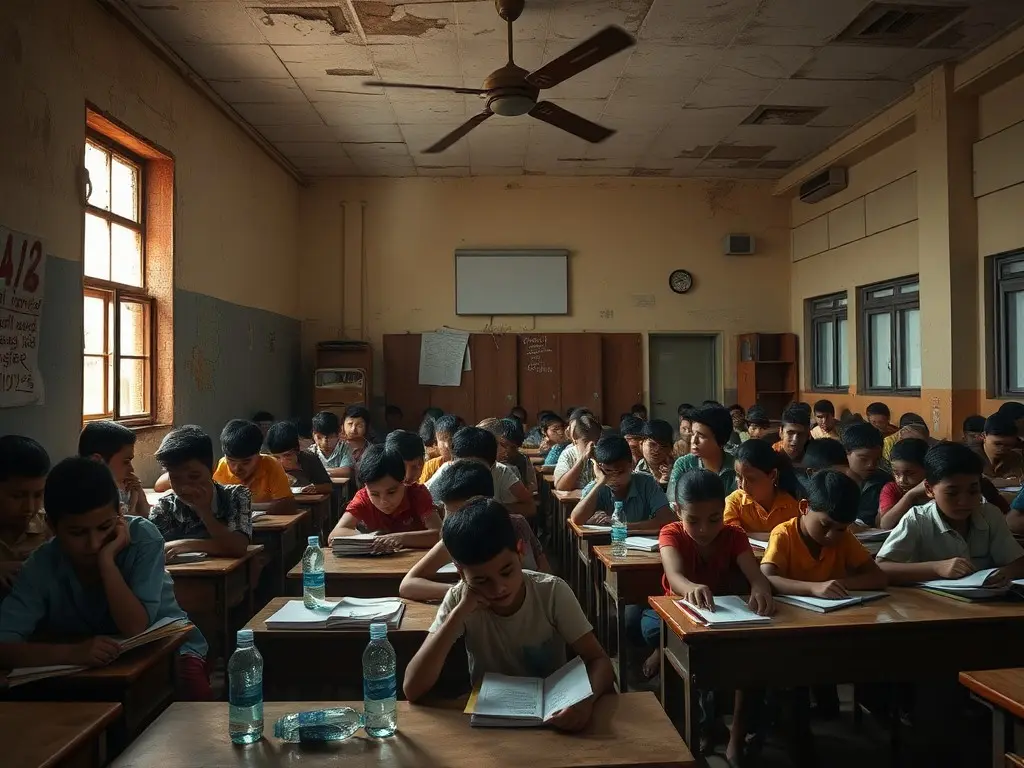
Researchers at the South African Medical Research Council and the University of Johannesburg found that rising temperatures in southern Africa are turning classrooms into dangerously hot environments, harming children’s concentration, academic performance, and physical health, particularly in rural schools where indoor temperatures reach up to 42°C. Studies show increased absenteeism, dehydration, and learning difficulties, with urban schools performing better at temperature regulation but still failing to protect students adequately from extreme heat.
Rising temperatures in southern Africa are turning classrooms into overheated spaces, posing serious risks to children’s health and education. Researchers from the South African Medical Research Council and the University of Johannesburg found that extreme heat in schools—especially those with poor ventilation, metal roofs, and overcrowding—disrupts concentration, memory, and academic performance. Their studies in Gauteng province revealed that over half of temperature and humidity readings exceeded safe levels, with indoor temperatures often higher than outdoor conditions. Children are particularly vulnerable due to their bodies’ limited ability to regulate heat, leading to dehydration, fatigue, and reduced cognitive function. A study led by environmental health researcher Shalin Bidassey-Manilal found that nearly all children in Johannesburg classrooms reported low concentration levels when temperatures rose. Absenteeism also increased significantly when classroom temperatures exceeded 25°C, highlighting the direct impact of heat on attendance and learning. Rural schools face greater risks than urban ones, with indoor temperatures reaching up to 42°C compared to 32°C in urban settings. Urban classrooms were better at maintaining temperatures between 25°C and 28°C, but even these conditions still pose challenges. The findings underscore deepening educational and health inequalities, as poorer communities—especially those in low-cost housing—suffer the most from indoor heat extremes. Current school infrastructure is ill-equipped to handle rising temperatures, with metal roofs, poor insulation, and lack of airflow trapping heat inside. Climate change is worsening heatwaves, making the problem more urgent. Researchers warn that without adaptation, children’s ability to learn, thrive, and stay healthy will continue to decline, disproportionately affecting the most vulnerable populations. The issue extends beyond schools, as government-built low-cost homes also struggle with extreme indoor temperatures. The research emphasizes that climate change is no longer a distant threat but a present reality affecting children’s daily lives. Education systems in southern Africa must prioritize heat-resistant designs and policies to protect students from worsening conditions.
This content was automatically generated and/or translated by AI. It may contain inaccuracies. Please refer to the original sources for verification.