Scientist accidentally finds potential shortcut to Mars
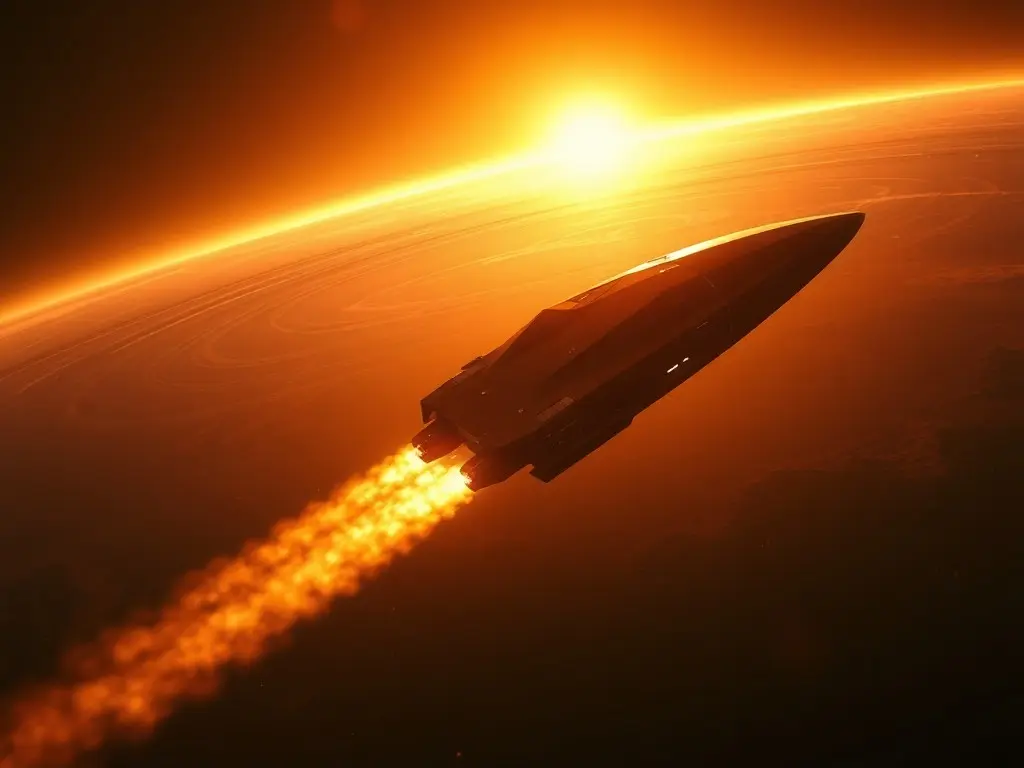
A scientist studying asteroid trajectories accidentally identified a potential 153-day round-trip route to Mars for a 2031 mission, cutting current estimates of nearly three years. The method relies on refined orbital geometry but requires advanced propulsion and landing technologies not yet available.
A researcher studying near-Earth asteroids discovered a potential shortcut to Mars while analyzing early trajectory data for asteroid 2001 CA21. The initial calculations suggested an unusual orbital path crossing Earth and Mars, which later observations dismissed—but the scientist noticed a hidden geometric pattern indicating an ultra-fast route. The proposed method could enable a round-trip Mars mission in as little as 153 days (five months) during the 2031 alignment, compared to current estimates of nearly three years. The mission profile would include a 33-day trip to Mars, a one-month surface stay, and a 90-day return journey. This is significantly shorter than the multi-year missions currently planned, which rely on slower but fuel-efficient transfer orbits. The discovery emerged from studying asteroid trajectories, not Mars mission planning. The original data, later refined, hinted at a geometric shortcut that could reduce travel time if future propulsion systems—like those from SpaceX’s Starship or Blue Origin’s New Glenn—achieve speeds of around 32.5 km/s. However, such speeds would require advanced landing technologies to safely slow down upon arrival at Mars, as current methods couldn’t handle the velocity. While the 34-day extreme case remains impractical with today’s technology, the 2031 mission proposal offers a more feasible alternative. The researchers focused on near-future possibilities, suggesting that even with current limitations, the geometric approach could drastically cut mission duration. The breakthrough underscores how unexpected insights—like those found in discarded asteroid data—can reshape space exploration strategies. The study was published in *Acta Astronautica*, highlighting how serendipitous discoveries can challenge conventional mission planning. NASA’s New Horizons probe, the fastest spacecraft ever launched at 16.26 km/s, serves as a benchmark for the speeds required to make such missions viable. Future advancements in propulsion and landing systems could bring this accelerated Mars travel closer to reality.
This content was automatically generated and/or translated by AI. It may contain inaccuracies. Please refer to the original sources for verification.