Scientists Discover 43-Foot Sea Reptile Twice the Size of a Great White Shark
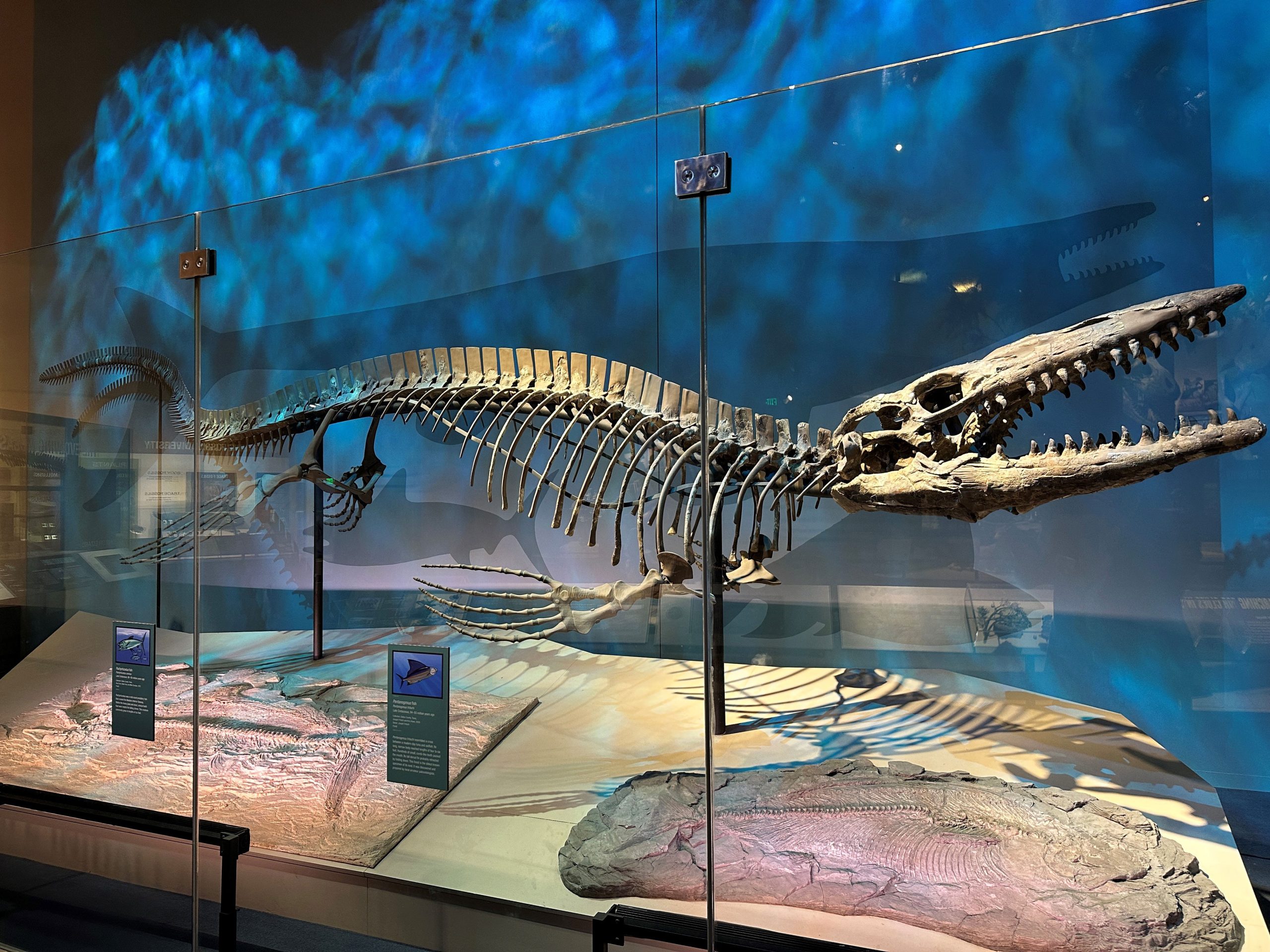
Scientists from the American Museum of Natural History, Perot Museum of Nature and Science, and Southern Methodist University have identified a new mosasaur species, *Tylosaurus rex*, measuring up to 43 feet long, based on fossils found in Texas. The species, which lived around 80 million years ago, exhibits adaptations for powerful predation and evidence of intra-species violence not previously documented in mosasaurs.
A newly identified mosasaur species, *Tylosaurus rex* (T. rex), has been discovered by researchers from the American Museum of Natural History, Perot Museum of Nature and Science in Dallas, and Southern Methodist University. The species, named for its size and dominance, reached lengths of up to 43 feet—roughly twice the length of a great white shark—and lived approximately 80 million years ago in what is now northern Texas. Fossils of the species were found in rocks deposited during a shallow seaway that once covered central North America. The discovery began when lead author Amelia Zietlow, a research associate at the American Museum of Natural History, re-examined a fossil previously misidentified as *Tylosaurus proriger*. Comparing it to the holotype of *T. proriger* at Harvard’s Museum of Comparative Zoology, Zietlow and her team determined the fossil represented a distinct species. Additional specimens from Texas, including those at the Perot Museum, supported this conclusion. The new species is larger than *T. proriger*, with finely serrated teeth and adaptations for stronger jaw and neck muscles. The name *T. rex* honors paleontologist John Thurmond, who first noted the unusual size of tylosaurs from northeast Texas in the late 1960s. The holotype for *T. rex* is a 1979 discovery from near Dallas, displayed at the Perot Museum. Fossil evidence suggests *T. rex* was a formidable predator, with signs of violent injuries, such as a broken jaw in a specimen nicknamed ‘The Black Knight.’ Researchers highlight that *T. rex* was not only significantly larger than previously known mosasaurs but also exhibited traits indicating greater aggression. The study, published in the *Bulletin of the American Museum of Natural History*, redraws the understanding of these ancient marine reptiles and their ecological dominance during the late Cretaceous period.
This content was automatically generated and/or translated by AI. It may contain inaccuracies. Please refer to the original sources for verification.