Scientists grow a bacteria-made “living” supermaterial that could replace plastic
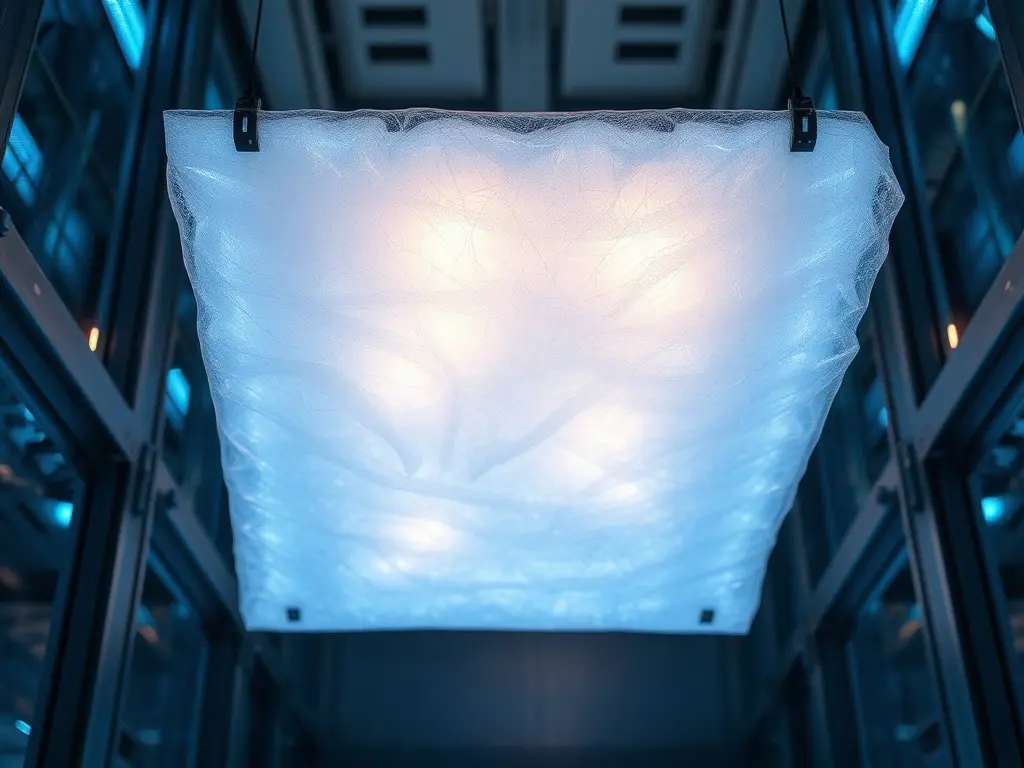
Researchers at Rice University and the University of Houston developed a bacteria-grown supermaterial using aligned cellulose nanofibers, capable of replacing plastic in packaging and electronics. The material is biodegradable, strong enough to withstand 436 megapascals of tensile force, and can dissipate heat three times faster than traditional cellulose when enhanced with boron nitride nanosheets.
Scientists at Rice University and the University of Houston have created a bacteria-made supermaterial that could replace plastic in multiple industries. The breakthrough involves bacterial cellulose—a natural biopolymer produced by bacteria—aligned using a rotating bioreactor to enhance strength and flexibility. Published in *Nature Communications*, the research shows the material can withstand tensile forces of up to 436 megapascals, rivaling metals and glass while remaining lightweight and transparent. The process introduces boron nitride nanosheets to improve performance, making the material dissipate heat three times faster than traditional cellulose. Lead author M.A.S.R. Saadi explained that the bacteria’s movement is controlled to align fibers in a specific direction, boosting structural integrity. This innovation addresses plastic pollution by offering a biodegradable, non-toxic alternative to petroleum-based plastics, which decompose into microplastics and emit harmful chemicals like BPA and phthalates. The material’s potential applications include food packaging, flexible electronics, textiles, thermal management systems, and energy storage devices. Muhammad Maksud Rahman, an assistant professor at the University of Houston, emphasized its versatility, combining strength, lightweight properties, and eco-friendliness. The research aligns with global efforts to reduce reliance on fossil fuel-based plastics through scalable, bio-based solutions. A key advantage is the material’s potential for industrial scalability, as it can be produced in a single manufacturing step. While concerns remain about economic viability compared to cheaper plastics, researchers believe this breakthrough could mark a significant step toward sustainable manufacturing. The discovery highlights the growing importance of biodegradable alternatives in addressing environmental challenges.
This content was automatically generated and/or translated by AI. It may contain inaccuracies. Please refer to the original sources for verification.