Scientists Uncover the Hidden Process That Can Turn Magma Into an Explosive Force
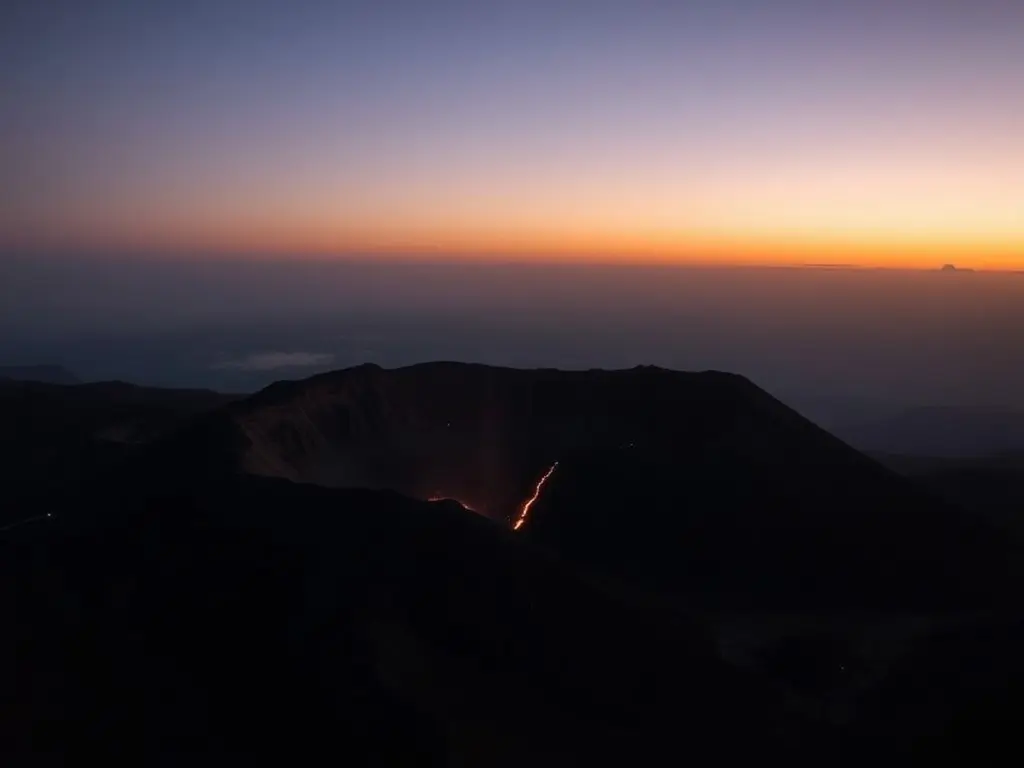
A team led by the University of Manchester discovered that superheated magma can delay crystallization for over eight hours, altering eruption explosiveness, using data from the 2021 Tajogaite eruption on La Palma. Their findings, published in *Nature Communications*, suggest thermal history plays a critical role in determining whether eruptions produce violent lava fountains or gentle lava flows.
Scientists at the University of Manchester have identified a key factor influencing volcanic eruption intensity: the thermal history of magma. Their research, published in *Nature Communications*, reveals that superheated magma—heated beyond the point where crystals can form—remains crystal-free far longer than expected, drastically altering eruption behavior. The study focused on magma from the 2021 Tajogaite eruption on La Palma in Spain’s Canary Islands. Using synchrotron X-ray microtomography at Diamond Light Source and lab experiments, the team observed that non-superheated magma began crystallizing within 20 minutes, while superheated magma delayed crystallization for over eight hours. This delay keeps magma fluid longer, enabling rapid ascent and potentially explosive eruptions with intense lava fountaining. Lead author Dr. Barbara Bonechi explained that crystallization dynamics significantly impact magma viscosity, which controls eruption style. The team’s lab recreations of volcanic conditions showed that slower crystallization allows gases to escape more gradually, favoring gentler, effusive eruptions. Conversely, rapid ascent with delayed crystallization can trap gases, increasing explosivity. Computer models incorporating these findings demonstrated how thermal history affects magma behavior during ascent. The research suggests that pre-eruptive heating—previously overlooked—may be as critical as magma chemistry or gas content in predicting eruption styles. Co-author Dr. Margherita Polacci noted that these insights could improve volcanic hazard assessments by refining interpretations of monitoring data. The discovery highlights the importance of studying magma’s thermal evolution before eruptions. By observing crystallization in real time, the team provided new tools for understanding why similar magmas produce vastly different eruption outcomes. Future work may integrate these findings into volcanic forecasting models to enhance early warning systems.
This content was automatically generated and/or translated by AI. It may contain inaccuracies. Please refer to the original sources for verification.