Scientists Unlock Hidden Secrets of 2,300-Year-Old Mummies Using Cutting-Edge CT Scanner
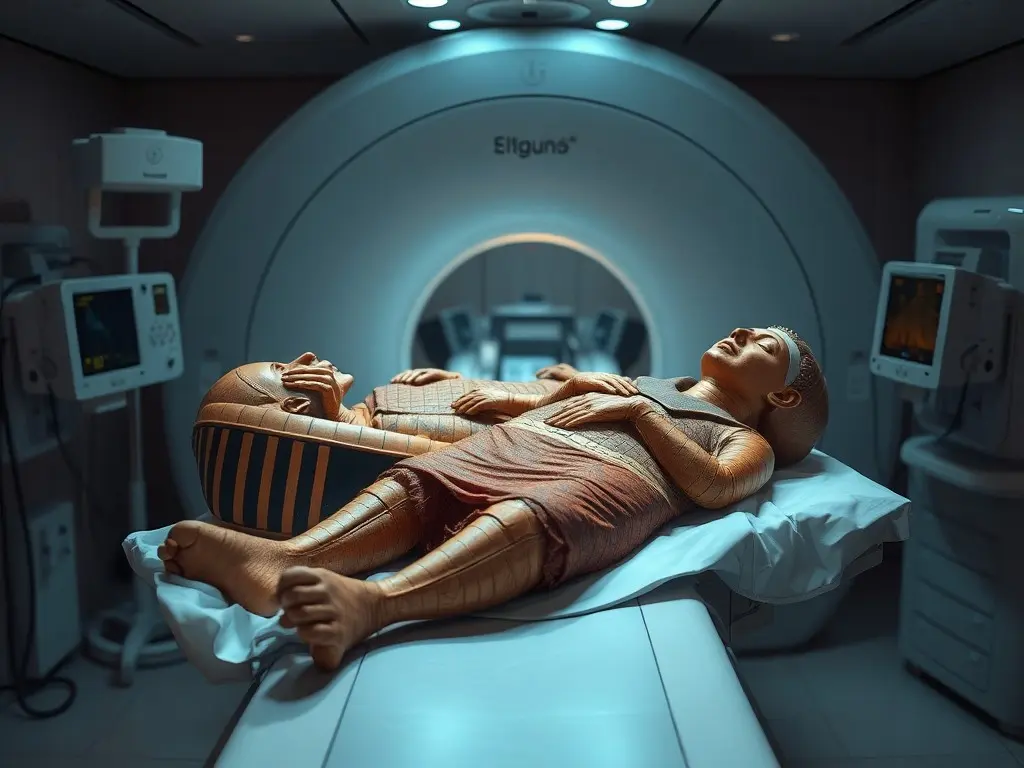
Scientists at Semmelweis University's Medical Imaging Center used a cutting-edge CT scanner to study 2,300-year-old Egyptian mummies, revealing new insights into their health and mummification methods. The high-resolution scans provided detailed images of the mummies' internal structure, allowing researchers to refine age estimates and potentially diagnose conditions such as osteoporosis.
Researchers at Semmelweis University's Medical Imaging Center used a state-of-the-art CT scanner to examine Egyptian mummies from the Semmelweis Museum of Medical History. The scans, conducted at night outside regular patient hours, produced highly detailed images of the mummies' internal structure. The mummies, which date back over 2,300 years, were previously studied using conventional CT scans, but the new technology revealed previously unseen details. The images suggested that one individual may have had osteoporosis, and provided a closer look at teeth and skull sutures in two mummified heads. The scans also revealed multiple layers of wrapping and their structural differences, which could support further historical and technical studies. The researchers are now carrying out a detailed review of the images to yield new, scientifically valid findings regarding the remains.
This content was automatically generated and/or translated by AI. It may contain inaccuracies. Please refer to the original sources for verification.