SEMO’s School for Young Children reaccredited
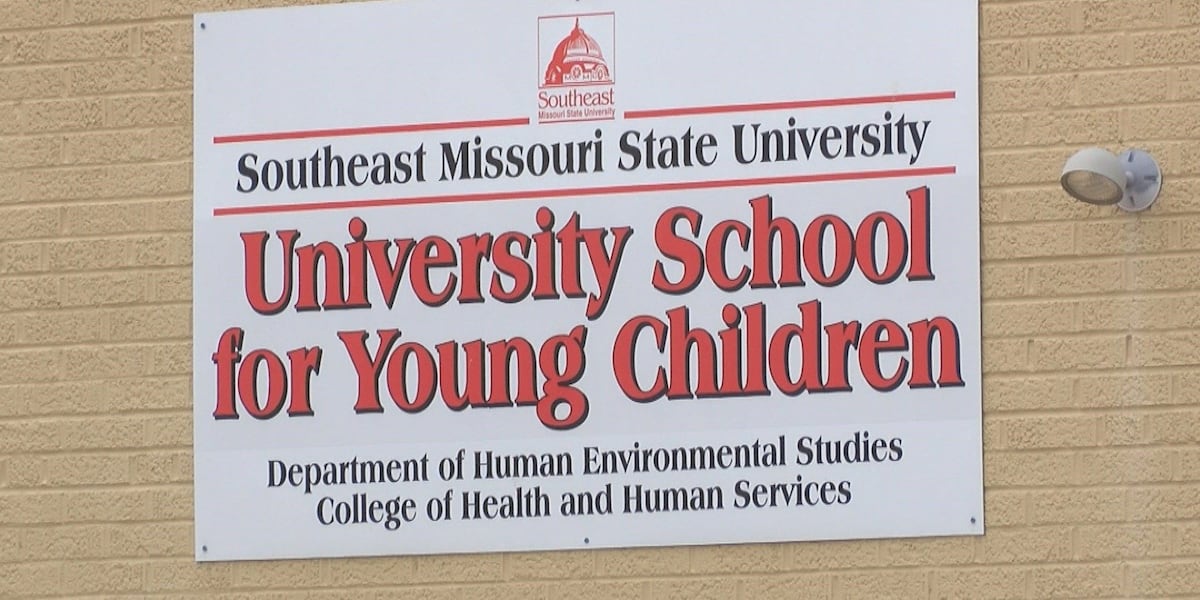
The University School for Young Children at Southeast Missouri State University (SEMO) has been reaccredited by the National Association for the Education of Young Children (NAEYC), a mark of quality ensuring high-standard early education in the region. This reaccreditation, valid for five years, reflects continuous improvement in curriculum, safety, staff qualifications, and leadership, while also serving as a training site for future educators.
The University School for Young Children at Southeast Missouri State University (SEMO) has received reaccreditation from the National Association for the Education of Young Children (NAEYC). This recognition, valid for five years, signifies adherence to national standards in curriculum, health and safety, family engagement, staff qualifications, and leadership. SEMO officials emphasize that the reaccreditation ensures high-quality early education for families in southeast Missouri and the broader Heartland region. The NAEYC accreditation process is rigorous, evaluating programs against established benchmarks over multiple years. The school’s reaccreditation cycle occurs every five years, with preparation beginning well in advance. Interim director Kim Rueseler stated that the achievement reflects sustained effort across every classroom and educator at the school. SEMO highlights that this accreditation strengthens early learning options in southeast Missouri, an area with limited NAEYC-accredited programs. The University School for Young Children is the only NAEYC-accredited early childhood program between St. Louis and Nashville, as well as the only one in southeast Missouri. Since 2006, the school has maintained continuous accreditation. Beyond serving young children, the center functions as a hands-on training site for SEMO students pursuing education careers. This dual role allows future teachers to gain practical experience while contributing to the school’s high standards. The reaccreditation underscores SEMO’s commitment to both excellence in early education and preparing the next generation of educators.
This content was automatically generated and/or translated by AI. It may contain inaccuracies. Please refer to the original sources for verification.