Shark Tank mogul says data center won't 'drain the Great Salt Lake'
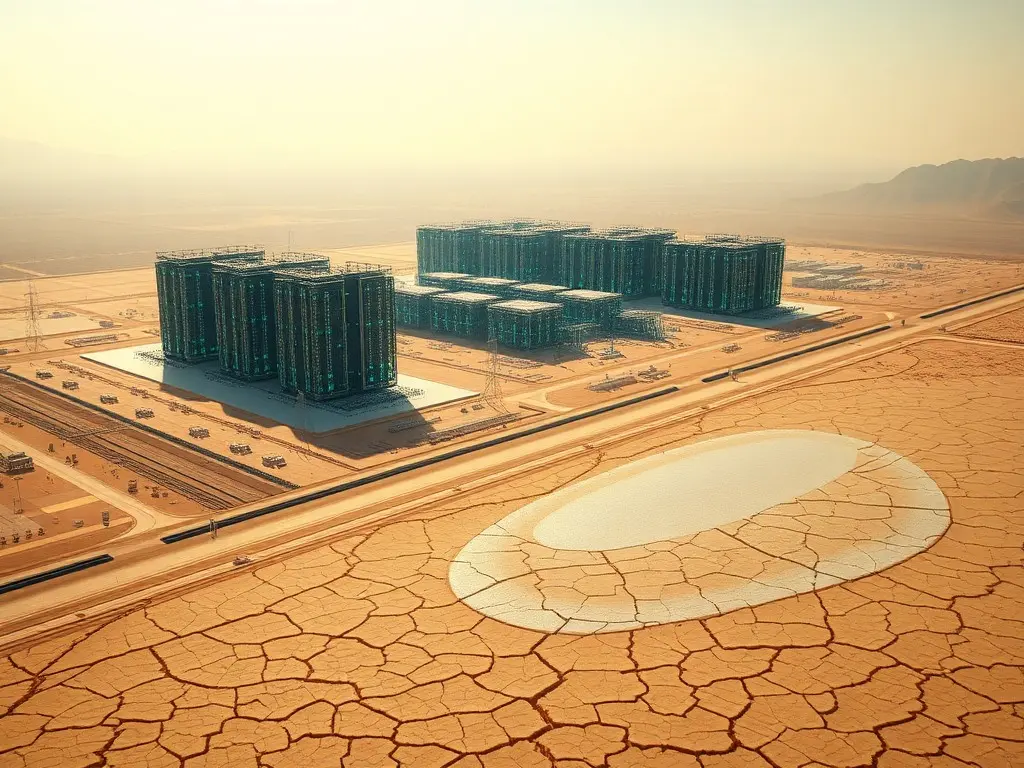
Shark Tank investor Kevin O'Leary defended the proposed 40,000-acre Stratos data center in Utah’s Box Elder County, dismissing environmental concerns about heat emissions and water use while emphasizing a U.S. race with China in AI infrastructure. He claimed the project, approved by local and state officials, aims to accelerate AI development despite warnings from experts about potential ecological impacts like temperature spikes and heat equivalent to '23 atomic bombs' daily.
Kevin O'Leary, a star on *Shark Tank* and developer of the proposed Stratos data center in Utah’s Box Elder County, defended the project in a CNN interview, rejecting claims that it would harm the Great Salt Lake or degrade air quality. The 40,000-acre facility, approved by the Box Elder County Commission and backed by Governor Spencer Cox, faces criticism from Utah State University physics professor who warned of heat emissions comparable to '23 atomic bombs' per day and localized temperature increases of 12°F at night. O'Leary insisted the project was proceeding 'slowly and incrementally' despite earlier statements to the Utah Military Installation Development Authority (MIDA) board, where he described a rushed timeline to outpace China’s AI infrastructure growth. He claimed China had built 400 gigawatts of power for AI centers in the past 24 months, framing the U.S. as falling behind in the global AI race. The developer thanked Cox and Senate President Stuart Adams for approving the project, calling the acceleration 'unprecedented.' Cox later pledged to implement protections for state resources, including water, air, and energy, though environmental concerns remain unresolved. O'Leary’s defense hinged on national security, arguing that proving U.S. leadership in AI would deter China from surpassing American technological advancements. Critics, including local officials and experts, continue to question the project’s ecological risks, particularly its potential to strain regional water supplies and exacerbate heat pollution. The Stratos data center’s approval follows a contentious public debate, with supporters prioritizing economic and geopolitical benefits over environmental warnings.
This content was automatically generated and/or translated by AI. It may contain inaccuracies. Please refer to the original sources for verification.