Singapore robotic-hands firm Sharpa joins Nvidia and Unitree on humanoid robot project
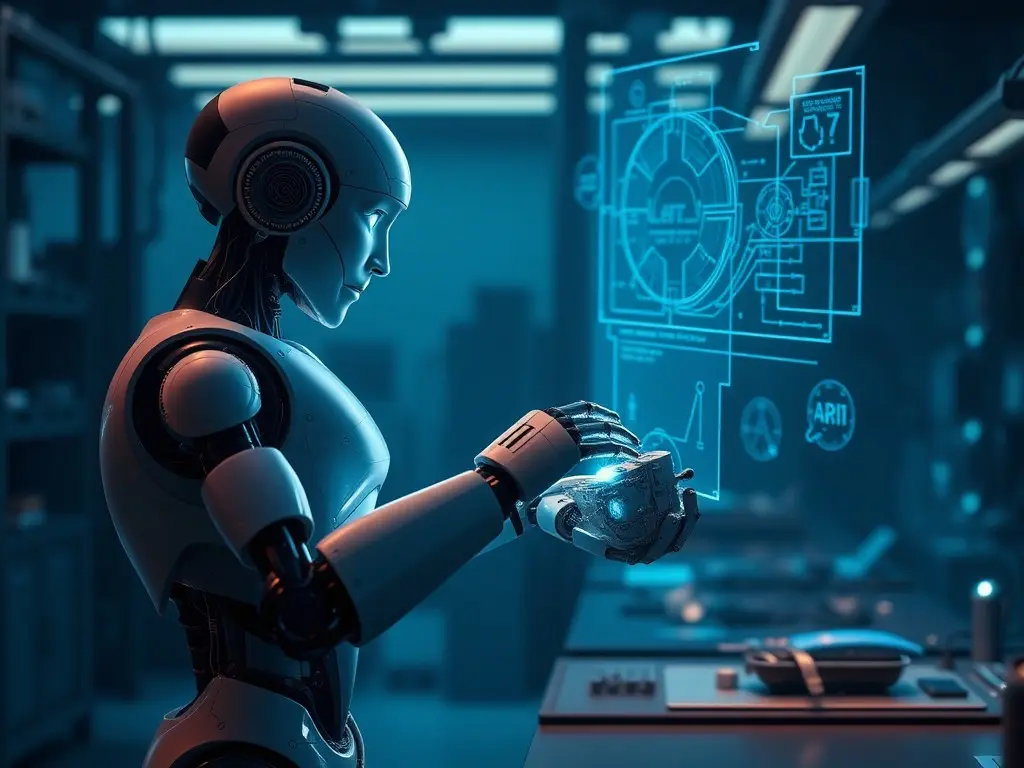
Singapore-based robotic-hands firm Sharpa has partnered with Nvidia and Chinese robot maker Unitree to develop humanoid robots for researchers, set to launch in late 2026. The collaboration combines Sharpa’s 22-degrees-of-freedom hands, Unitree’s H2 humanoid body, and Nvidia’s Jetson Thor AI brain to enable precise tasks like assembly or medical procedures.
Singapore’s Sharpa, a robotic-hands company, has joined forces with Nvidia and Unitree to create humanoid robots for research purposes. The partnership was announced by Nvidia CEO Jensen Huang during his keynote at Computex in Taipei on June 1, targeting a late 2026 release for researchers. The robots will feature Sharpa’s hands, designed to mimic human dexterity with 22 degrees of freedom, paired with Unitree’s 1.83m-tall, 68kg H2 humanoid body and Nvidia’s Jetson Thor AI brain. The collaboration aims to simplify robotics research by providing a unified hardware and software platform, eliminating the need for labs to assemble disparate components. Nvidia’s physical AI simulation VP Rev Lebaredian emphasized that Sharpa’s hands enable precise training for tasks requiring manipulation, such as assembly or medical procedures. Researchers will gain access to Nvidia’s AI models, simulation tools, and software for training and operating the robots. Sharpa’s hands, previously showcased at CES 2026 for tasks like blackjack dealing and pinwheel assembly, bring tactile sensitivity to robotics. The company, founded in 2024, operates in Shanghai and California, having previously collaborated with Nvidia on robotics foundational models. Huang highlighted the economic potential of humanoid robots, describing them as a multitrillion-dollar opportunity for industries like manufacturing and healthcare. The robots are designed to accelerate research by providing a ready-to-use platform, reducing the time labs spend on basic hardware integration. Nvidia’s Lebaredian noted that current research often involves piecing together fragmented systems, creating inefficiencies. The partnership aims to streamline this process, allowing researchers to focus on advanced applications like precise assembly or patient care. The humanoid robots will combine Sharpa’s hands, Unitree’s H2 body, and Nvidia’s AI capabilities, offering researchers a comprehensive tool for training robots in real-world tasks. The collaboration underscores the growing convergence of robotics, AI, and hardware innovation in advancing automation across industries.
This content was automatically generated and/or translated by AI. It may contain inaccuracies. Please refer to the original sources for verification.