SpaceX aims to raise record $75 bn in stock market debut
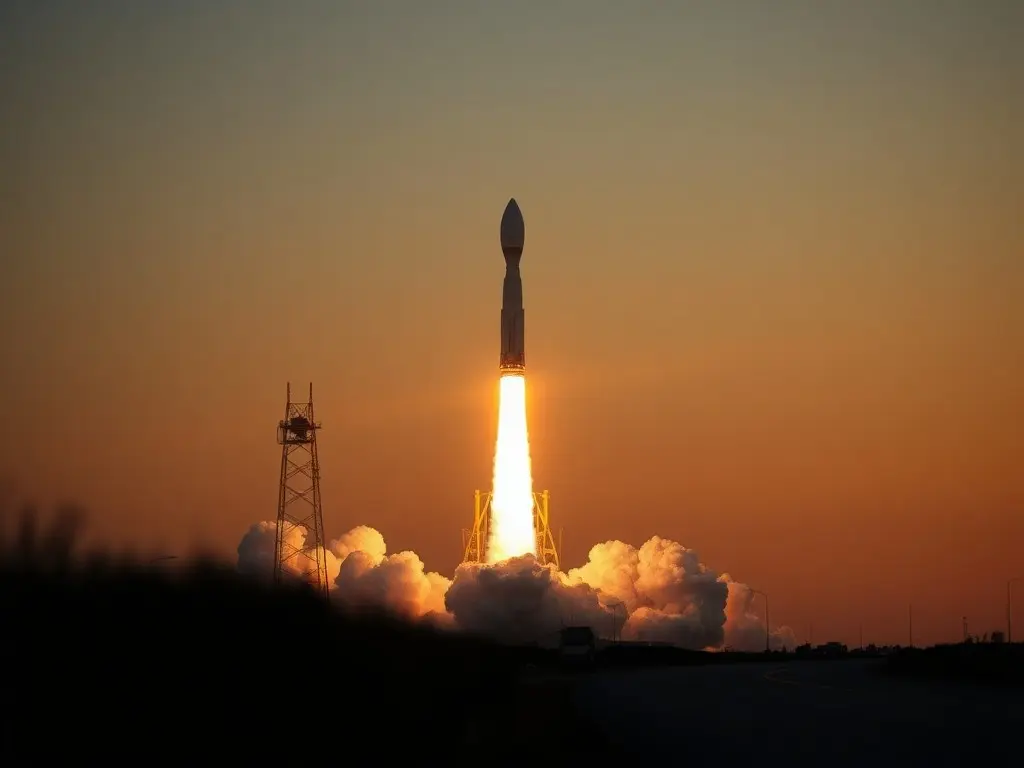
SpaceX plans to raise a record $75 billion in an initial public offering (IPO), valuing the company at $1.765 trillion, according to a regulatory filing, which would make Elon Musk the world’s first trillionaire if successful. The company, led by Musk, also highlighted its role in NASA’s Artemis program, its Starlink satellite internet expansion, and its long-term ambitions for Mars colonization, though public shares will initially be limited to institutional investors and wealthy individuals.
SpaceX, the rocket and satellite company founded by Elon Musk in 2002, filed plans to raise approximately $75 billion in a record initial public offering (IPO), valuing the company at $1.765 trillion. The IPO will involve selling 555,555,555 shares at an initial price of $135 each, surpassing the previous fundraising record held by Saudi Aramco’s $25.6 billion IPO in 2019. The company’s valuation reflects its ambitious projects, including a planned 2028 lunar landing mission for NASA’s Artemis program, where SpaceX is developing lunar landers alongside competitor Blue Origin. NASA aims to test an in-orbit rendezvous between its spacecraft and SpaceX’s landers in 2027, paving the way for crewed missions. SpaceX also continues to expand its Starlink satellite internet service, now serving 10.3 million subscribers across 164 markets, including Ukrainian troops and Iranian protesters. Beyond space exploration, SpaceX’s IPO could consolidate Musk’s business empire, with analysts predicting a potential merger with Tesla in 2027. The two companies are already collaborating on projects like the Terafab semiconductor plant. Musk’s long-term vision includes colonizing Mars, with a bonus tied to establishing a population of one million on the planet. The IPO filing also notes that Musk will retain over 80% voting control, ensuring his dominance over the company’s direction. However, public shares will initially be restricted to institutional investors and wealthy individuals, limiting immediate gains for retail investors. The valuation reflects optimism about SpaceX’s future rather than its current financial performance, driven by its high-risk, high-reward space ambitions. SpaceX has already made history in private spaceflight, becoming the first company to dock a private spacecraft with the International Space Station (ISS) in 2012 and later launching crewed missions in 2020, ending NASA’s reliance on Russia for astronaut transport.
This content was automatically generated and/or translated by AI. It may contain inaccuracies. Please refer to the original sources for verification.