SpaceX completes Starship mission with some glitches
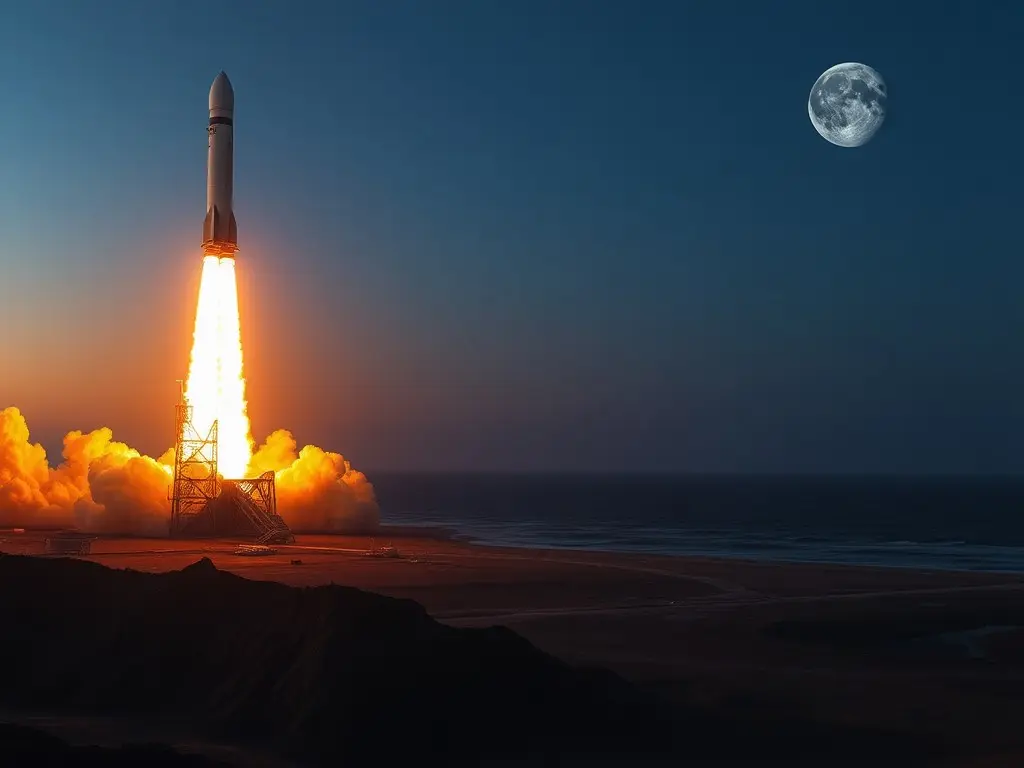
SpaceX successfully launched its third-generation Starship rocket from Texas, completing a global test flight despite engine issues and a planned fiery re-entry in the Indian Ocean. The mission marked progress toward NASA’s Artemis program, with Administrator Jared Isaacman praising Starship’s role in future lunar missions, including a potential 2028 moon landing." "article": "SpaceX’s third-generation Starship rocket, the V3 model, completed its debut test flight from Starbase in southern Texas on Thursday, following a delayed launch due to pad issues. The 124-meter rocket carried 20 mock Starlink satellites, releasing them mid-flight during an hour-long journey that stretched halfway around the world. Though some engines failed during the booster’s controlled return, the spacecraft reached its target near the Indian Ocean before intentionally burning up upon re-entry—a planned outcome for this test. The launch occurred two days after SpaceX CEO Elon Musk announced plans to take the company public. NASA Administrator Jared Isaacman attended the event, calling the mission a critical step toward lunar missions under the Artemis program. NASA’s Artemis III mission, scheduled for next year, will test docking procedures between the Orion capsule and Starship or Blue Origin’s Blue Moon lander in Earth orbit. Starship’s latest design features upgrades including larger grid fins for steering, a reinforced fuel line equivalent in size to SpaceX’s Falcon 9 booster, and enhanced navigation systems. The rocket also includes docking cones for future crewed missions to the moon, where NASA aims to establish a base near the lunar south pole by 2028. Artemis IV, targeting a crewed moon landing as early as 2028, will use either Starship or Blue Moon, depending on readiness and safety. During the flight, two modified Starlink satellites provided live footage of Starship in orbit, marking a first for SpaceX. Despite engine troubles, the mission demonstrated progress toward Musk’s long-term goal of making Starship operational for Mars missions. The test follows October’s final flight of the previous Starship model, reinforcing SpaceX’s rapid iteration process.
SpaceX’s third-generation Starship rocket, the V3 model, completed its debut test flight from Starbase in southern Texas on Thursday, following a delayed launch due to pad issues. The 124-meter rocket carried 20 mock Starlink satellites, releasing them mid-flight during an hour-long journey that stretched halfway around the world. Though some engines failed during the booster’s controlled return, the spacecraft reached its target near the Indian Ocean before intentionally burning up upon re-entry—a planned outcome for this test. The launch occurred two days after SpaceX CEO Elon Musk announced plans to take the company public. NASA Administrator Jared Isaacman attended the event, calling the mission a critical step toward lunar missions under the Artemis program. NASA’s Artemis III mission, scheduled for next year, will test docking procedures between the Orion capsule and Starship or Blue Origin’s Blue Moon lander in Earth orbit. Starship’s latest design features upgrades including larger grid fins for steering, a reinforced fuel line equivalent in size to SpaceX’s Falcon 9 booster, and enhanced navigation systems. The rocket also includes docking cones for future crewed missions to the moon, where NASA aims to establish a base near the lunar south pole by 2028. Artemis IV, targeting a crewed moon landing as early as 2028, will use either Starship or Blue Moon, depending on readiness and safety. During the flight, two modified Starlink satellites provided live footage of Starship in orbit, marking a first for SpaceX. Despite engine troubles, the mission demonstrated progress toward Musk’s long-term goal of making Starship operational for Mars missions. The test follows October’s final flight of the previous Starship model, reinforcing SpaceX’s rapid iteration process.
This content was automatically generated and/or translated by AI. It may contain inaccuracies. Please refer to the original sources for verification.