SpaceX Hits Wall Steet With the Biggest IPO in History
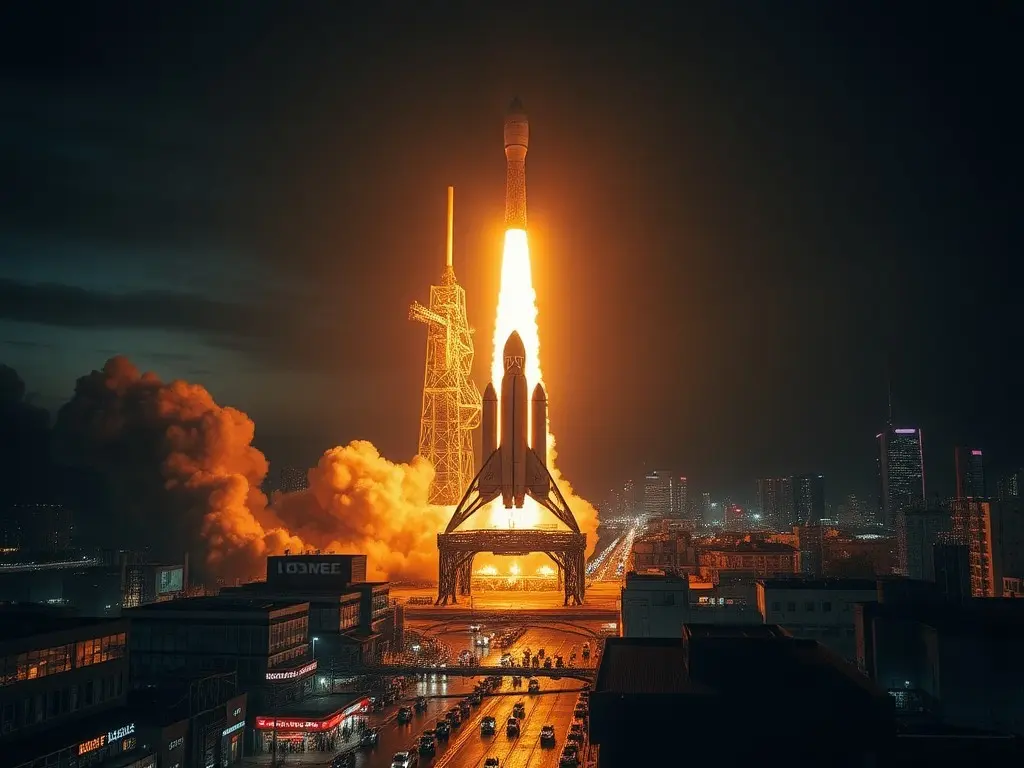
SpaceX priced its IPO at $135 per share, raising $75 billion and achieving a $1.77 trillion valuation, the largest stock debut in history. The company’s shares began trading on Nasdaq under the ticker SPCX, though analysts warn of potential overvaluation and financial risks, including a $4.9 billion net loss in 2025 despite $18.6 billion in revenue.
SpaceX officially launched its initial public offering (IPO) on Nasdaq under the ticker SPCX, pricing shares at $135 each. The company sold 555 million shares, raising $75 billion and securing a valuation of roughly $1.77 trillion—the largest stock debut in history. The IPO positions SpaceX among the world’s most valuable companies and could make Elon Musk the first trillionaire. The move also introduces retail investors to a major AI-focused company outside traditional tech giants, as SpaceX acquired xAI, the parent company of Twitter and the Grok chatbot. Competitors like OpenAI and Anthropic are also planning public listings this year. SpaceX’s IPO filing highlights a $28.5 trillion total addressable market, with $26.5 trillion attributed to AI. To accommodate the massive offering, Wall Street adjusted rules, allowing faster inclusion in major indexes like Nasdaq and FTSE Russell. This could force index-tracking funds to buy SpaceX shares, indirectly exposing investors to the company. However, critics question the valuation, citing SpaceX’s $4.9 billion net loss in 2025 despite $18.6 billion in revenue. Morningstar analysts estimate the stock is worth about $63 per share, less than half its IPO price. S&P Dow Jones Indices confirmed SpaceX will not be fast-tracked into the S&P 500, easing concerns about forced inclusion in retirement funds. The IPO aims for retail investors to make up 30% of the offering, above the typical 10% seen in such debuts. Trading began after 10 AM on Friday, with market reactions closely watched due to the unprecedented scale of the listing.
This content was automatically generated and/or translated by AI. It may contain inaccuracies. Please refer to the original sources for verification.