SpaceX is about to launch tallest and most powerful rocket in history
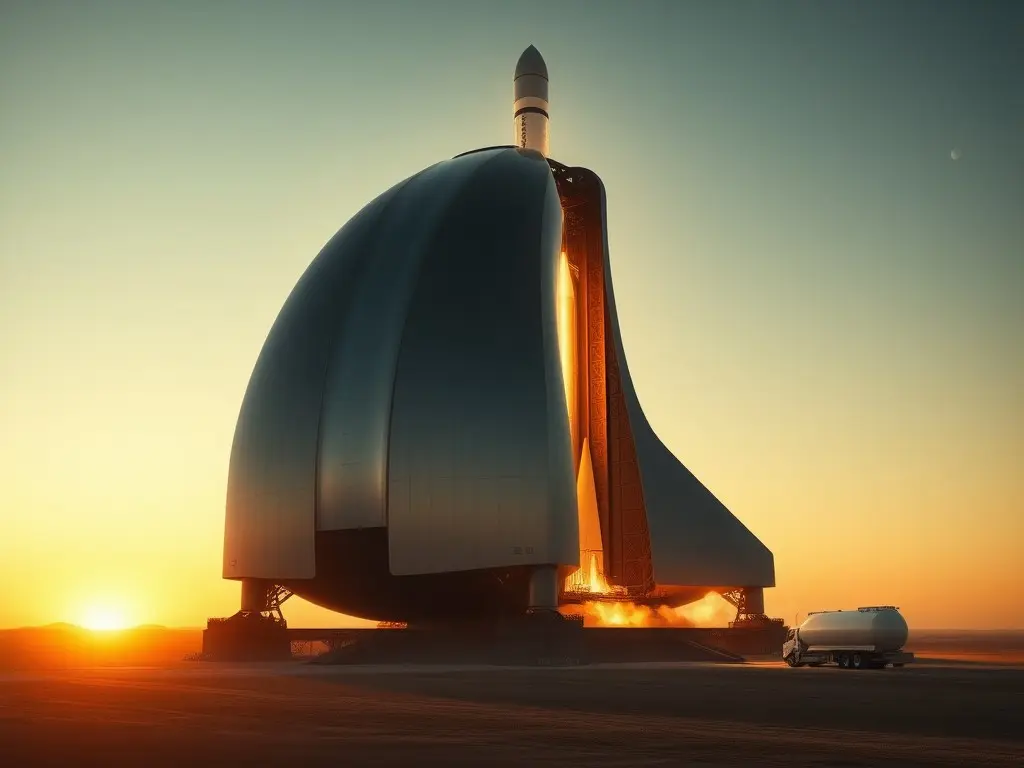
SpaceX’s twelfth Starship test flight, scheduled for as soon as May 19, will launch the tallest (124 meters) and most powerful (75,000 kilonewtons thrust) rocket in history from Texas, featuring upgraded Super Heavy and Starship stages with version 3 Raptor engines. NASA relies on Starship for its Artemis moon-landing program, with Artemis III planned to use SpaceX’s lander alongside Blue Origin’s, aiming for a crewed lunar return by 2028.
SpaceX is preparing for its twelfth Starship test flight, targeting launch as early as May 19 from its Starbase site in Boca Chica, Texas. The upgraded rocket, featuring version 3 models of both the Super Heavy booster and Starship upper stage, will stand 124 meters tall—surpassing NASA’s Space Launch System (SLS) at 98 meters and the Saturn V’s 111 meters. With 75,000 kilonewtons of thrust, nearly double SLS’s 39,000 kilonewtons, it will become the most powerful rocket ever launched, according to SpaceX. The Super Heavy booster now uses three enlarged grid fins (50% larger than before) for atmospheric steering, while Starship incorporates a larger propellant tank, in-orbit refueling capabilities, and improved heat-resistant tiles for re-entry. These changes follow extensive revisions since the last test in October 2023, with version 3 Raptor engines—previously tested only in limited capacity—powering both stages. NASA is closely monitoring the test, as Starship is critical to its Artemis program. A recent NASA document confirms Artemis III will use SpaceX’s lunar lander (alongside Blue Origin’s) to return astronauts to the moon’s surface by 2028, following the uncrewed Artemis I and crewed Artemis II missions. The lander will rendezvous with an Orion spacecraft in low Earth orbit before descending to the lunar surface. SpaceX’s iterative ‘fail-fast’ approach has seen six successful and five failed test flights to date. Despite challenges, experts like Peter Shaw of Kingston University London remain confident in SpaceX’s ability to meet Artemis deadlines. Alistair John of the University of Sheffield noted the rocket’s peak power exceeds Germany’s total electricity generation, underscoring its unprecedented scale. The flight will debut a newly designed launch pad at Starbase, adding to the stakes. Neither SpaceX nor NASA provided comment on the upcoming test, but the mission’s success is pivotal for both commercial space ambitions and NASA’s lunar exploration timeline.
This content was automatically generated and/or translated by AI. It may contain inaccuracies. Please refer to the original sources for verification.