SpaceX Starship test flight succeeds despite engine failures
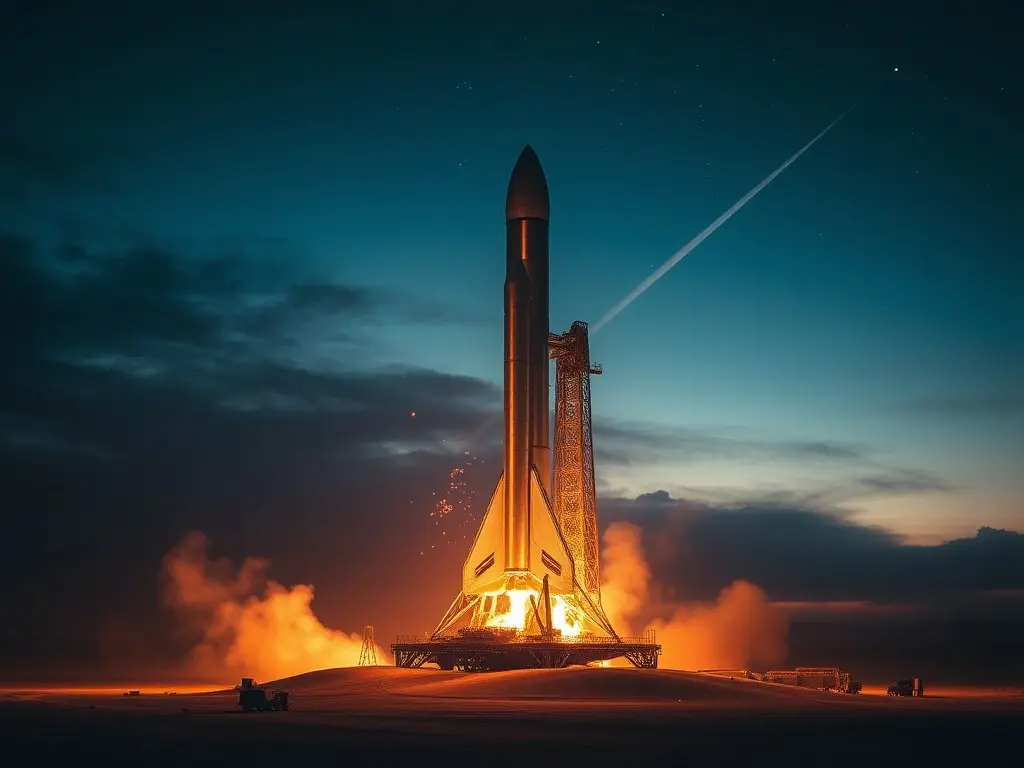
SpaceX's 12th Starship test flight from Starbase, Texas, successfully deployed dummy Starlink satellites into orbit despite engine failures and booster issues during a flight marred by propulsion system malfunctions. The mission revealed critical engineering gaps, raising concerns about NASA’s 2028 lunar mission timeline and the rocket’s readiness for fully reusable orbital missions as SpaceX prepares for its $75 billion IPO.
SpaceX’s 12th Starship test flight achieved a partial success on Friday, deploying dummy Starlink satellites into orbit from Starbase, Texas, but exposed significant engineering challenges ahead of its planned $75 billion public market debut. The rocket lifted off at 6:30 PM ET and reached Mach 7 before splashing down in the Indian Ocean. However, the Super Heavy first stage failed shortly after separation, and engine relight issues caused damage to the booster. The upper stage tipped over and exploded upon impact, though this outcome was partially anticipated. Despite the setbacks, the mission demonstrated Starship’s ability to release mock satellites, a key capability for scaling Starlink’s global internet constellation. SpaceX deployed over 3,000 satellites in 2024 alone using Falcon 9 rockets, and Starship is designed to accelerate this expansion by carrying far greater payloads per launch. The test follows a seven-month pause in flights after explosions in early 2025 disrupted air traffic near the launch site. NASA Administrator Jared Isaacman attended the launch as a symbolic gesture of confidence, but propulsion failures now cast doubt on SpaceX’s ability to meet aggressive timelines for lunar missions and investor expectations. Starship’s revised engines fell short of meeting propulsion benchmarks needed for safe orbital missions and landings, raising concerns about its readiness for NASA’s Artemis program, which aims to return astronauts to the Moon by 2028. The company’s IPO filing highlights Starship’s goal of delivering 100 metric tons to orbit in a fully reusable configuration, though this test did not fully validate that capability. With public funding and investor scrutiny looming, SpaceX must address these technical hurdles to ensure Starship meets its ambitious milestones.
This content was automatically generated and/or translated by AI. It may contain inaccuracies. Please refer to the original sources for verification.