SpaceX’s money-losing rockets are biggest asset in AI dream
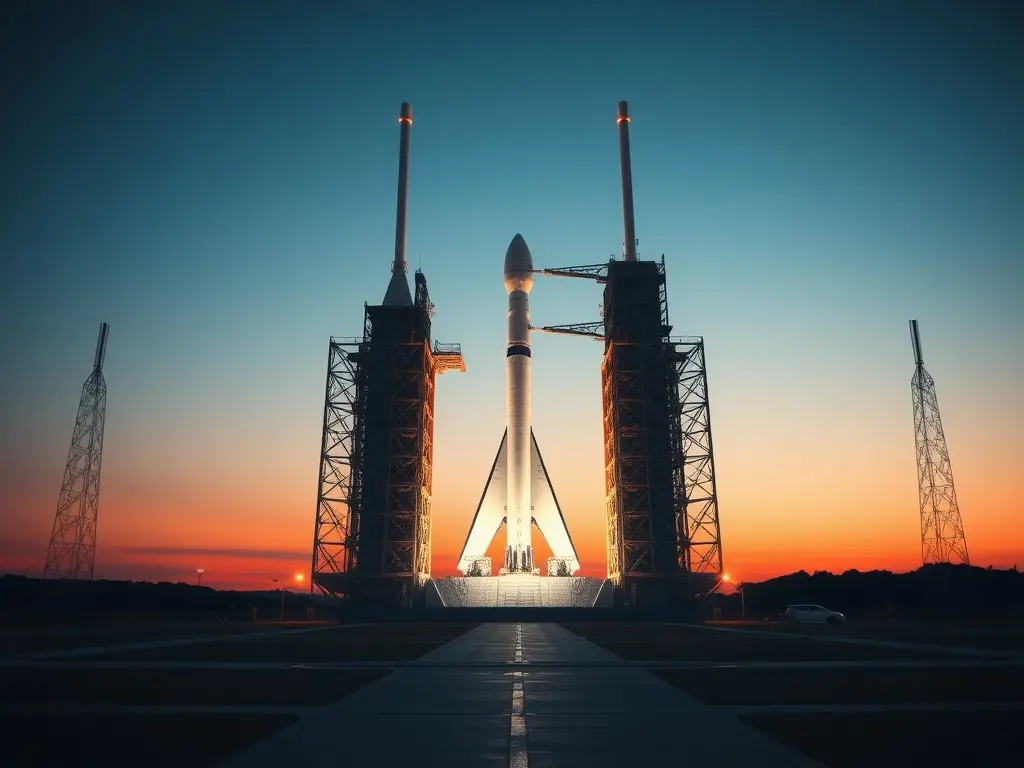
SpaceX’s IPO prospectus revealed its launch business generated only $4.1 billion in revenue in 2025 while losing money, despite being the backbone of its dominance in the heavy-lift launch market. The company’s future growth hinges on Starlink and potential AI data centers, with the upcoming Starship test flight critical to unlocking these ambitions and securing investor confidence.
SpaceX’s IPO filing highlighted a stark contrast between its modest launch revenue and its ambitious AI and telecommunications goals. The company’s launch business, which made it a global leader, brought in just $4.1 billion last year while operating at a loss—a far cry from its $26.5 trillion potential market valuation tied to AI and Starlink. Despite this, launch remains a competitive advantage, enabling SpaceX to dominate the heavy-lift market and secure contracts from the US government, NASA, and the Pentagon. The upcoming Starship test flight, set for as early as Friday evening, is pivotal for SpaceX’s future. Starship will serve as the foundation for expanding Starlink and deploying orbital AI data centers, making its success essential to Elon Musk’s long-term vision. SpaceX President Gwynne Shotwell noted that Starlink missions now account for nearly 75% of Falcon 9 launches, with the company acting as its own largest customer. Starlink’s revenue surged to $11.4 billion in 2025, up from $7.6 billion the prior year, outpacing launch earnings. The Falcon 9 fleet, which SpaceX pioneered for reusability, remains critical to deploying over 10,000 Starlink satellites in low-Earth orbit. However, launch alone cannot sustain SpaceX’s growth, as competitors like Rocket Lab and Firefly Aerospace are diversifying into satellite manufacturing and space communications. Analysts emphasize that SpaceX’s past innovations—like revolutionizing the launch industry—will attract future investors. Chad Anderson of Space Capital called launch a ‘competitive advantage’ but stressed that Starlink and AI ventures are the real revenue drivers. Shahin Farshchi of Lux Capital highlighted SpaceX’s ability to create new markets, a trait that sets it apart from traditional aerospace firms. With Starship’s debut looming, SpaceX faces pressure to prove its reliability. The rocket’s success will determine whether the company can transition from launch dominance to AI and orbital infrastructure leadership. For now, its Falcon 9 fleet ensures it remains the world’s primary launch provider, but Starlink and Starship are the keys to its next phase.
This content was automatically generated and/or translated by AI. It may contain inaccuracies. Please refer to the original sources for verification.