SpaceX's next-generation Starship V3 rocket makes maiden flight from Texas
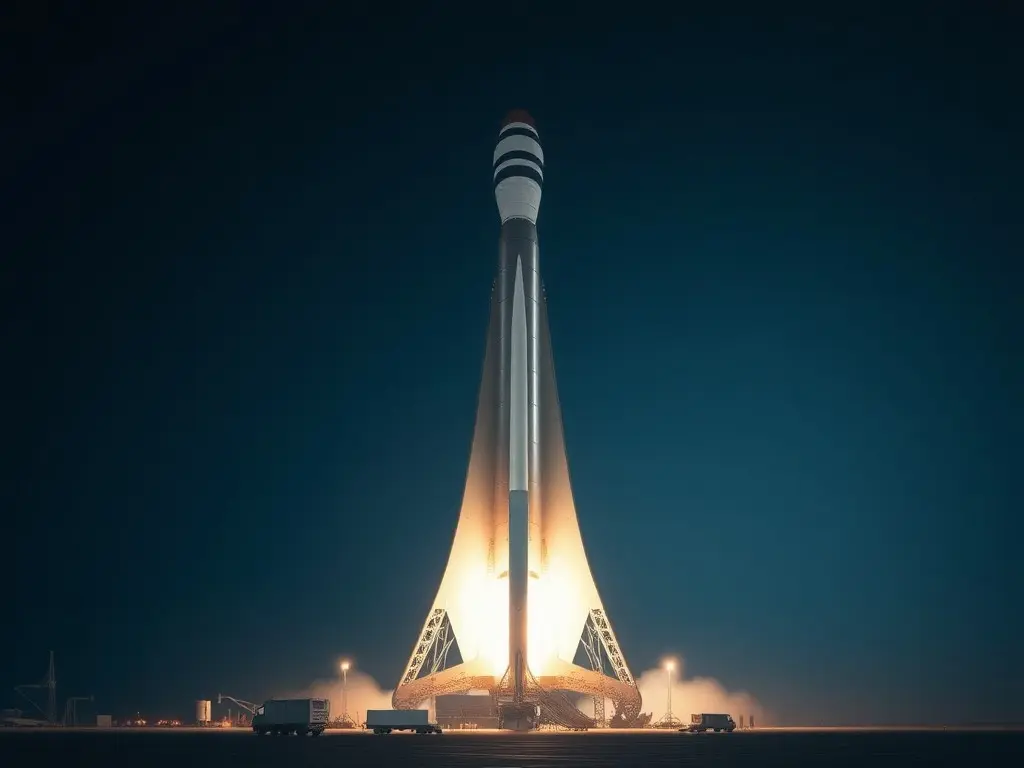
SpaceX’s third-generation Starship V3 rocket completed its maiden flight from Boca Chica, Texas, on May 22, deploying 20 simulated Starlink satellites and two modified Starlink satellites while the Super Heavy booster experienced engine issues and struck the Gulf of Mexico. NASA and SpaceX are advancing plans for Starship’s first launch from Florida’s Kennedy Space Center by year-end, aiming to support the Artemis moon program as a crewed lunar lander." "article": "SpaceX successfully launched its next-generation Starship V3 rocket and Super Heavy booster from Boca Chica, Texas, on May 22, marking the system’s first full test flight. The 407-foot-tall rocket lifted off at 6:30 p.m. EDT and reached an altitude of about 115 miles before deploying a mechanical payload called the 'PEZ dispenser,' which released 20 simulated Starlink satellites and two modified Starlink satellites. These satellites collected data on Starship’s heat shield during the flight. During the hour-long test, the Super Heavy booster encountered engine-lighting issues and impacted the Gulf of Mexico at high speed instead of executing a controlled descent. Despite the booster’s failure, the flight demonstrated progress in Starship’s orbital capabilities. Meanwhile, SpaceX is preparing for Starship’s first launch from NASA’s Kennedy Space Center in Florida, with construction underway at Pad 39A and Launch Complex 37. Col. Brian Chatman, commander of Space Launch Delta 45, stated SpaceX is accelerating infrastructure development, aiming for a potential launch by the end of 2026. The arrival of Starship at Cape Canaveral is expected to mark a significant milestone, dubbed 'the year of the giants.' NASA plans to test Starship’s orbital docking capabilities next year as part of the Artemis III mission, which will involve either SpaceX’s Starship lander or Blue Origin’s Mark II lander. The agency has praised SpaceX’s progress, with NASA Administrator Jared Isaacman tweeting that the V3 launch brought humanity 'one step closer to the Moon…one step closer to Mars.' The upcoming Florida launches will require Starship to achieve orbital refueling and other critical milestones before it can serve as a crewed lunar lander for NASA’s Artemis program. SpaceX continues to expand its Starship operations, with Super Heavy boosters expected to arrive on the drone barge *You’ll Thank Me Later* in the coming months.
SpaceX successfully launched its next-generation Starship V3 rocket and Super Heavy booster from Boca Chica, Texas, on May 22, marking the system’s first full test flight. The 407-foot-tall rocket lifted off at 6:30 p.m. EDT and reached an altitude of about 115 miles before deploying a mechanical payload called the 'PEZ dispenser,' which released 20 simulated Starlink satellites and two modified Starlink satellites. These satellites collected data on Starship’s heat shield during the flight. During the hour-long test, the Super Heavy booster encountered engine-lighting issues and impacted the Gulf of Mexico at high speed instead of executing a controlled descent. Despite the booster’s failure, the flight demonstrated progress in Starship’s orbital capabilities. Meanwhile, SpaceX is preparing for Starship’s first launch from NASA’s Kennedy Space Center in Florida, with construction underway at Pad 39A and Launch Complex 37. Col. Brian Chatman, commander of Space Launch Delta 45, stated SpaceX is accelerating infrastructure development, aiming for a potential launch by the end of 2026. The arrival of Starship at Cape Canaveral is expected to mark a significant milestone, dubbed 'the year of the giants.' NASA plans to test Starship’s orbital docking capabilities next year as part of the Artemis III mission, which will involve either SpaceX’s Starship lander or Blue Origin’s Mark II lander. The agency has praised SpaceX’s progress, with NASA Administrator Jared Isaacman tweeting that the V3 launch brought humanity 'one step closer to the Moon…one step closer to Mars.' The upcoming Florida launches will require Starship to achieve orbital refueling and other critical milestones before it can serve as a crewed lunar lander for NASA’s Artemis program. SpaceX continues to expand its Starship operations, with Super Heavy boosters expected to arrive on the drone barge *You’ll Thank Me Later* in the coming months.
This content was automatically generated and/or translated by AI. It may contain inaccuracies. Please refer to the original sources for verification.