Standard Bots Raises $200 Million Series C at $1 Billion Valuation to Scale AI-Native Industrial Robotics
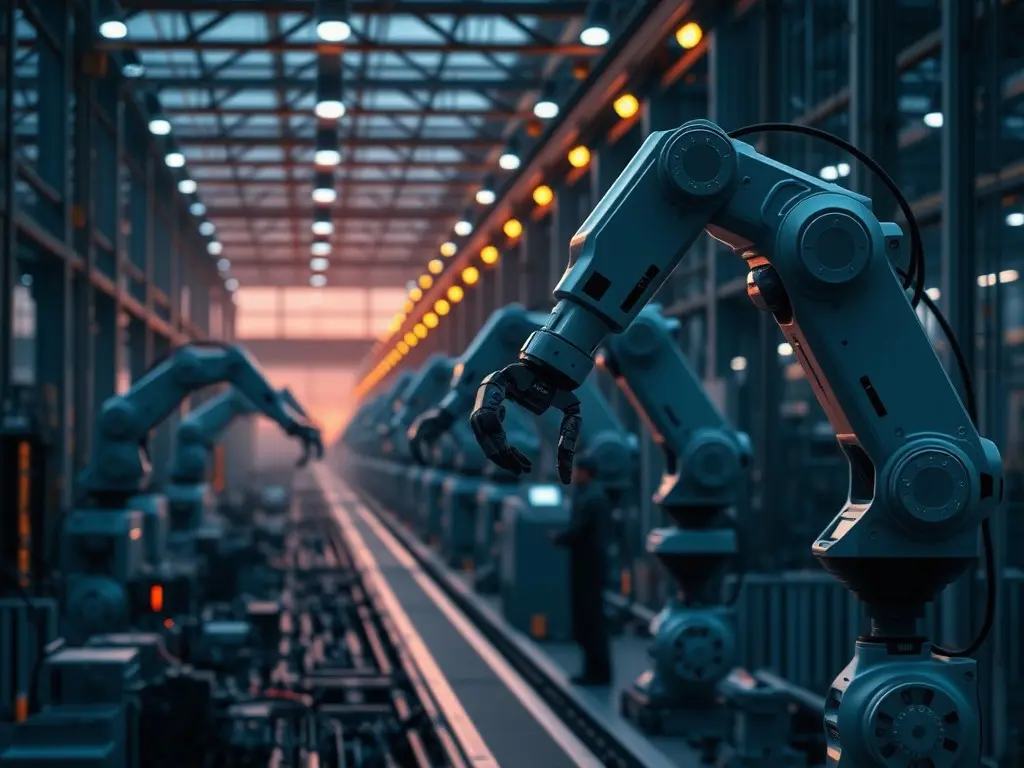
Standard Bots secured $200 million in Series C funding at a $1 billion valuation, led by RoboStrategy, to expand AI-native industrial robotics in the U.S. The company’s robots use AI-driven 'skill by demonstration' to simplify automation for manufacturers, including clients like Amazon, Lockheed Martin, and NASA, aiming for 10% of new U.S. deployments by next year.
Standard Bots, a New York-based robotics company, has raised $200 million in Series C funding, achieving a $1 billion valuation. The round was led by RoboStrategy, with participation from existing investor General Catalyst, signaling strong confidence in its AI-native industrial automation approach. The funds will accelerate manufacturing capacity, product development, and robot deployment across the U.S., addressing labor shortages and boosting domestic production. The company’s robots operate using AI-driven 'skill by demonstration,' allowing operators to teach tasks physically rather than through traditional programming. This reduces reliance on specialized engineers and lowers automation barriers for small and medium-sized manufacturers. Standard Bots already serves major clients, including Amazon, Lockheed Martin, NASA, Sunoco, and the U.S. Army, and projects it will account for 10% of new U.S. industrial robot deployments by 2025. Unlike humanoid robotics, Standard Bots focuses on industrial robot arms for tasks like machine tending, welding, and material handling. Its vertical integration—designing components such as actuators and control systems—enables cost and performance control. The company’s AmpereDrive technology and ArcOS software platform further enhance its ability to adapt to real-world manufacturing needs. The funding reflects broader investor interest in 'physical AI,' where AI powers robots and autonomous systems in industrial settings. With RoboStrategy’s leadership and General Catalyst’s continued support, Standard Bots joins a wave of robotics firms attracting significant capital. This shift from software-only AI to physical applications is seen as critical for transforming manufacturing efficiency and flexibility.
This content was automatically generated and/or translated by AI. It may contain inaccuracies. Please refer to the original sources for verification.