‘Stars, Stripes and First Americans’
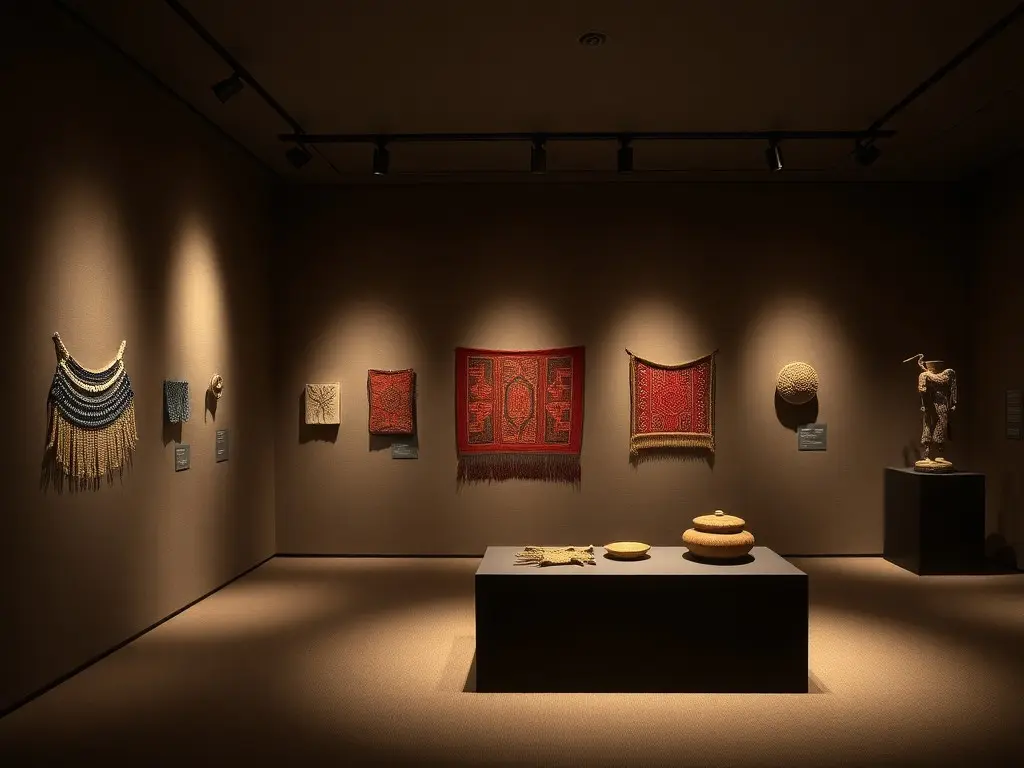
The Museum of Indian Arts and Culture in Santa Fe opens an exhibition titled *Stars, Stripes and First Americans*, exploring Indigenous perspectives on the American flag through 10 objects spanning the late 19th century to the 21st century. Curated by Elisa Phelps, the show highlights works like Lakota beadwork, Diné textiles referencing September 11, and art honoring Navajo Code Talkers, revealing the flag’s layered meanings in Indigenous history, survival, and cultural revival.
The Museum of Indian Arts and Culture in Santa Fe will open *Stars, Stripes and First Americans* on May 17, an exhibition examining how Indigenous communities have interpreted the American flag over 250 years. Curated by Elisa Phelps, the show features 10 rarely displayed pieces, including late-19th-century Lakota beadwork and a Diné woven textile incorporating the Twin Towers and the date *September 11, 2001*. Some works, like those by Lakota artists, used flag imagery as a survival strategy during forced assimilation, blending cultural practices with patriotic symbols under the guise of July Fourth celebrations. The exhibition also honors Indigenous military service, including a painting depicting a Navajo Code Talker against a flag backdrop. Phelps notes that Indigenous people have served in the U.S. military since the Revolutionary War, often at higher rates than other groups, with military service deeply embedded in warrior traditions. Other pieces reflect a more complex relationship with American identity, such as a Santa Domingo Pueblo artist’s inlaid earrings featuring stars and stripes. The collection spans from the late 1800s to contemporary works, showcasing how the flag has symbolized resistance, cultural preservation, and revitalization. Phelps explains that for many Indigenous communities, the flag became a tool to maintain traditions while navigating oppression, from banned ceremonies to forced reservations. The exhibition runs through March 7, 2027, offering a unique lens on how a national symbol carries distinct, often contradictory meanings for Indigenous peoples. The museum’s collection rarely includes these objects in public displays, making this a singular opportunity to explore their historical and cultural significance. Phelps hopes visitors will reflect on the flag’s multifaceted role—from a mark of honor for warriors to a symbol of resilience in the face of systemic erasure. The show underscores the intersection of Indigenous art, history, and national identity, challenging conventional narratives of American patriotism.
This content was automatically generated and/or translated by AI. It may contain inaccuracies. Please refer to the original sources for verification.