Supreme Court reinstates Republican-favored Alabama congressional districts
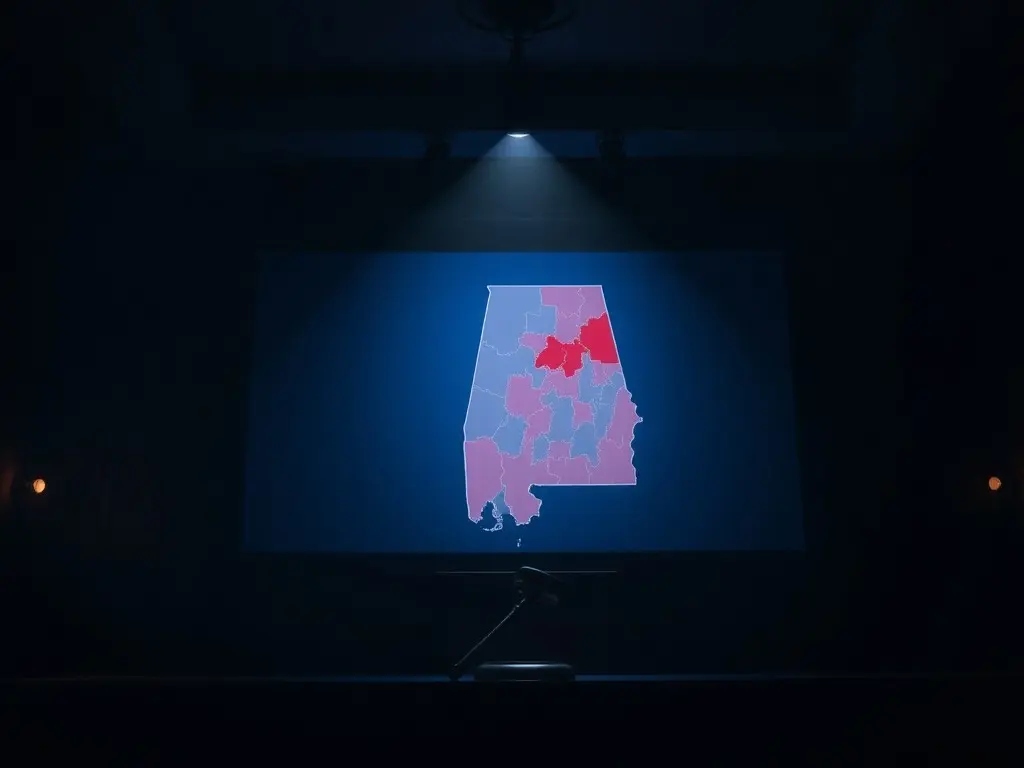
The U.S. Supreme Court reinstated Alabama’s Republican-drawn congressional map, which features only one majority-Black district despite the state being over one-quarter Black, overriding a lower court ruling that found it racially discriminatory. The decision comes after the Court’s conservative majority weakened the Voting Rights Act in April, allowing the map to stand for the 2026 midterm elections and likely costing Democrat Shomari Figures his seat in Alabama’s Second District.
The U.S. Supreme Court on Tuesday reinstated Alabama’s congressional district map, which favors Republicans and includes only one majority-Black district despite Black voters making up over one-quarter of the state’s population. The decision reversed a three-judge panel that had ruled the map was ‘tainted by intentional race-based discrimination,’ with the Court’s three liberal justices dissenting. The ruling means Alabama’s 2026 midterm elections will use a map with six Republican-leaning districts and one Democratic-leaning district, up from five safe Republican seats under a previously ordered remap. Democrat Shomari Figures, currently representing Alabama’s Second District, is expected to lose his seat due to the change. The dispute began in 2021 when Alabama adopted a new map after the census, drawing just one majority-Black district. Voters sued, arguing the plan violated the Voting Rights Act and the Constitution by diluting minority voting power. Lower courts agreed, ordering Alabama to create a second district where Black voters could elect their preferred candidate. The Supreme Court had previously ordered Alabama to comply but allowed the state to continue litigating. In April, the Court’s conservative majority weakened the Voting Rights Act, ruling that states could no longer intentionally draw majority-minority districts. Alabama then argued its map was now permissible under the new standard. A lower court panel of three Republican judges, including two Trump appointees, later ruled the single-Black-district plan was still ‘intentionally discriminatory,’ prompting Alabama to return to the Supreme Court. The Court’s conservative justices ultimately sided with Alabama, concluding the map’s discrimination was partisan rather than racial. The decision allows the original map to stand for the 2026 elections, overriding earlier orders and setting a precedent for future redistricting cases. Alabama had already canceled elections using a court-drawn map and scheduled a special primary in August after the Court’s May ruling.
This content was automatically generated and/or translated by AI. It may contain inaccuracies. Please refer to the original sources for verification.