Surviving below least pay
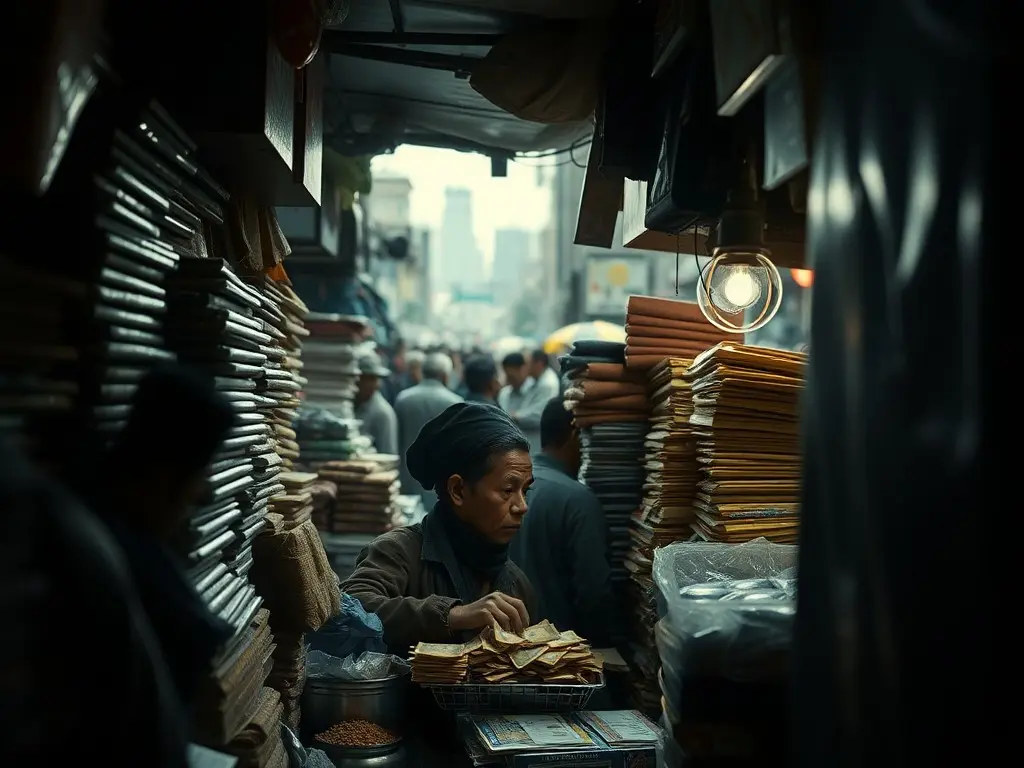
Low-income workers in Malawi, including shopkeepers like Francis Malunga and a worker named Peter, earn below the legally mandated minimum wage of K126,000 monthly despite recent increases, as enforcement remains weak. Trade unions like the Malawi Congress of Trade Unions (MCTU) push for a 95% wage hike, citing inflation and rising costs, but workers fear job losses if employers struggle to comply.
Francis Malunga, a 34-year-old from Kameza Township in Blantyre, survives on a K60,000 monthly salary earned by his wife, a domestic worker, after losing his retail job due to rising operational costs. Despite Malawi’s minimum wage rising to K126,000 monthly in May 2025, many workers—including those in small shops—earn far less, with some receiving as little as K50,000 to K90,000. A government report shows only 1,841 of 47,083 job seekers found employment between April 2025 and March 2026, while unemployment remains high among youth, according to Afrobarometer. The Malawi Congress of Trade Unions (MCTU) is demanding a 95% increase in the minimum wage, citing inflation and rising fuel prices as reasons for workers’ struggles. MCTU president Charles Kumchenga argues that wages have not kept pace with the cost of living, leaving workers unable to afford basic necessities. However, workers like Peter, a retail employee in Lilongwe earning K70,000 monthly, fear job losses if employers cannot absorb higher wage demands, despite the legal minimum now being K126,000. Economist Christopher Mbukwa warns that wage increases must consider economic indicators like the cost of living and businesses’ financial capacity to avoid job losses. He notes that many small enterprises already pay below the legal minimum, with some shop owners in Blantyre and Limbe offering wages as low as K50,000 monthly. Workers often avoid reporting violations due to fear of unemployment, despite the Ministry of Labour mandating higher wages for different business sizes based on turnover. The enforcement of minimum wage laws remains weak, with domestic workers’ daily pay rising only to K2,800 and small enterprises paying as little as K4,038 daily. The government’s latest adjustments—ranging from K105,000 to K150,000 monthly—have not been uniformly applied, leaving many workers in financial distress. Trade unions face pressure to balance worker demands with the risk of further job cuts in an already struggling economy.
This content was automatically generated and/or translated by AI. It may contain inaccuracies. Please refer to the original sources for verification.