The Amazon's 'lost city' has been widely misunderstood. This is its true story
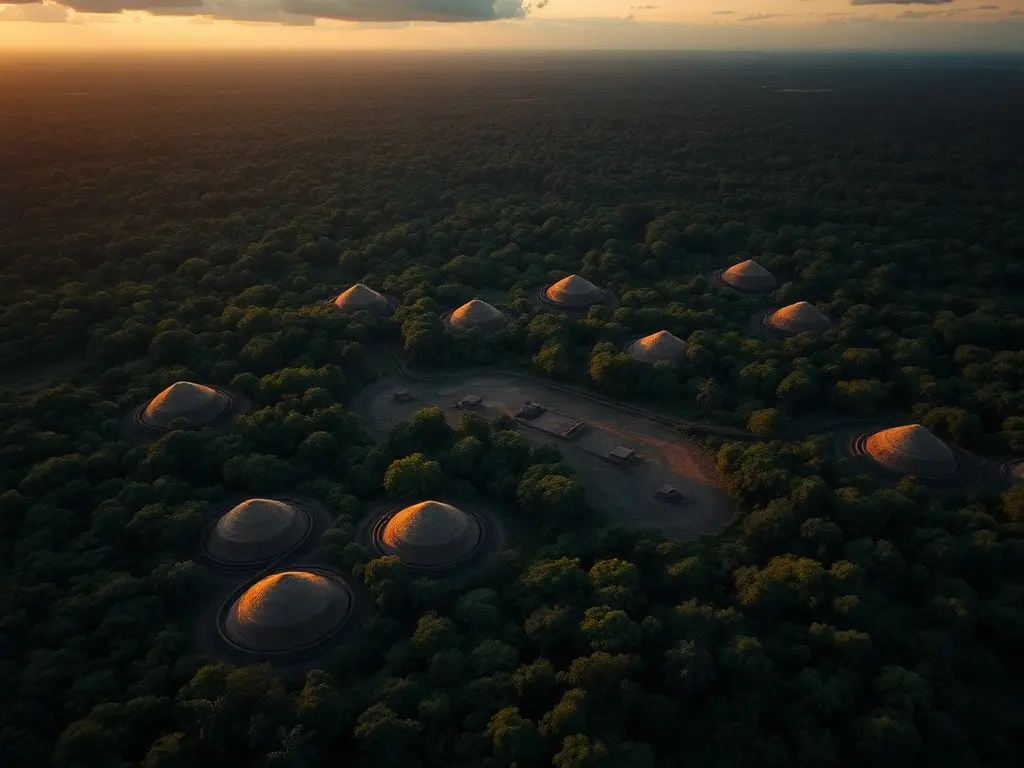
Archaeologists using LiDAR technology have uncovered a vast 3,000-year-old urban network in Ecuador’s Amazon, challenging the notion that ancient Amazonian societies were nomadic hunter-gatherers. The Huapula Site and surrounding clusters reveal a unique low-density, multicentric form of urbanism, with geometric mound patterns and stratified mud structures, though its purpose and fate remain unclear.
Archaeologist Alden Yépez of Pontificia Universidad Católica de Ecuador (PUCE) led a team to the Huapula Site in Ecuador’s Amazon, where LiDAR mapping exposed a sprawling 3,000-year-old urban landscape. The discovery includes geometric mound formations and stratified mud pathways, contradicting the long-held belief that Amazonian societies were nomadic. Jesuit priest Pedro Porras first documented the site in 1978, excavating 15 areas near the Upano River, but modern technology has revealed its full scale. The Ecuadorian National Institute for Cultural Heritage (INPC) mapped a 600 sq km area in 2015, identifying clusters of man-made mounds as part of a multicentric urban system. Unlike classical cities, this network was low-density, blending with the forest while leveraging its resources. Eight mounds at Huapula alone form a geometric pattern, with one mound featuring stratified mud layers exposed by Porras’ excavations. Researchers emphasize that these settlements were not traditional cities but a distinct Amazonian form of urbanism, organized around interconnected clusters. The discovery reshapes understanding of ancient Amazonian civilizations, suggesting sophisticated planning and social structures. However, questions remain about how and why these networks were built, and their preservation challenges. Local archaeologists have known of some formations for 50 years, but LiDAR technology revealed their true extent. The findings support theories of complex Amazonian societies capable of large-scale construction and organization. Further study is needed to uncover the site’s purpose and cultural significance before it faces potential threats from discovery.
This content was automatically generated and/or translated by AI. It may contain inaccuracies. Please refer to the original sources for verification.