The art deco airport terminal 'designed by accident'
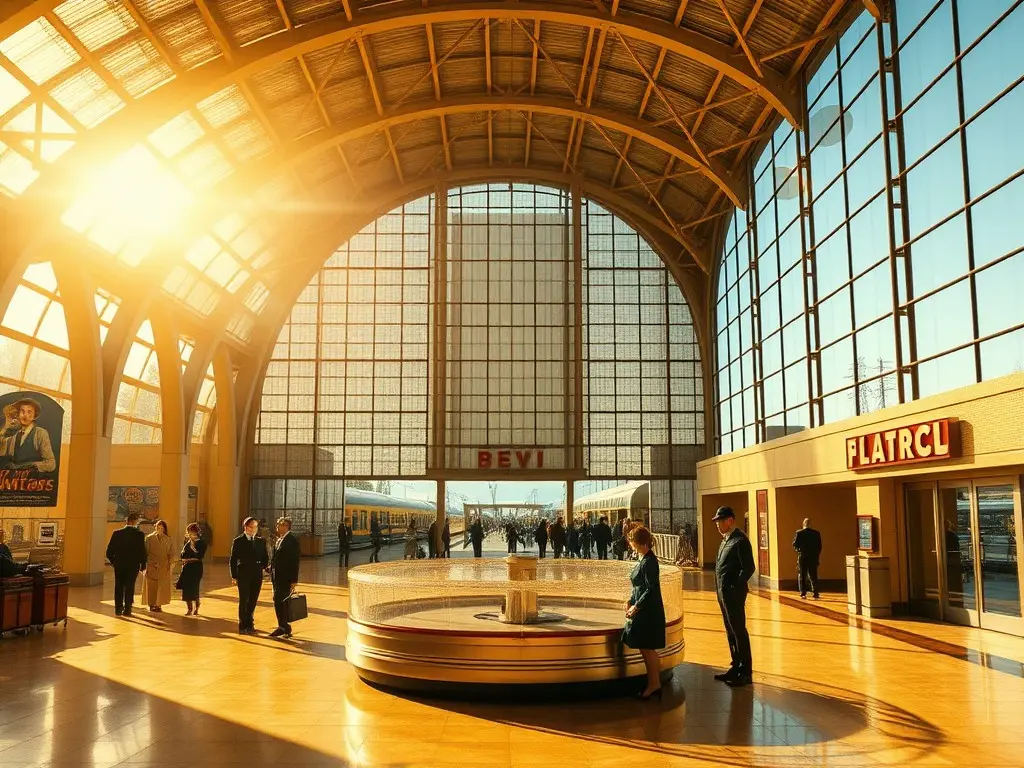
Gatwick Airport’s original art deco terminal, known as 'The Beehive,' was built between 1935 and 1936 and was the world’s first to integrate trains directly into its design, allowing passengers to travel from train to plane without exposure to rain. Now a Grade II* listed building and repurposed as office space, The Beehive remains a preserved landmark of aviation history despite being retired in 1958 after commercial flights outgrew it.
Gatwick Airport’s original terminal, nicknamed 'The Beehive' for its circular design, was constructed between 1935 and 1936 and holds a unique place in aviation history. According to local historian Doug Cox of the Horley Local History Society, the terminal’s distinctive shape was allegedly inspired by a late-night remark from the architect Morris Jackaman’s father, who joked that he would be 'thinking around in circles' if he didn’t finalize the design. The Beehive was the first airport in the world to fully integrate train travel into its infrastructure, allowing passengers to move seamlessly from trains to planes via underground tunnels and pull-out canopies. This feature protected travelers from rain, a groundbreaking convenience for the time. The terminal hosted its first flight—a Jersey Airways plane to Paris—in 1936, marking the beginning of its brief but impactful operational life. During World War II, Gatwick served as a base for the RAF, but by the end of the conflict, commercial aviation had outgrown The Beehive’s capacity. In 1958, it was replaced by a larger terminal, now handling over 43 million passengers annually. Despite its retirement, the terminal was preserved and granted Grade II* listed status in 1996, ensuring its survival as a piece of aviation heritage. Today, The Beehive operates as office space while standing as a testament to early 20th-century innovation in airport design. Its legacy endures not only as a functional building but also as a symbol of Gatwick’s rich history, blending practicality with architectural charm.
This content was automatically generated and/or translated by AI. It may contain inaccuracies. Please refer to the original sources for verification.