The Beijing Summit Rewrites Its Rules of Superpower Economic Engagement
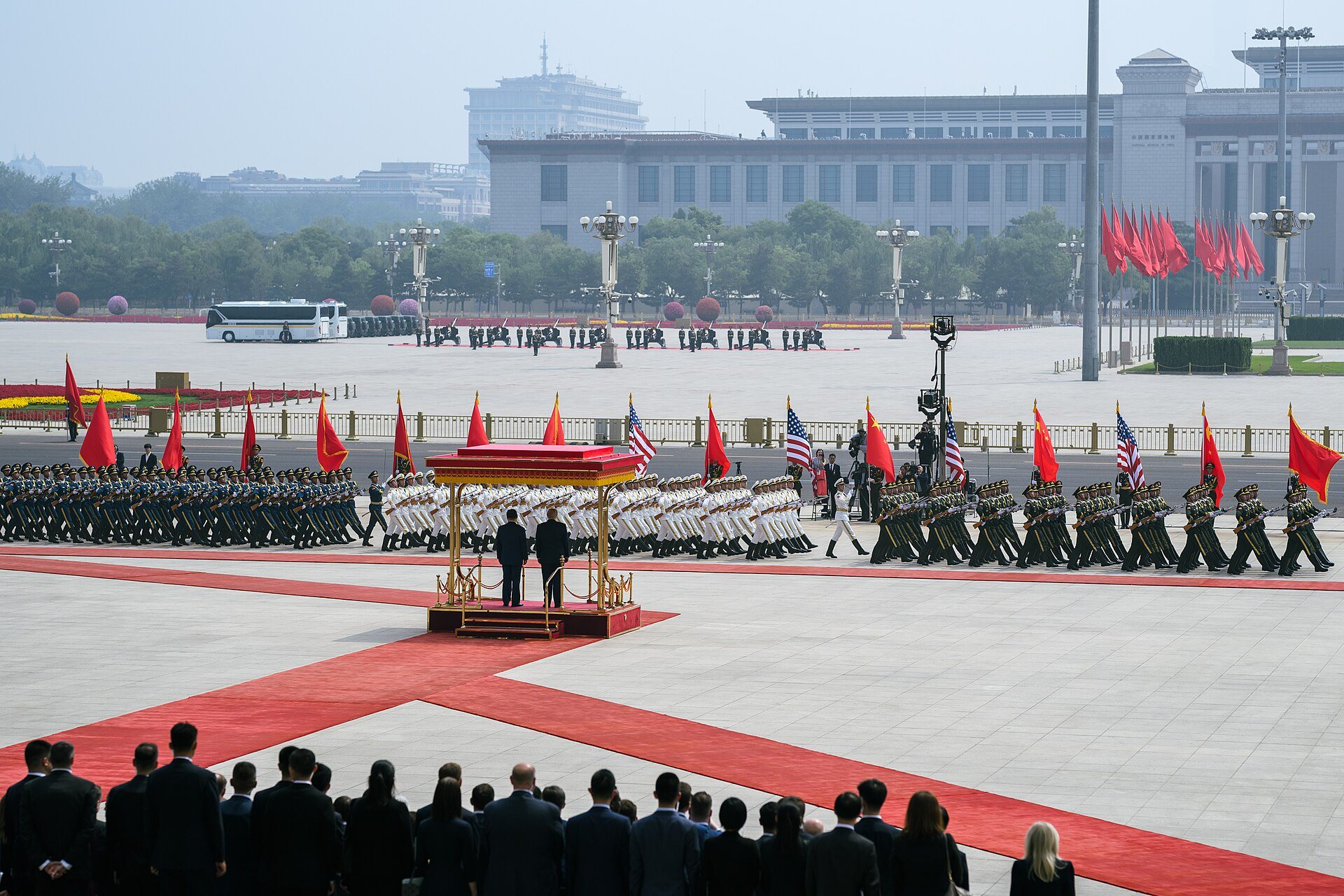
The May 14 Beijing summit between U.S. President Donald Trump and Chinese President Xi Jinping produced a framework for 'constructive strategic stability,' shifting expectations from economic decoupling and conflict toward pragmatic cooperation on trade and technology while excluding Taiwan. Beijing’s pre-summit proposal to overcome the 'Thucydides trap' and Foreign Minister Wang Yi’s post-summit emphasis on cooperation as the priority signaled a deliberate diplomatic pivot to manage competition without systemic hostility.
The May 14 summit in Beijing between U.S. President Donald Trump and Chinese President Xi Jinping marked a significant shift in superpower relations, moving away from predicted economic decoupling and potential conflict toward a structured framework for cooperation. Dubbed 'constructive strategic stability' by Beijing, the agreement prioritizes bilateral deal-making while preserving China’s red lines, notably Taiwan. Analysts had anticipated a downward spiral under Trump’s second term, but the summit instead produced a pragmatic reconciliation on trade, technology, and global governance. Prior to the summit, Xi explicitly framed the meeting as an opportunity to avoid the 'Thucydides trap,' where a rising power challenges a dominant one, proposing a new paradigm for major-country relations. This rhetorical shift was quickly translated into action, with Foreign Minister Wang Yi emphasizing post-summit that cooperation would remain the foundation of U.S.-China ties. The approach offers Washington a transactional partnership aligned with its bilateral negotiation preferences while allowing Beijing to maintain its core national interests. Economic cooperation became a key focus, with China deploying a charm offensive ahead of the summit. Vice Premier He Lifeng led trade delegations to South Korea in the days before the meeting, signaling Beijing’s intent to appeal to U.S. commercial interests. The summit’s outcomes suggest both nations are prioritizing domestic economic stability over unmanageable geopolitical escalation, particularly amid Trump’s broader Middle East conflicts. By decoupling trade and technology from the Taiwan issue, Beijing provided a diplomatic pathway for de-escalation. The framework avoids systemic hostility, instead framing competition as manageable, which aligns with Trump’s administration’s approach. This calculated strategy reflects China’s effort to rewrite the rules of superpower engagement while preserving its strategic autonomy.
This content was automatically generated and/or translated by AI. It may contain inaccuracies. Please refer to the original sources for verification.