The Billion-Dollar Pivot: Why the Biggest Bets in AI Are Moving From Software to Sensors
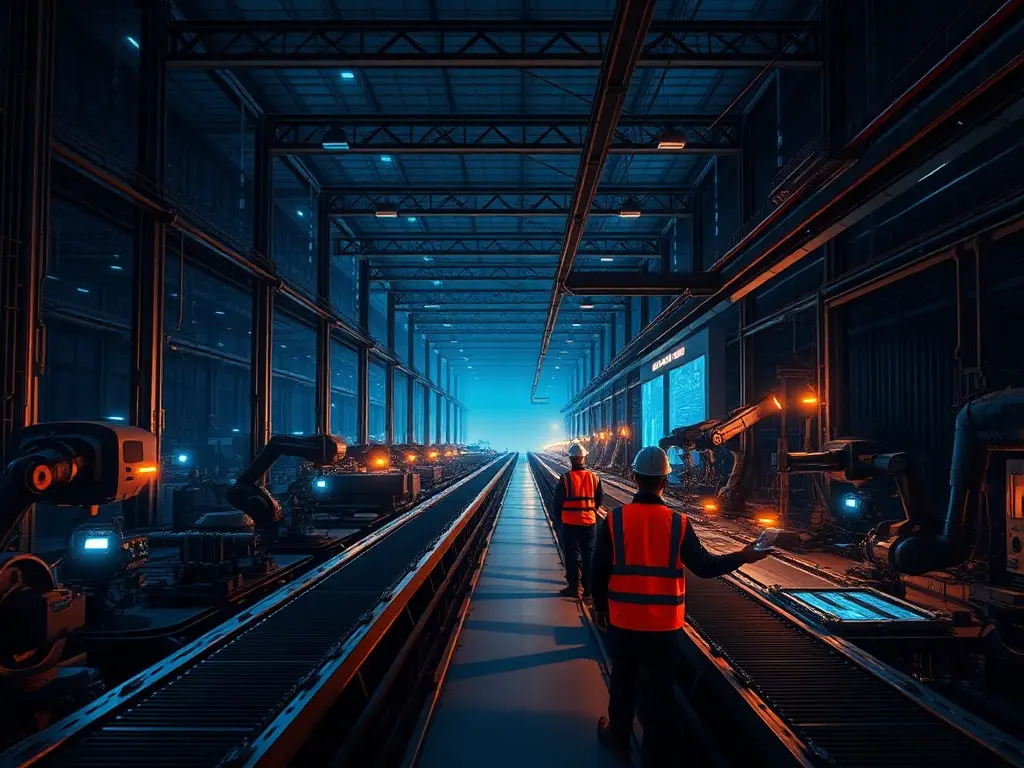
Investors are shifting billions toward physical AI, with Jeff Bezos’s Project Prometheus raising $10 billion and SoftBank’s Roze targeting a $100 billion valuation, as companies like NVIDIA and Eclipse Ventures bet on AI-driven sensor data for industrial applications. The shift follows years of AI software dominance, now leveraging untapped sensor data in manufacturing to address labor shortages and unlock $155 billion in projected market value by 2029.
Jeff Bezos’s Project Prometheus secured $10 billion in funding in April, valuing the AI-focused venture at $38 billion, despite having no products or research published. Investors like JPMorgan and BlackRock backed the initiative, which aims to develop AI systems simulating physical processes—part of a broader trend called physical AI. The same month, SoftBank filed for an initial public offering of Roze, a robotics and AI company, targeting a $100 billion valuation. Eclipse Ventures also launched a $1.3 billion fund dedicated to physical AI startups, signaling a pivot from software to hardware-driven AI applications. NVIDIA’s CEO, Jensen Huang, declared at the company’s GTC conference in March that physical AI had arrived, predicting every industrial company would integrate robotics. This shift follows a slowdown in private equity deals for AI software, as firms seek higher-value opportunities in physical systems. Lex Zhao of One Way Ventures noted that physical AI offers less risk of market disruption, making it attractive for traditional industries. Over the past decade, manufacturers installed sensors across operations, from conveyor belts to refineries, but much of the data collected remained unused. Physical AI now processes this raw sensor data to detect anomalies like vibration irregularities or temperature spikes, translating it into actionable insights. Industry estimates valued the AI-in-manufacturing market at $34 billion in 2025, with projections reaching $155 billion by 2029. The urgency stems from labor shortages, particularly in Europe, where the EU may lose 1–2 million workers annually, and Germany faces a 5 million-worker deficit by 2030. Paul Bloudoff of NTT DATA described physical AI as a ‘Rosetta Stone’ for industrial data, enabling factories to leverage sensor outputs efficiently. The technology’s potential to optimize production and reduce reliance on human labor is driving its rapid adoption across sectors.
This content was automatically generated and/or translated by AI. It may contain inaccuracies. Please refer to the original sources for verification.