The CBSE Fallout! The Faith Shaken, Leaks Exposed And How India’s Education System Lost Students’ Trust
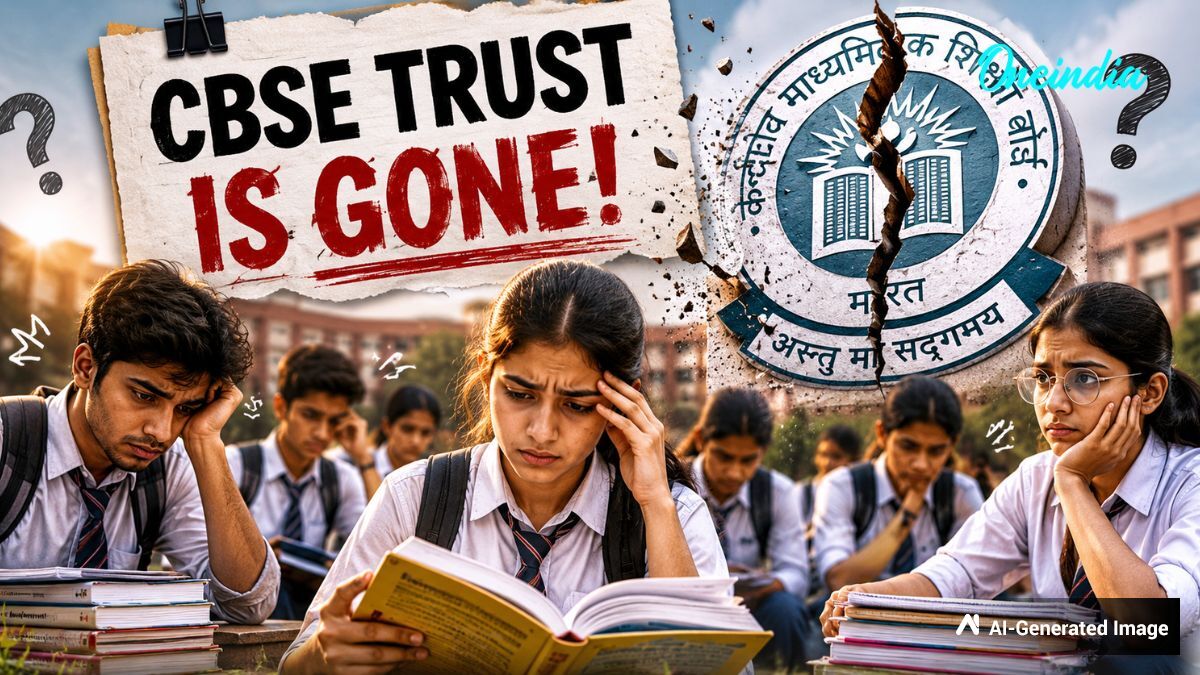
India’s Central Board of Secondary Education (CBSE) faced a major digital evaluation crisis in 2026, where students discovered unreadable scans, mismatched answer sheets, and systemic failures in its On-Screen Marking (OSM) system, shattering trust in the exam process. The collapse of the portal under scrutiny and institutional negligence exacerbated psychological distress among students, parents, and educators, highlighting deeper flaws in India’s high-pressure education system.
India’s Central Board of Secondary Education (CBSE) digital evaluation system for Class 12 exams in 2026 collapsed under pressure, exposing systemic failures that eroded trust in the country’s education system. The On-Screen Marking (OSM) project, introduced as a modernization effort, led to widespread issues including blurry scans, mismatched answer sheets, and incorrect roll numbers, with one student receiving another’s Physics paper. The crisis followed years of controversy, including the NEET-UG paper leak scandal, which already strained confidence in India’s exam system. The CBSE’s unpreparedness became evident as the portal crashed under scrutiny, payment systems malfunctioned, and students faced repeated charges while demanding transparency. Despite claims of digital transformation, the infrastructure failed to handle the scale of one crore answer sheets, revealing institutional overconfidence without adequate safeguards. Students reported receiving incorrect answer sheets after reevaluation requests, deepening distrust in a system meant to determine their academic futures. The psychological toll was severe, with high-performing students doubting their abilities due to flawed evaluations. Parents and educators expressed outrage over the lack of accountability, while social media amplified frustration over the system’s negligence. The crisis underscored broader concerns about India’s education ecosystem, where technological promises often outpace implementation, leaving students vulnerable to administrative failures. CBSE’s handling of the situation further damaged its credibility, as students and families demanded explanations for the mismanagement. The fallout extended beyond marks, affecting college admissions, scholarships, and career prospects for thousands of students. The incident highlighted the need for stronger oversight and preparedness in India’s high-stakes education system. Experts warned that the erosion of trust could have long-term consequences, including reduced participation in exams and a decline in academic integrity. The CBSE crisis served as a stark reminder of the risks when digital initiatives are rolled out without robust safeguards, leaving millions questioning the fairness of a system they once trusted.
This content was automatically generated and/or translated by AI. It may contain inaccuracies. Please refer to the original sources for verification.