The Feds and Law Enforcement Are Worried AI Backlash Could Turn Into ‘Anti-Tech Violent Extremism’
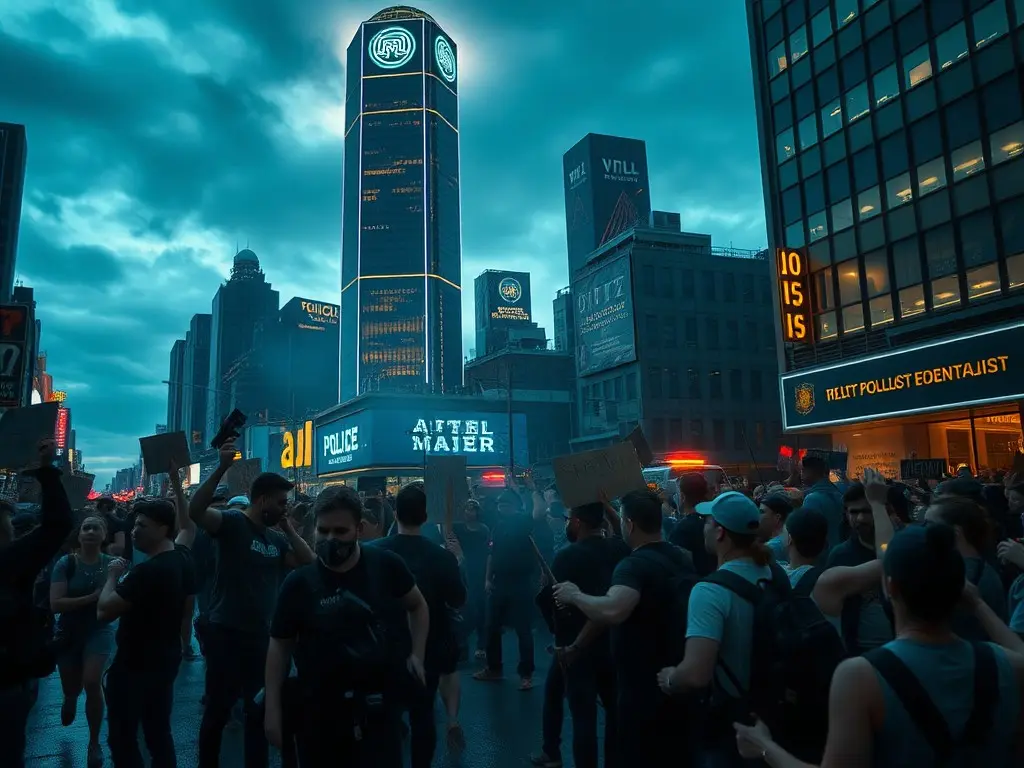
U.S. law enforcement agencies, including the FBI and DHS, have identified a potential threat from 'anti-tech violent extremism' tied to growing public backlash against AI, warning of possible civil unrest in major cities like New York. These concerns coincide with the Trump administration’s pro-AI stance, a new counterterrorism strategy labeling left-wing dissent as a threat, and internal reports linking anti-AI sentiment to violent activity, including the case of Ziz LaSota.
U.S. law enforcement agencies are monitoring a rising threat of 'anti-tech violent extremism,' according to over 1,000 pages of unpublished reports from the Department of Homeland Security (DHS), the FBI, and fusion centers obtained by Wired. The reports suggest that public backlash against AI could escalate into large-scale protests and civil unrest, particularly in urban areas like New York City, with some documents explicitly warning of potential violent extremist activity. The term 'anti-tech violent extremism' does not appear in any public domestic extremism reports from DHS or the FBI, indicating this is a new classification. The shift reflects concerns over growing skepticism toward AI, including high-profile statements like Pope Leo XIV’s recent encyclical calling for AI to be 'disarmed.' The Trump administration’s approach to AI regulation has been largely hands-off, with the president signing an executive order in December to curb state-level AI regulations. Earlier this month, Trump backed out of a proposed executive order that would have required AI companies to provide federal access to frontier models 90 days before public release. Meanwhile, the administration has taken a harder line on political dissent, with National Security Presidential Memorandum 7 directing agencies to investigate and prosecute violence tied to 'anti-Americanism' and 'anti-capitalism.' The new counterterrorism strategy, released by Trump’s adviser Sebastian Gorka, categorizes violent left-wing extremists alongside narcoterrorists and Islamist groups as top threats. This framework could lead law enforcement to scrutinize anti-AI organizing, even as public resistance to AI grows. The reports highlight a range of activities, from extreme anti-AI groups like the one led by Ziz LaSota—linked to murders—to routine public meetings and protests. Fusion centers across the U.S. are tracking events such as town halls and budget discussions where anti-AI sentiment may be expressed. The concern is that frustration over AI’s rapid development could fuel broader unrest, particularly in cities with large populations. While the reports do not yet detail specific plots, they signal a growing focus on monitoring and potentially preempting violence tied to technological dissent.
This content was automatically generated and/or translated by AI. It may contain inaccuracies. Please refer to the original sources for verification.