The Final Mile of Robot Simulation Training: Why Scene Assets Are Becoming the Critical Missing Link in the Industry Chain
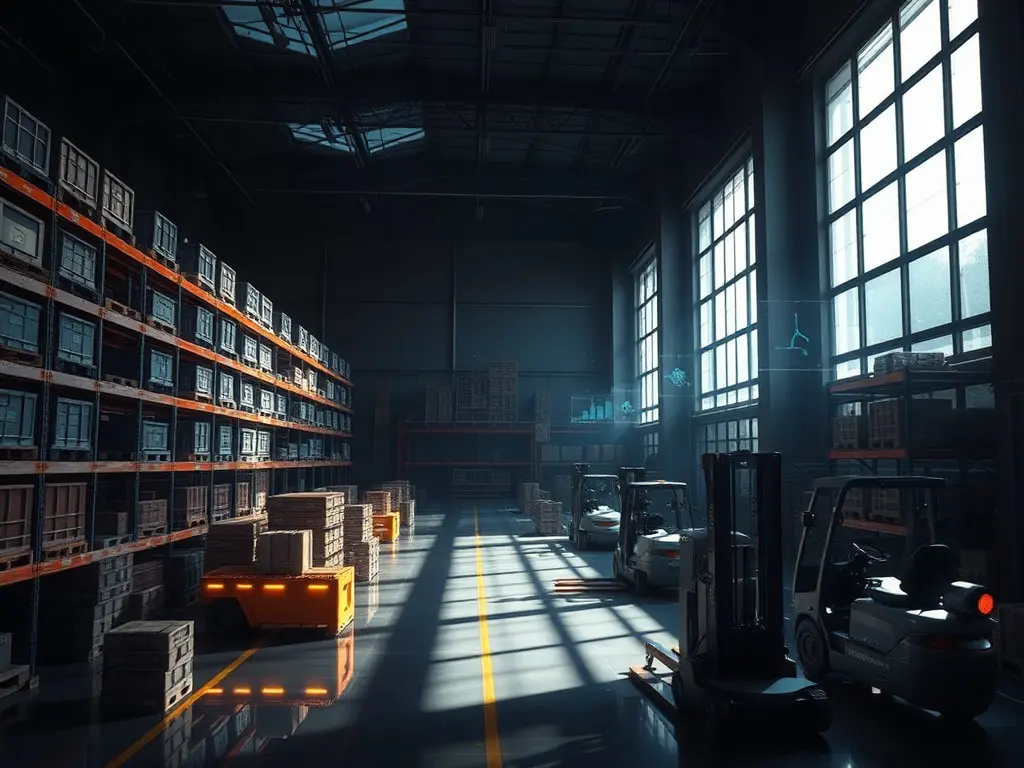
The robotics simulation training industry faces a critical data shortage, with only 500,000 hours of high-quality real-world data available compared to the 1 billion to 100 billion hours needed for embodied AI training. Startups like Pixel Planet are addressing this gap by supplying high-fidelity simulation scene assets, leveraging a library of over five million digital models to enable scalable, cost-effective robot training in virtual environments.
The robotics simulation training industry is experiencing a major shift in 2026 due to a severe data shortage. Despite the availability of trillions of words for large language models, physical robots lack sufficient high-quality interaction data—only about 500,000 hours exist, far short of the 1 billion to 10 billion hours required for baseline generalization. High-fidelity simulation has become essential to bridge this gap, with the global robotics simulation market valued at $7.58 billion in 2026 and projected to grow to $13.9 billion by 2032 at a 10.56% CAGR. Pixel Planet, an Asia-Pacific startup, is focusing on providing high-fidelity simulation scene assets rather than developing hardware or physics engines. The company’s library of over five million digital models—covering household, industrial, medical, and aerospace environments—is being adapted for simulation use. Shanelle Yuan, co-founder and CEO, explains that robots require millions of trial-and-error iterations in virtual environments, and simulation data is the only commercially viable solution for scalable training and edge-case evaluation. The robotics data ecosystem now consists of three tiers: low-cost internet and human data for general education, simulation data for mass training, and real-world data for high-fidelity but limited testing. Simulation’s role is to generate infinite, hyper-specific scenarios sustainably, addressing the prohibitive costs and safety risks of real-world data collection. At the NVIDIA GTC 2026 conference, the OpenUSD Core Specification 1.0 was introduced, establishing industry-standard data models for physically accurate 3D assets. Platforms like Isaac Sim have opened their ecosystems to third-party assets, recognizing that first-party developers cannot meet the diverse training needs of global robotics companies. This shift is creating a market for independent asset suppliers, with Pixel Planet positioned to capitalize on its decade-long legacy of high-end visual production.
This content was automatically generated and/or translated by AI. It may contain inaccuracies. Please refer to the original sources for verification.