The First Mammal Ancestor Egg Was Hidden in Plain Sight for 18 Years
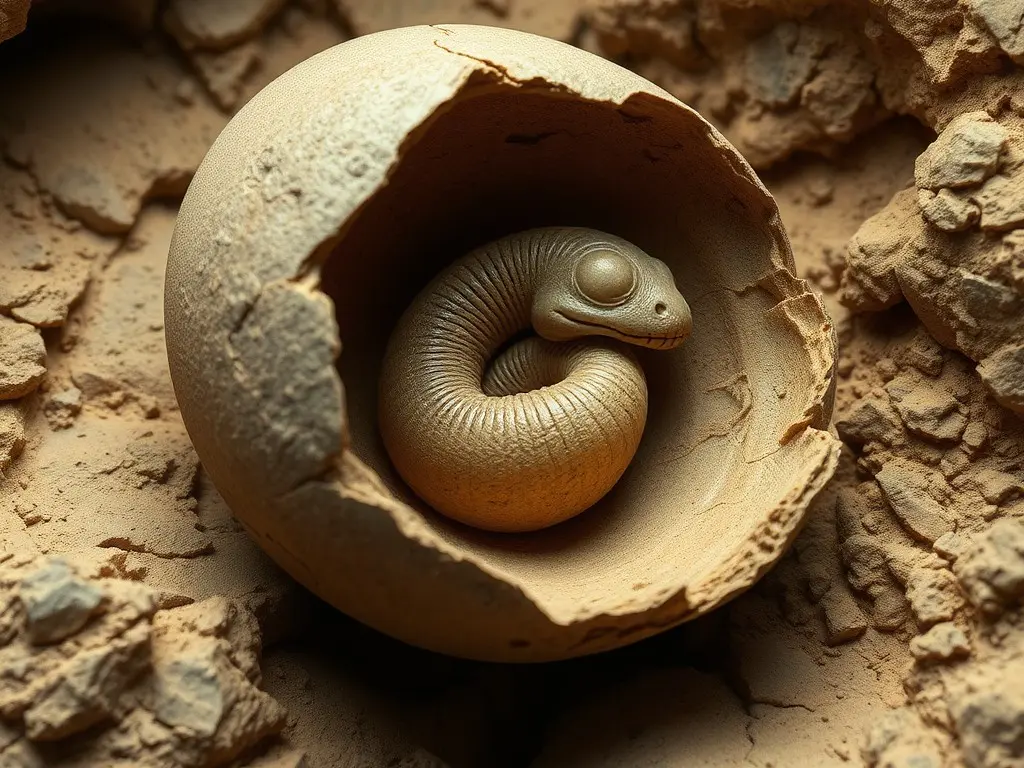
A 250-million-year-old fossilized egg containing a Lystrosaurus was discovered in South Africa, confirming that early mammal relatives laid eggs. The fossil, unearthed in 2008, was analyzed using synchrotron X-ray CT in 2026, revealing the curled-up body of a juvenile Lystrosaurus.
A team of scientists led by Professor Julien Benoit, Professor Jennifer Botha, and Dr Vincent Fernandez discovered a 250-million-year-old fossilized egg containing a Lystrosaurus. The fossil was unearthed in South Africa in 2008 by Botha, but it wasn't until 2026 that the team used synchrotron X-ray CT to confirm the presence of a juvenile Lystrosaurus inside. Lystrosaurus, a non-mammalian synapsid, is an ancestor to most modern mammal species. It survived the End-Permian Mass Extinction, which occurred roughly 252 million years ago. The discovery provides insight into the evolution of early mammal relatives and their ability to adapt to extreme environments. The fossil's soft-shelled egg may have been a key factor in Lystrosaurus's survival.
This content was automatically generated and/or translated by AI. It may contain inaccuracies. Please refer to the original sources for verification.