The Future of the Environment, Through Students’ Eyes
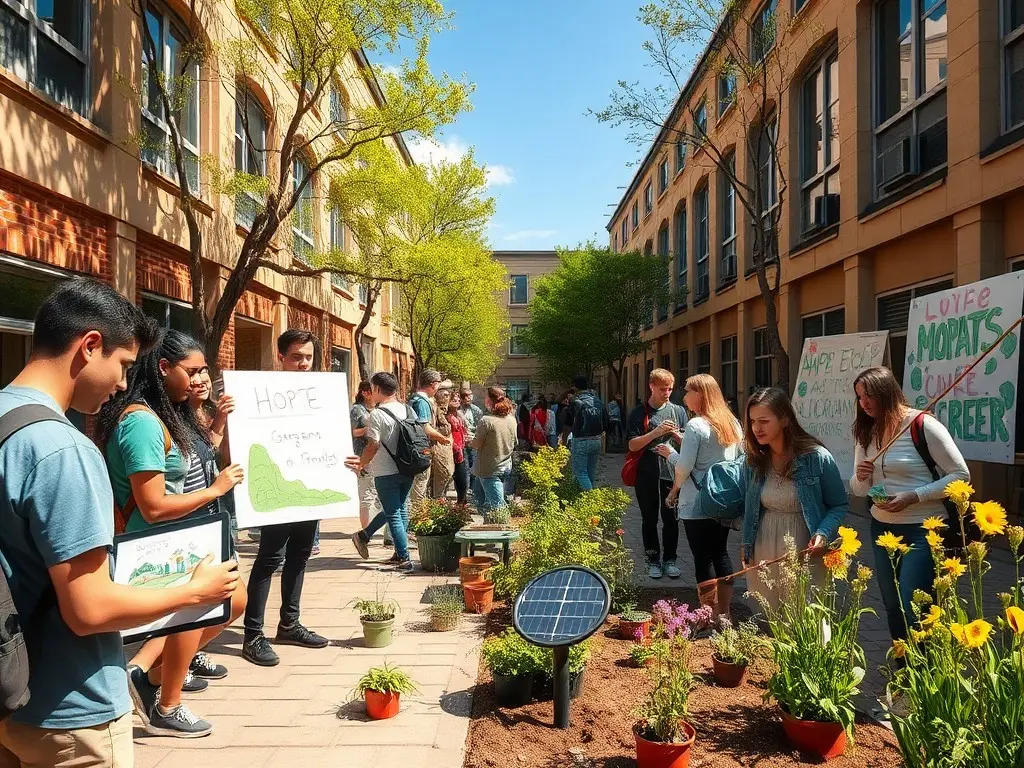
Denver University’s 2026 Signature Work Showcase featured over 100 student projects addressing environmental challenges, including Zoe Lopez’s youth eco-engagement program and Nissa Tapper’s GIS-based study of Minnesota dairy farming history. Projects like a Nature Day curriculum and geographic analysis of land-use changes highlighted gaps in environmental education and the impact of agriculture on ecosystems.
Denver University’s 2026 Signature Work Showcase, held May 13 in the Community Commons, displayed more than 100 student research projects focused on environmental challenges in Colorado and beyond. Among them, Zoe Lopez—a second-year public policy major—led a team developing a Nature Day curriculum to combat youth eco-disengagement, addressing barriers like school approvals and accessibility. Their project, mentored by Joe Walsh and guided by Generation Wild’s Christopher Aaby, aimed to teach elementary students about environmental impacts through interactive activities like sound safaris and urban heat walks. Separately, senior environmental science major Nissa Tapper analyzed Minnesota’s dairy farming history from 1860 to 2022 using GIS methods, linking land-use changes to prairie, forest, and wetland ecosystems. Her work, advised by Guiming Zhang, revealed connections between agricultural expansion and environmental degradation over time. Both projects reflected hands-on learning and community collaboration, showcasing student efforts to bridge environmental education gaps and inform policy. Lopez’s team faced challenges engaging families, including transportation and safety concerns, despite free programs. They pivoted to an opt-in Nature Day event to maximize participation. Tapper’s research highlighted how dairy farming’s growth altered landscapes, offering insights into sustainable land management. The showcase underscored student-driven solutions to environmental issues, from youth outreach to historical land-use analysis. Faculty mentors and community partners played key roles in guiding research toward real-world impact. Projects like these demonstrate how academic work can address pressing ecological and educational challenges.
This content was automatically generated and/or translated by AI. It may contain inaccuracies. Please refer to the original sources for verification.