The Ice That Saved Bowhead Whales Is Now Melting Away
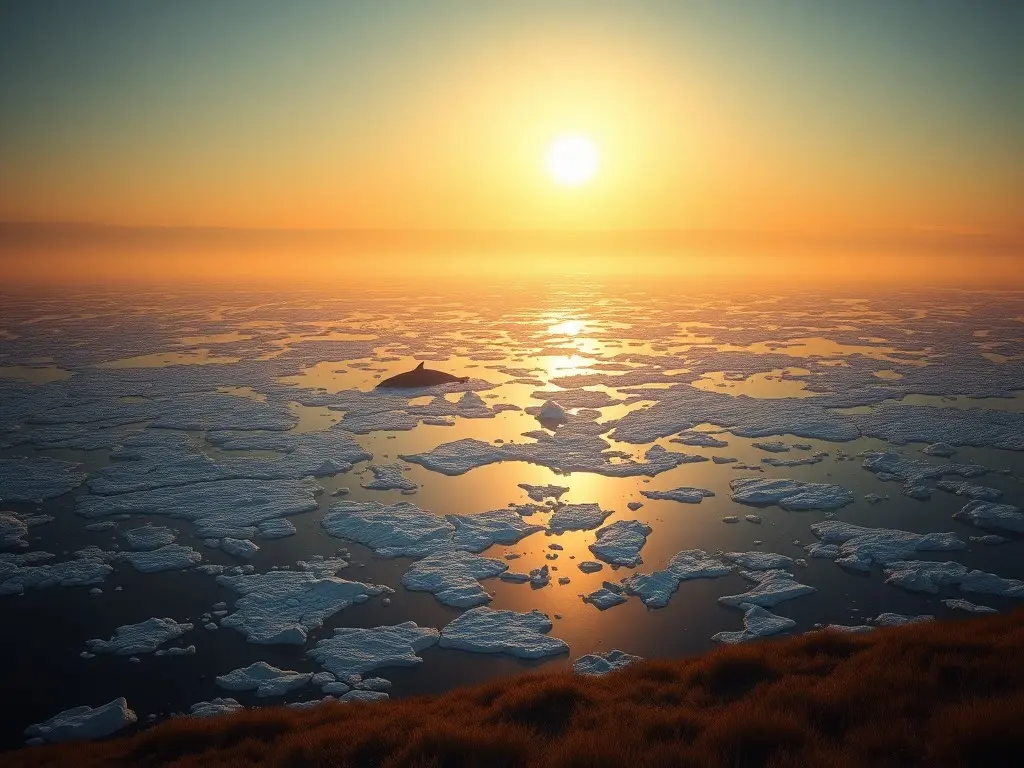
A new study in *Proceedings of the National Academy of Sciences* reveals that bowhead whale population recovery disparities stem from historical whaling patterns, not climate factors, with some stocks like the Bering-Chukchi-Beaufort rebounding to 10,000+ while others remain critically low. Despite international protection since the 1970s, the species still numbers around 24,000—far below pre-whaling levels—due to genetic damage from centuries of exploitation, according to lead author Dr. Nicholas Freymueller.
A study published in *Proceedings of the National Academy of Sciences* challenges the prevailing belief that climate change is the primary reason some bowhead whale populations remain critically low. Researchers found that historical whaling patterns, rather than ocean conditions, explain why certain stocks have recovered unevenly. The Bering-Chukchi-Beaufort population, for example, now numbers over 10,000 whales, while others like the Spitsbergen stock struggle with fewer than 1,000. Between the 16th and 20th centuries, whaling decimated bowhead populations, reducing them to roughly 1,500–3,000 by the time international protections were enacted in the 1970s. Since then, the species has rebounded to about 24,000, but this remains a fraction of its pre-exploitation size. Lead author Dr. Nicholas Freymueller noted that previous theories blamed ocean changes for slow recovery, but genetic scars from past whaling are the real factor. There are four main bowhead populations: Okhotsk Sea, Bering-Chukchi-Beaufort, East Canada–West Greenland, and Spitsbergen. The Bering-Chukchi-Beaufort stock recovered fastest due to selective hunting pressure, while others faced more severe exploitation. The International Whaling Commission highlights these disparities, emphasizing that protection laws alone cannot reverse genetic damage. The study warns that reduced genetic diversity threatens the species’ long-term survival. Climate change now exacerbates risks, as melting Arctic ice—once a refuge—disrupts feeding and migration. Scientists urge immediate conservation action to address both historical and modern threats before populations collapse further.
This content was automatically generated and/or translated by AI. It may contain inaccuracies. Please refer to the original sources for verification.