The Indian workers training AI robots to take their jobs
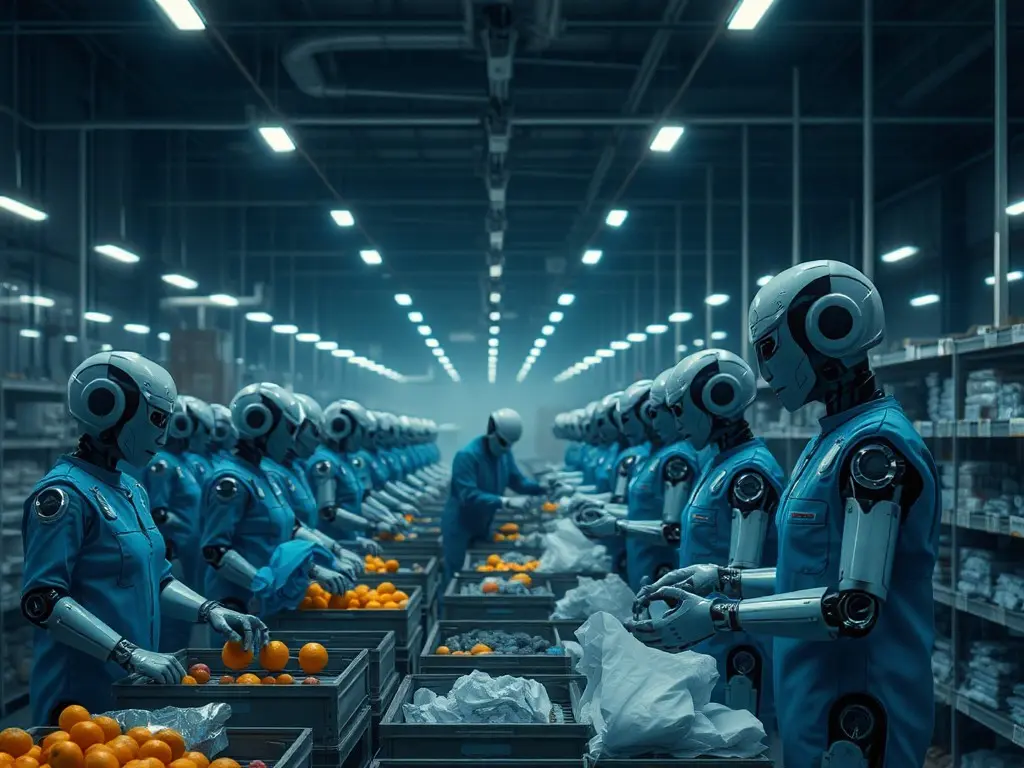
Indian workers like Nagireddy Sriramyachandra, a 25-year-old in Tamil Nadu, earn $2/hour filming mundane tasks like mango-slicing to train AI robots for household chores, feeding 'egocentric data' to companies like Objectways. The booming spatial AI sector employs thousands in India, but raises concerns as automation could eventually replace these jobs, with Morgan Stanley predicting over a billion humanoid robots in use by 2050, primarily for industrial tasks.
In Karur, India, workers like 25-year-old Nagireddy Sriramyachandra film daily tasks—such as slicing mangoes—using head-mounted cameras to train AI robots. For each hour of footage, she earns around 250 rupees ($2), contributing to a growing pool of AI trainers in India’s Tamil Nadu state. These recordings, called 'egocentric data,' help developers teach robots to mimic human movements in real-world settings. Objectways, an AI data company with offices in India and the U.S., employs thousands of workers to collect such footage, supplying it to Fortune 500 clients. The company’s CEO, Ravi Shankar, notes that clients request videos of specific tasks like folding clothes or making sandwiches, aiming to automate labor-intensive jobs. Objectways partners with Amazon SageMaker, a platform for machine learning models, to refine these AI systems. India has positioned itself as a key hub for AI data annotation, with workers in factories and studios using specialized equipment like video glasses and motion sensors. At a Karur textile factory, eight workers were seen recording tasks while producing labeled caps and ironed bags. Digital labor expert Aditi Surie from Bengaluru’s Indian Institute for Human Settlements predicts demand for such services will rise, though automation risks long-term job displacement. The humanoid robot market is expanding rapidly, with Morgan Stanley forecasting over a billion robots in use by 2050, mostly for industrial and commercial tasks. Indian officials acknowledge the dual-edged nature of AI progress, warning that while it creates temporary employment, it may eventually eliminate jobs. Government think tank NITI Aayog highlights concerns about labor displacement, particularly for blue-collar workers in sectors like manufacturing and services.
This content was automatically generated and/or translated by AI. It may contain inaccuracies. Please refer to the original sources for verification.