The interstellar comet 3I/ATLAS was born somewhere much different from our solar system
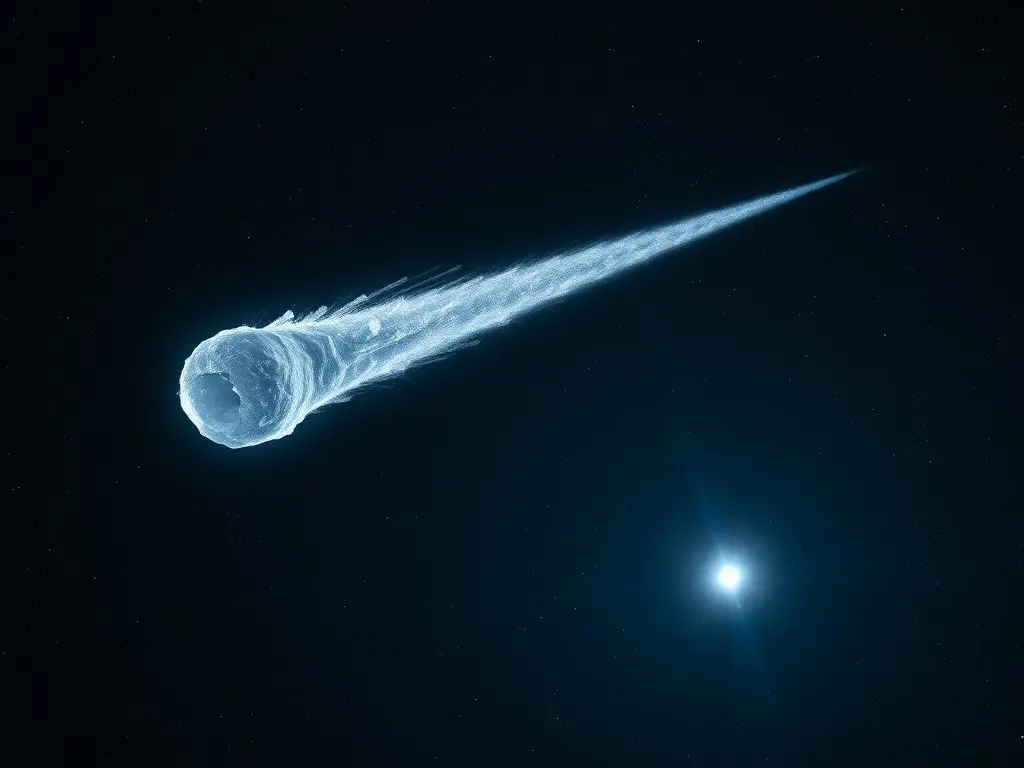
Researchers led by the University of Michigan discovered that the interstellar comet 3I/ATLAS has a high ratio of deuterium to hydrogen in its water, indicating it was formed in a much colder environment than our solar system. The ratio was 30 times that of any comet in our solar system and 40 times the value found in Earth's oceans.
Astronomers discovered the interstellar comet 3I/ATLAS less than a year ago. Research led by the University of Michigan revealed new insights about its birthplace, indicating it was much colder than the environment that created our solar system. The comet is rich in a specific type of water containing deuterium. The team's study was published in the journal Nature Astronomy and was supported by NASA, the U.S. National Science Foundation, and Chile's National Research and Development Agency. The ratio of deuterium to hydrogen in 3I/ATLAS's water is 30 times that of any comet in our solar system. The study was made possible by observations at the MDM Observatory in Arizona and the Atacama Large Millimeter/submillimeter Array in Chile.
This content was automatically generated and/or translated by AI. It may contain inaccuracies. Please refer to the original sources for verification.