The Iran war is destroying oil demand. Could it also spark a shift to clean energy?
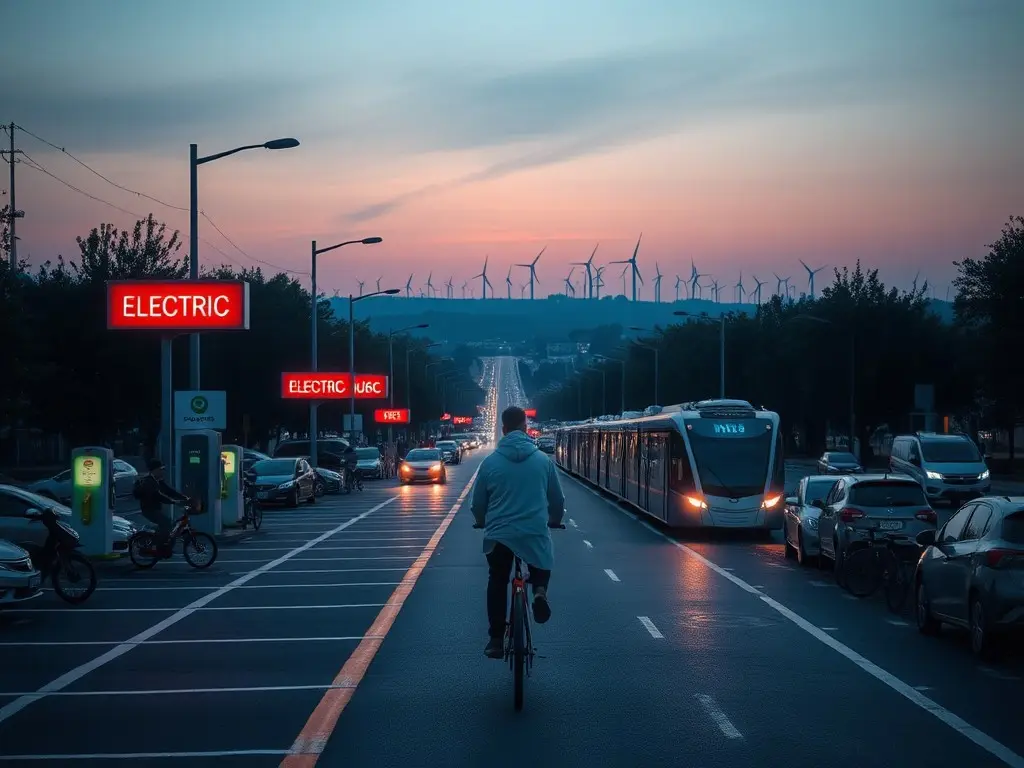
The Iran war has disrupted global oil supplies, pushing U.S. gasoline prices above $4.50 per gallon and causing a 40% increase since late February, leading Americans to reduce driving and shift to public transit, EVs, and carpooling. Experts warn this crisis could trigger long-term demand destruction for oil, particularly in Asia, where reliance on fossil fuels may decline permanently, potentially marking the peak year for global oil demand." "article": "The Iran war has triggered the largest oil supply disruption in history, driving U.S. gasoline prices to over $4.50 per gallon—a 40% rise since fighting began in late February. Americans are cutting back on driving, with 44% reporting reduced car use due to high costs, according to an ABC News, Washington Post, and Ipsos survey from late April. Cities like Cincinnati and Los Angeles have seen surges in public transit ridership, while sales of used electric and hybrid vehicles have climbed. Some are replacing car trips with bikes, scooters, or Amtrak rides, though structural barriers like suburban sprawl limit alternatives. The crisis has forced industries and households to use less oil, creating what economists call ‘demand destruction.’ The International Energy Agency forecasts global oil demand will contract by 420,000 barrels per day this year, a rare silver lining amid Middle East-driven price shocks. Asia, once projected to drive global oil growth, is now reconsidering fossil fuel dependence, with experts like Daan Walter of Ember suggesting this shift could accelerate the peak of global oil demand sooner than expected. With 20% of global oil shipments blocked in the Strait of Hormuz, the crisis has exposed vulnerabilities in energy markets. High prices are pushing consumers toward efficiency, renewable alternatives, and reduced consumption. While some Americans may return to driving once costs stabilize, the long-term impact on oil demand could be irreversible, particularly if Asia pivots toward electrification. The shift is already visible in transportation trends, from rising EV sales to increased carpooling and remote work. However, structural challenges—like America’s car-dependent infrastructure—mean many will adapt rather than abandon vehicles entirely. Economists caution that sustained high prices could reshape energy markets permanently, benefiting clean energy sectors while weakening fossil fuel reliance.
The Iran war has triggered the largest oil supply disruption in history, driving U.S. gasoline prices to over $4.50 per gallon—a 40% rise since fighting began in late February. Americans are cutting back on driving, with 44% reporting reduced car use due to high costs, according to an ABC News, Washington Post, and Ipsos survey from late April. Cities like Cincinnati and Los Angeles have seen surges in public transit ridership, while sales of used electric and hybrid vehicles have climbed. Some are replacing car trips with bikes, scooters, or Amtrak rides, though structural barriers like suburban sprawl limit alternatives. The crisis has forced industries and households to use less oil, creating what economists call ‘demand destruction.’ The International Energy Agency forecasts global oil demand will contract by 420,000 barrels per day this year, a rare silver lining amid Middle East-driven price shocks. Asia, once projected to drive global oil growth, is now reconsidering fossil fuel dependence, with experts like Daan Walter of Ember suggesting this shift could accelerate the peak of global oil demand sooner than expected. With 20% of global oil shipments blocked in the Strait of Hormuz, the crisis has exposed vulnerabilities in energy markets. High prices are pushing consumers toward efficiency, renewable alternatives, and reduced consumption. While some Americans may return to driving once costs stabilize, the long-term impact on oil demand could be irreversible, particularly if Asia pivots toward electrification. The shift is already visible in transportation trends, from rising EV sales to increased carpooling and remote work. However, structural challenges—like America’s car-dependent infrastructure—mean many will adapt rather than abandon vehicles entirely. Economists caution that sustained high prices could reshape energy markets permanently, benefiting clean energy sectors while weakening fossil fuel reliance.
This content was automatically generated and/or translated by AI. It may contain inaccuracies. Please refer to the original sources for verification.