The missing notebooks that solved a 55-million-year-old fossil mystery
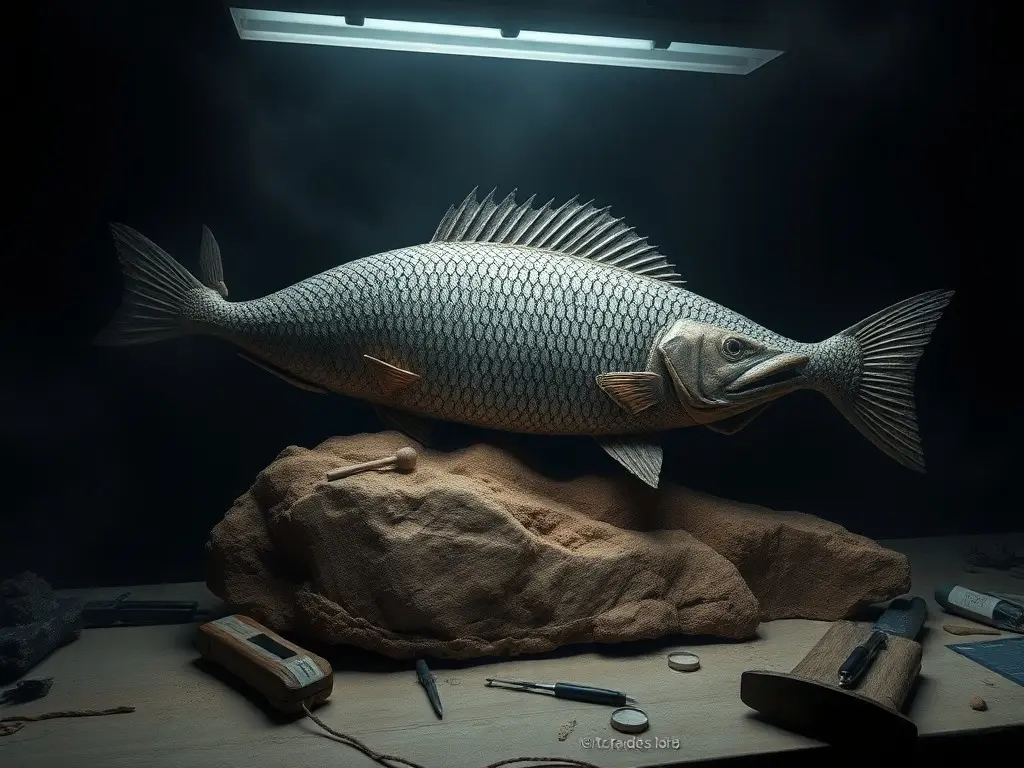
A 1.2-meter fossil of a 55-million-year-old tarpon-like predator, discovered in 1999 on Pitt Island in New Zealand, was finally analyzed after long-lost field notebooks from paleontologist Dr. Richard Köhler were recovered in 2025. The specimen, named *Ikawaihere koehleri*, represents the first documented high-level predatory bony fish from New Zealand’s Paleogene era and was published in the *New Zealand Journal of Geology and Geophysics*." "article": "A 55-million-year-old fossil mystery has been solved thanks to the recovery of long-lost field notebooks belonging to Dr. Richard Köhler. The notebooks, donated by Köhler’s family in 2025, provided critical details about the discovery site on Pitt Island’s western coastline near Waihere Bay, where Köhler found the fossil in 1999. The specimen, a 1.2-meter-long tarpon-like fish preserved in three-dimensional detail, was initially extracted in heavy blocks and brought to the University of Otago. Researchers, including Emeritus Professor Daphne Lee and the late Professor Ewan Fordyce, recognized its significance but lacked key geological data until the notebooks resurfaced. The fossil, named *Ikawaihere koehleri*, was identified as a predatory bony fish with anatomical features matching modern tarpon, such as a powerful tail fin and upward-facing mouth. It represents the first high-level pursuit predator from New Zealand’s Paleogene era, offering insights into ancient ecosystems. The study, published in the *New Zealand Journal of Geology and Geophysics*, was delayed due to missing field records after Köhler’s death. The notebooks allowed researchers to complete a Fossil Record Form and properly document the discovery location, enabling the publication. The name *Ikawaihere koehleri* honors Köhler and the discovery site, with acknowledgment to Heidi Lanauze and the Hokotehi Moriori Trust for their support. The fossil provides a rare glimpse into New Zealand’s ancient marine life, filling a gap in the region’s paleontological record.
A 55-million-year-old fossil mystery has been solved thanks to the recovery of long-lost field notebooks belonging to Dr. Richard Köhler. The notebooks, donated by Köhler’s family in 2025, provided critical details about the discovery site on Pitt Island’s western coastline near Waihere Bay, where Köhler found the fossil in 1999. The specimen, a 1.2-meter-long tarpon-like fish preserved in three-dimensional detail, was initially extracted in heavy blocks and brought to the University of Otago. Researchers, including Emeritus Professor Daphne Lee and the late Professor Ewan Fordyce, recognized its significance but lacked key geological data until the notebooks resurfaced. The fossil, named *Ikawaihere koehleri*, was identified as a predatory bony fish with anatomical features matching modern tarpon, such as a powerful tail fin and upward-facing mouth. It represents the first high-level pursuit predator from New Zealand’s Paleogene era, offering insights into ancient ecosystems. The study, published in the *New Zealand Journal of Geology and Geophysics*, was delayed due to missing field records after Köhler’s death. The notebooks allowed researchers to complete a Fossil Record Form and properly document the discovery location, enabling the publication. The name *Ikawaihere koehleri* honors Köhler and the discovery site, with acknowledgment to Heidi Lanauze and the Hokotehi Moriori Trust for their support. The fossil provides a rare glimpse into New Zealand’s ancient marine life, filling a gap in the region’s paleontological record.
This content was automatically generated and/or translated by AI. It may contain inaccuracies. Please refer to the original sources for verification.