The Ocean’s “Real-Life Zombie” Is a Sea Cucumber Whose Amputated Tissue Survived for Three Years
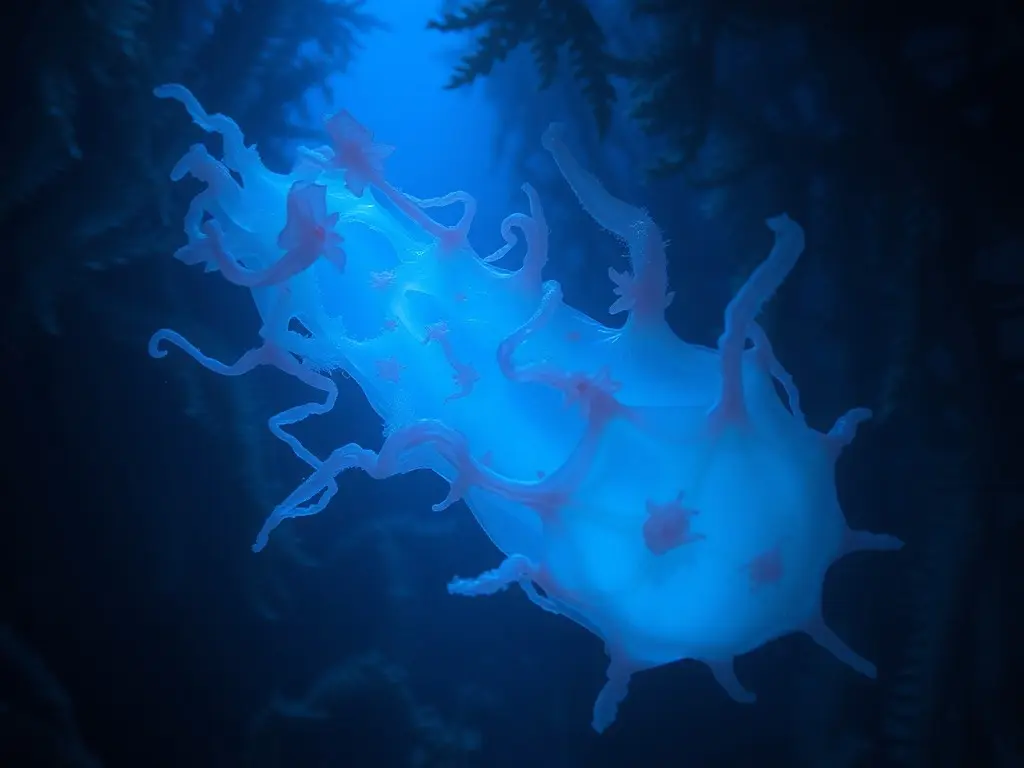
Researchers discovered that amputated tissue from cold-water sea cucumbers (*Psolus fabricii*) survived and grew for over three years in natural seawater, challenging assumptions about tissue resilience outside the body. The findings, published in *Science Advances*, suggest potential applications in regenerative medicine and tissue engineering.
A severed piece of sea cucumber tissue initially seemed unremarkable to researchers studying *Psolus fabricii*, a cold-water species. However, weeks later, they observed the tissue not only surviving but actively growing in ordinary seawater, defying expectations and earning it the nickname 'real-life zombie' sea cucumber. The study, published in *Science Advances*, documented how tissue from the sea cucumber’s tube feet, body, and tentacles remained biologically active for over three years. Researchers exposed the samples to flowing natural seawater, a microbially rich environment that paradoxically sustained the tissue instead of causing decay. Oceanographer Rachel Sipler noted the tissue absorbed dissolved amino acids directly from seawater, demonstrating an unexpected capacity for self-sustenance. Unlike traditional cell cultures, which require sterile conditions, the sea cucumber tissue thrived in complex, natural environments. Scientists observed immune activity, tissue restructuring, and cell diversification over time, suggesting potential applications in wound healing, antimicrobial therapies, and regenerative medicine. The tissue’s resilience avoids ethical and biosafety concerns tied to human or vertebrate cell lines, making it a promising model for biomedical research. The discovery challenges long-held assumptions about how tissues survive outside the body. While the team has not yet regrown a complete sea cucumber, the findings hint at parallels with lizard tail regeneration, where severed body parts can regrow new organisms. Researchers emphasized the tissue’s potential as a low-cost, accessible tool for classrooms and labs with limited resources. The experiment was terminated only after three years when the team prepared to publish their findings. The study suggests that sea cucumbers may hold keys to understanding tissue regeneration, offering new avenues for medical and biological research.
This content was automatically generated and/or translated by AI. It may contain inaccuracies. Please refer to the original sources for verification.